
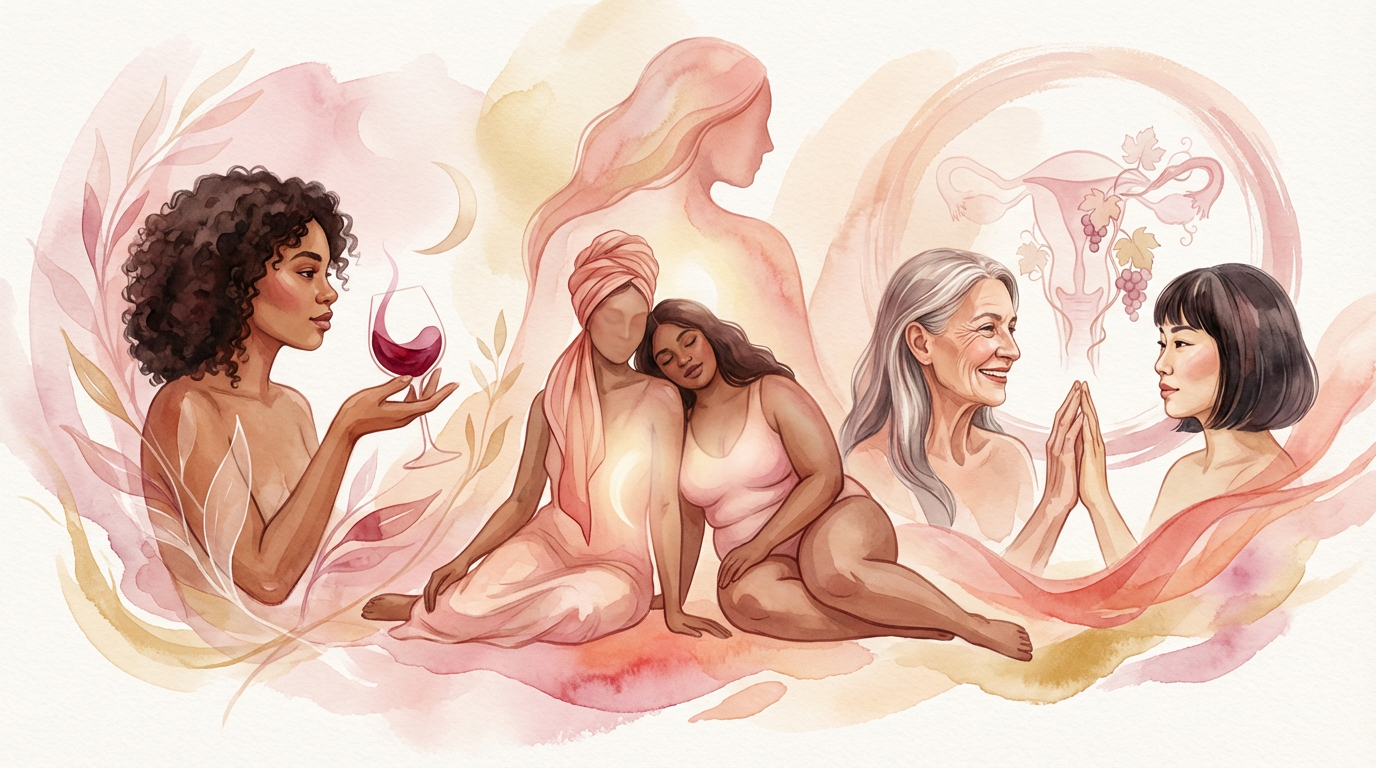
Wine and Your Cycle: What Every Woman Should Know
Understand how wine and alcohol interact with your menstrual cycle phases, from hormone metabolism to symptom management, and make informed choices that support your wellness.
Listen to this article
~29 min listen
Wine and Your Cycle: What Every Woman Should Know
For centuries, women have enjoyed a glass of wine to unwind after a long day. But how does alcohol consumption interact with your menstrual cycle? Understanding the relationship between wine, hormones, and your period can help you make informed choices that support your wellness journey.
The Hormone-Alcohol Connection
Your menstrual cycle is orchestrated by fluctuating levels of estrogen and progesterone. These hormones don't just affect your reproductive system—they influence how your body processes alcohol, your mood, energy levels, and even how intoxicated you feel.
Estrogen and Alcohol Metabolism: During the follicular phase (days 1-14), estrogen levels rise gradually. Higher estrogen can slow alcohol metabolism, meaning that glass of wine might affect you more strongly mid-cycle than it would during menstruation. Research shows that women with higher estrogen levels experience prolonged alcohol effects and may feel more intoxicated from the same amount.
Progesterone's Sedative Effect: After ovulation, progesterone rises during the luteal phase (days 15-28). This hormone has natural sedative properties, which can amplify alcohol's depressant effects. Many women report feeling sleepier or more affected by wine during the week before their period.
How Alcohol Affects Each Phase of Your Cycle
Menstrual Phase (Days 1-5): Proceed with Caution
During menstruation, your body is already working hard. Hormone levels are at their lowest, which can affect mood and energy. While some women reach for wine to ease cramps, alcohol can actually worsen menstrual symptoms:
- •Increased cramping: Alcohol is a vasodilator, potentially increasing blood flow and intensifying cramps
- •Dehydration: Alcohol's diuretic effect can worsen bloating and headaches
- •Blood sugar fluctuations: Can amplify mood swings and fatigue
- •Heavier bleeding: Some women report increased flow after drinking
The upside? Lower hormone levels mean more consistent alcohol metabolism. You'll process wine more predictably than during other phases.
Smart choices: If you choose to drink, hydrate thoroughly, eat before consuming alcohol, limit to 1-2 glasses, and avoid sugary cocktails that spike blood sugar.
Follicular Phase (Days 6-14): Higher Tolerance Window
As your period ends and estrogen begins to climb, many women feel energized and social. This phase often corresponds with higher alcohol tolerance and fewer negative effects:
- •Better mood resilience: Rising estrogen supports neurotransmitters like serotonin
- •More stable energy: Less likely to experience alcohol-related crashes
- •Social connection: Natural increase in sociability aligns with social drinking occasions
Research insight: Studies show women metabolize alcohol more consistently during the follicular phase, with fewer reports of severe hangovers.
Smart choices: This is typically the best time for moderate social drinking if you choose to indulge. Your body is more resilient to alcohol's effects. Still, stick to recommended limits: no more than 1 drink per day or 7 per week.
Ovulation (Day 14-16): Peak Sensitivity
Ovulation brings a surge in both estrogen and luteinizing hormone (LH). This hormonal peak can make you more sensitive to alcohol's effects:
- •Enhanced intoxication: The same amount of wine may feel stronger
- •Slower metabolism: Your body takes longer to process alcohol
- •Judgment impairment: Important consideration for fertility awareness
For fertility: If you're trying to conceive, this is an ideal time to abstain. Alcohol can affect the cervical mucus quality needed for conception and may impair judgment around fertile window timing.
Smart choices: Consider non-alcoholic alternatives during your fertile window. If you do drink, reduce your usual amount by half.
Luteal Phase (Days 17-28): The PMS Challenge
The two weeks before your period can be the most challenging time for alcohol consumption. Progesterone's sedative effects combine with dropping serotonin levels, creating a perfect storm:
- •Amplified PMS symptoms: Alcohol can worsen anxiety, irritability, and depression
- •Sugar cravings intensified: Wine's sugar content can trigger more cravings
- •Sleep disruption: While wine may help you fall asleep, it prevents restorative deep sleep
- •Breast tenderness worsened: Alcohol can increase estrogen, aggravating breast pain
The temptation trap: Many women crave wine most during PMS, seeking relief from anxiety and irritability. Unfortunately, alcohol often makes these symptoms worse over time.
Smart choices: This is the optimal time to explore non-alcoholic alternatives. Herbal teas, sparkling water with fruit, or alcohol-free wines can provide ritual without the negative effects.
The Science of Resveratrol: Red Wine's Potential Benefits
You've likely heard about resveratrol, the antioxidant compound found in red wine grapes. Research suggests resveratrol may offer some health benefits:
- •Anti-inflammatory properties: May help reduce inflammation associated with menstrual cramps
- •Cardiovascular support: Supports heart health through improved blood vessel function
- •Antioxidant protection: Helps neutralize free radicals
The catch: To get therapeutic levels of resveratrol, you'd need to drink far more wine than is healthy. A single glass contains only 0.3-1.8mg of resveratrol, while studies showing benefits use 150-500mg doses.
Better sources: You can get resveratrol benefits without alcohol from red grapes, blueberries, cranberries, peanuts, and resveratrol supplements.
When Alcohol Makes Symptoms Worse
For some women, alcohol consistently aggravates menstrual symptoms regardless of cycle phase:
Endometriosis and PCOS
Alcohol can worsen inflammation in endometriosis and may affect insulin sensitivity in PCOS. Many women with these conditions report significant symptom improvement when eliminating alcohol.
Heavy or Painful Periods
If you experience dysmenorrhea (painful periods) or menorrhagia (heavy bleeding), alcohol may:
- •Thin the blood, potentially increasing flow
- •Increase prostaglandins, the compounds that cause cramping
- •Interfere with pain medication effectiveness
- •Disrupt sleep needed for recovery
Premenstrual Dysphoric Disorder (PMDD)
Women with PMDD experience severe mood symptoms before menstruation. Alcohol can significantly worsen PMDD symptoms:
- •Amplifies depression and anxiety
- •Disrupts emotional regulation
- •Interferes with PMDD medications
- •Creates a cycle of seeking relief through drinking
Expert recommendation: If you have PMDD, consider eliminating alcohol entirely for 2-3 cycles to assess impact.
Timing Matters: Drinking Strategies for Cycle Awareness
If you choose to drink alcohol, strategic timing can minimize negative effects:
Best times:
- •Mid-follicular phase (days 7-11)
- •Early afternoon rather than evening
- •With substantial food in your stomach
- •When well-hydrated throughout the day
Worst times:
- •Days 1-3 of menstruation if you have heavy bleeding
- •Days 24-28 (late luteal/PMS phase)
- •On empty stomach during any phase
- •When already dehydrated or tired
The Hydration Factor: Alcohol and Bloating
One of the most common complaints during menstruation is bloating. Alcohol's diuretic effect seems counterintuitive—shouldn't it reduce bloating?
The paradox: While alcohol initially increases urination, it ultimately causes dehydration. Your body responds by retaining more fluid, worsening bloating. Additionally:
- •Sugar in wine triggers insulin spikes, promoting water retention
- •Alcohol slows digestion, causing gas and discomfort
- •Carbonation in sparkling wine adds gas directly
The solution: For every glass of wine, drink 1-2 glasses of water. This helps maintain hydration and reduces next-day bloating.
Sleep Quality and Your Cycle
Sleep disruption is one of alcohol's most underestimated effects on menstrual health. While wine may help you fall asleep faster, it prevents the deep, restorative sleep your body needs:
How alcohol disrupts sleep:
- •Suppresses REM sleep in the second half of the night
- •Increases wakefulness as blood alcohol drops
- •Worsens night sweats during the luteal phase
- •Amplifies next-day fatigue and irritability
Cycle connection: Many women already experience poorer sleep in the luteal phase due to progesterone. Adding alcohol compounds this issue.
Recovery recommendation: If you drink, finish alcohol at least 3-4 hours before bedtime to allow processing before sleep.
Non-Alcoholic Alternatives That Satisfy
The ritual of enjoying a relaxing beverage doesn't require alcohol. Consider these cycle-friendly alternatives:
Menstrual Phase Mocktails
- •Ginger-turmeric tonic: Anti-inflammatory support for cramps
- •Cherry juice spritzer: Natural melatonin for better sleep
- •Magnesium-rich smoothie: Supports muscle relaxation
Follicular Phase Refreshers
- •Green tea with lemon: Energizing without alcohol
- •Kombucha: Probiotic benefits for gut health
- •Fresh fruit agua fresca: Hydrating and vitamin-rich
Luteal Phase Soothers
- •Chamomile "wine": Warm chamomile tea in a wine glass
- •Alcohol-free red wine: Contains resveratrol without alcohol
- •Golden milk latte: Turmeric anti-inflammatory benefits
Cultural Considerations and Social Pressure
Many social situations revolve around alcohol, making it challenging to abstain even when you know it'll worsen symptoms. Strategies for navigating social drinking:
Response scripts:
- •"I'm focusing on my cycle health this month"
- •"I'm doing a wellness reset" (no explanation needed)
- •"I'm the designated driver tonight"
- •"I feel better without it during this time"
Ordering tips:
- •Order a fancy mocktail so you're holding a glass
- •Ask for sparkling water in a wine glass with lime
- •Order alcohol-free wine (increasingly available)
- •Bring your own non-alcoholic beverages to gatherings
The Research: What Studies Show
Large-scale studies on alcohol and menstrual health reveal important insights:
Harvard Nurses' Health Study: Women who consumed 2+ drinks daily had 33% higher risk of irregular periods and fertility issues.
Journal of Women's Health Research (2018): Moderate alcohol consumption (3-6 drinks per week) was associated with worse PMS symptoms, particularly mood changes and sleep disturbance.
Fertility & Sterility (2016): Even light drinking (1-3 drinks per week) during the luteal phase was associated with reduced conception rates.
European Journal of Clinical Nutrition (2020): Women who abstained from alcohol reported 27% improvement in menstrual pain severity over 3 cycles.
Personal Experimentation: Track and Learn
Your body's response to alcohol is unique. Consider tracking these factors for 2-3 cycles:
- •Day of cycle when you drink
- •Amount and type of alcohol
- •Symptoms the next day
- •Sleep quality that night
- •Menstrual symptoms during that cycle
- •Mood and energy the following days
Pattern recognition: Many women discover clear patterns—like wine during the luteal phase always worsens PMS, or drinking during menstruation increases cramps.
Making Your Personal Choice
There's no one-size-fits-all answer to alcohol and your cycle. Consider:
Reasons to minimize or eliminate:
- •You have PCOS, endometriosis, or PMDD
- •Trying to conceive
- •Severe PMS or menstrual symptoms
- •Sleep problems
- •Family history of alcoholism
- •Taking medications that interact with alcohol
Moderate consumption may be fine if:
- •You have regular, pain-free periods
- •No fertility concerns
- •No underlying conditions
- •You limit to recommended amounts (1 drink/day max)
- •You time consumption to follicular phase
- •You maintain excellent hydration
The Bottom Line
Wine and alcohol interact complexly with your menstrual cycle through hormone metabolism, hydration status, sleep quality, and inflammation. While moderate consumption may be fine for some women during certain cycle phases, many women experience symptom improvement when reducing or eliminating alcohol—particularly during the luteal phase and menstruation.
The most empowering approach is self-awareness: track how alcohol affects your unique cycle, respect your body's signals, and make informed choices that support your overall wellness. Remember that the ritual, relaxation, and social connection you seek from wine can often be found in alcohol-free alternatives that support rather than undermine your menstrual health.
Your body is giving you information every cycle. Are you listening?
Cite this article
PERIODiQ Editorial Team (2025). "Wine and Your Cycle: What Every Woman Should Know." PERIODiQ. https://periodiq.app/library/wine-and-your-cycle
"Wine and Your Cycle: What Every Woman Should Know." PERIODiQ, 2025, https://periodiq.app/library/wine-and-your-cycle.
Send this to a friend — PERIODiQ is free for them too. No card. No paywall.
Loved this? Save articles, track your cycle, and unlock meditations — free forever.
Disclaimer: PERIODiQ™ offers general wellness information only. It does not provide medical advice, diagnosis, or treatment. Always speak with a licensed health professional about your health.