Social Media, Body Image, & Your Cycle: Navigating Hormonal Shifts
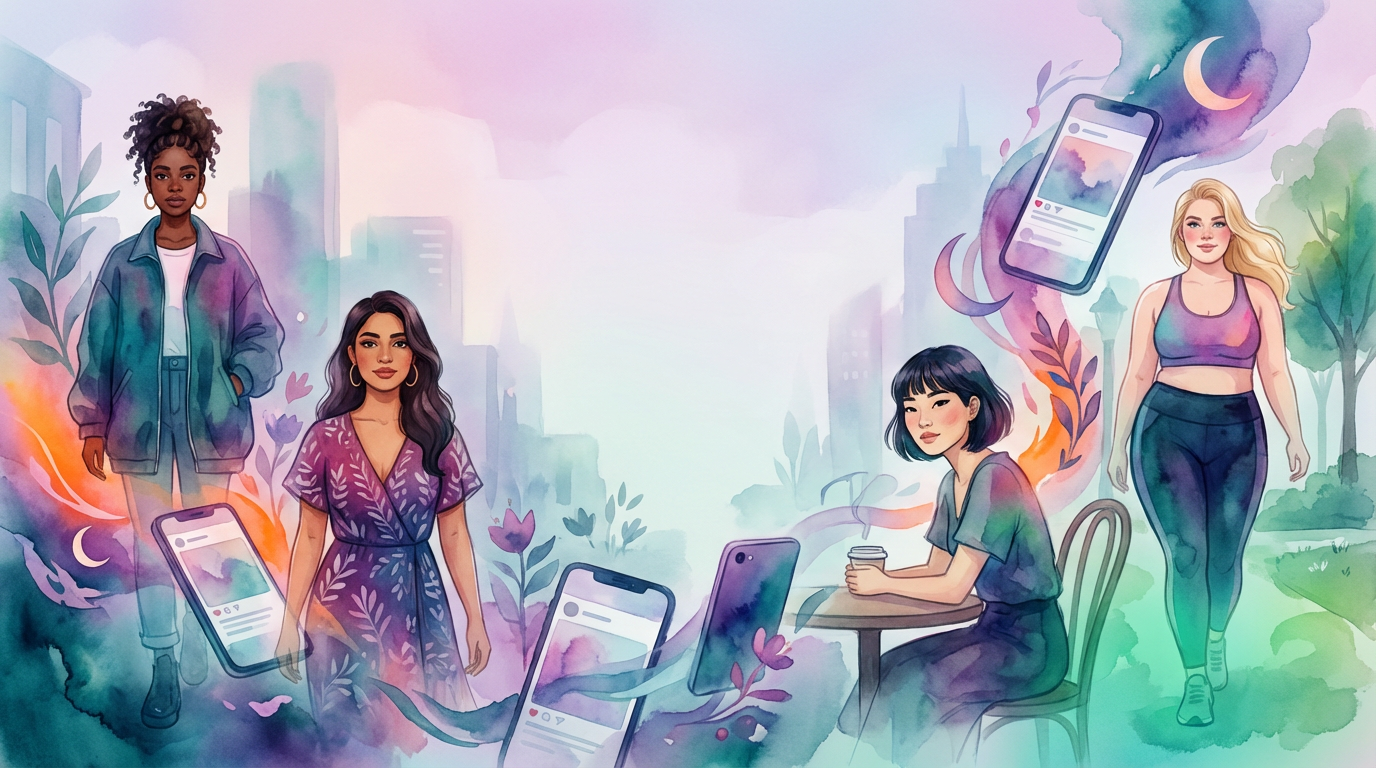
Social media significantly impacts body image, especially during different phases of your menstrual cycle due to hormonal fluctuations. Understanding these hormonal shifts and implementing mindful social media habits can empower young women to protect their mental well-being and cultivate a more positive self-perception, despite external pressures and internal changes.
Listen to this article
~13 min listen
Click play to generate audio narration with a calming voice
TL;DR Summary
- •Hormonal fluctuations throughout your menstrual cycle can significantly amplify the negative effects of social media on body image, making you more vulnerable to comparison and self-criticism.
- •Social media algorithms often promote unrealistic beauty standards, which can worsen body dissatisfaction, particularly during vulnerable cycle phases like the luteal phase.
- •Implementing digital boundaries, curating your feed, and practicing self-compassion are crucial strategies for protecting your mental health and fostering a positive body image, regardless of your hormonal state.
Introduction: Why Does Social Media Hit Different During Your Period?
Ever scrolled through Instagram and felt totally fine, only to find yourself spiraling into comparison and self-doubt a week later, convinced everyone else looks better, lives better, is better? If this sounds familiar, you're not alone, and your menstrual cycle might be playing a bigger role than you think. Social media's impact on body image is profoundly influenced by the hormonal shifts throughout your cycle, making you more susceptible to negative self-perception during certain phases. For young women navigating early adulthood, careers, and relationships, understanding this connection is crucial for maintaining mental well-being and fostering a healthy relationship with their bodies and with social platforms. We're talking about how your fluctuating hormones can turn a casual scroll into a full-blown body image crisis, and what you can do about it.
How Do Hormones Influence Body Image During Your Cycle?
Your menstrual cycle isn't just about bleeding; it's a complex symphony of hormones – estrogen, progesterone, and testosterone – that ebb and flow, influencing everything from your energy levels and mood to, yes, your perception of your own body. This hormonal body image connection is powerful and often underestimated, especially when combined with the constant barrage of curated images online.
The Follicular Phase: Rising Confidence, But Still Vulnerable
This phase starts on day one of your period and lasts until ovulation. Estrogen is the star here, gradually rising. Estrogen is often associated with feelings of increased energy, confidence, and a more positive outlook. You might feel more comfortable in your skin, more social, and less bothered by what you see online. Your skin might be clearer, your hair shinier – thanks, estrogen! However, it's not a complete shield. While comparison might sting less, the underlying societal pressures amplified by social media are still there. It's a prime time to build up your positive self-talk and reinforce healthy digital habits before the hormonal tide turns.
Ovulation: The Peak of Positivity (Usually)
Around the middle of your cycle, estrogen peaks, followed by a surge in luteinizing hormone (LH) and a slight increase in testosterone. Many women report feeling their most attractive and confident during ovulation. You might feel more outgoing, energetic, and generally more at ease with your appearance. This is evolution's way of making you feel good and ready to, well, ovulate! During this window, you might be less prone to the critical self-talk that social media can trigger. However, even during this peak, the desire to compare can still subtly influence your thoughts, especially if your feed is packed with highly idealized content.
The Luteal Phase: The Body Image Battleground
Ah, the luteal phase. This is arguably the most challenging time for body image periods and social media interaction. After ovulation, progesterone levels rise, while estrogen begins to decline. This hormonal shift can lead to premenstrual syndrome (PMS) symptoms, including bloating, breast tenderness, fatigue, mood swings, and increased anxiety or irritability. Physiologically, you might feel heavier, your clothes might feel tighter, and your skin might break out.
Mentally, progesterone's calming effects can turn into a sedative effect for some, leading to lower mood, while the declining estrogen can exacerbate feelings of insecurity. This combination creates a fertile ground for negative self-talk and magnified body dissatisfaction. When you scroll through social media during this phase, those perfectly sculpted abs or flawless complexions can feel like a direct attack on your already vulnerable self-esteem. Research suggests that women in their luteal phase are more likely to experience negative self-perception and heightened emotional reactivity, making them particularly susceptible to the detrimental effects of social comparison on platforms like Instagram and TikTok.
Menstruation: A Mixed Bag
As your period begins, both estrogen and progesterone levels are at their lowest. For some, the start of menstruation brings a sense of relief as PMS symptoms subside. Bloating might decrease, and mood can stabilize. For others, the first few days of their period can still be accompanied by discomfort, fatigue, and low energy, which can make them feel less than their best. Your body is working hard, and feeling physically uncomfortable can certainly contribute to a less positive body image. Social media's impact during this time can vary greatly depending on individual symptoms and how quickly hormones begin to rise again in the follicular phase.
How Does Social Media Specifically Worsen Body Image Concerns?
Social media platforms are designed to be addictive, and their algorithms often prioritize content that grabs attention – which, unfortunately, often means highly curated, filtered, and unrealistic depictions of beauty and life. This constant exposure can be a major trigger for social media mental health challenges, especially concerning body image.
The Comparison Trap
This is the big one. We're wired to compare ourselves to others, but social media amplifies this instinct to an unprecedented degree. You're not just comparing yourself to your immediate peers; you're comparing yourself to millions of curated highlight reels, often enhanced with filters, strategic angles, and even subtle digital alterations. This creates an impossible standard, leading to feelings of inadequacy, jealousy, and low self-worth. During your luteal phase, when you're already feeling physically and emotionally vulnerable, this comparison trap can feel inescapable.
Filter Culture and Unrealistic Ideals
Filters, editing apps, and AI-generated images have blurred the lines between reality and fantasy. The 'Instagram face' or 'TikTok body' are not achievable for most people without significant intervention, yet they become the unspoken standard. Seeing these idealized versions constantly can distort your perception of what real bodies look like, making you critical of your own natural appearance.
The Echo Chamber Effect
Algorithms learn what you engage with. If you spend time looking at fitness models, diet content, or beauty influencers, the algorithm will show you more of it. This can create an echo chamber that reinforces unrealistic ideals and keeps you in a cycle of comparison and self-criticism. It's subtle, but over time, it shapes your subconscious beliefs about what is desirable and beautiful.
Fear of Missing Out (FOMO) and Self-Worth
Beyond just appearance, social media often portrays aspirational lifestyles – lavish vacations, perfect relationships, successful careers. This can subtly link your self-worth to external achievements and appearances, making you feel like you're falling short. If you're experiencing hormonal fluctuations that already make you feel low, seeing these 'perfect' lives can exacerbate feelings of inadequacy and contribute to a negative body image, as you might perceive yourself as not 'good enough' to achieve those things.
Practical Strategies to Protect Your Body Image and Mental Health
Okay, so we know the problem. Now, what do we do about it? It's not about ditching social media entirely (though for some, that's a valid choice!), but about becoming a more mindful, intentional user, especially when your hormones are doing their thing.
1. Track Your Cycle and Anticipate Vulnerable Phases
Knowledge is power. Use a period tracking app (like PERIODiQ!) or a simple calendar to understand your unique cycle patterns. Pay attention to how you feel during different phases. If you know your luteal phase often makes you feel more sensitive, bloated, or prone to comparison, you can proactively adjust your social media habits during that time. This is a game-changer for managing hormonal body image issues.
2. Curate Your Feed Mindfully
Your social media feed is your space. Take control of it:
- •Unfollow/Mute Accounts That Trigger You: If an account consistently makes you feel bad about yourself, unfollow it. If you don't want to unfollow a friend but their content is triggering, mute them. No one needs to know, and your mental health is paramount.
- •Follow Diverse Body Types: Seek out accounts that celebrate body diversity, promote body neutrality or positivity, and challenge conventional beauty standards. This helps recalibrate your perception of what 'normal' bodies look like.
- •Engage with Empowering Content: Like, comment on, and save posts that make you feel good, inspired, or informed. This signals to the algorithm to show you more of that content.
- •Prioritize Real-Life Connections: Focus on accounts of real friends and family whose lives you genuinely want to keep up with, rather than strangers whose entire purpose is to project an image.
3. Set Digital Boundaries (Especially During Your Luteal Phase)
Treat social media like a treat, not a constant companion.
- •Time Limits: Use your phone's built-in app timers to limit your daily social media usage. Stick to them, especially when you're feeling vulnerable.
- •Designated Scroll Times: Instead of mindlessly scrolling throughout the day, designate specific times for checking social media. Outside of those times, put your phone away or engage in other activities.
- •No Scrolling Before Bed/After Waking: These are prime times for comparison and anxiety. Give your brain a break. Instead, read a book, journal, or listen to music.
- •Social Media-Free Zones: Designate certain places or activities as social media-free, like mealtimes, workouts, or time with loved ones.
4. Practice Mindful Consumption
Before you open an app, ask yourself: Why am I doing this? How do I feel right now? As you scroll, pay attention to your emotions. If you start to feel negative, put the phone down. Don't let yourself get sucked into the comparison spiral. Remind yourself that what you're seeing is a curated highlight reel, not real life. This conscious approach helps mitigate the negative aspects of social media mental health.
5. Cultivate Self-Compassion
This is huge, especially when facing body image periods challenges. Your body is amazing. It carries you through life, heals itself, and endures hormonal shifts. Be kind to it. Speak to yourself with the same empathy and understanding you would offer a friend.
- •Journaling: Write down your feelings about your body and social media. This can help you process emotions and identify triggers.
- •Affirmations: Regularly repeat positive affirmations about your body and self-worth.
- •Focus on Function, Not Appearance: Appreciate your body for what it does rather than just how it looks. Can it run? Dance? Hug? Think about all its incredible capabilities.
- •Engage in Activities You Love: Do things that make you feel good in your body, whether it's dancing, hiking, yoga, or simply stretching. This helps build a positive internal connection.
6. Seek Real-Life Connection and Support
Nothing beats genuine human connection. Spend time with friends and family who uplift you and make you feel good about yourself. Talk openly about your struggles with social media and body image. Knowing you're not alone can be incredibly validating and empowering. If your struggles feel overwhelming, consider reaching out to a therapist or counselor who specializes in body image or social media mental health.
7. Understand the Business Model
Remember that social media companies profit from your engagement. They want you scrolling, clicking, and comparing. This isn't about your well-being; it's about their bottom line. Understanding this can help you detach emotionally from the content and recognize it for what it is: a product designed to keep your attention. This perspective can help you regain control over your hormonal body image experience online.
Key Takeaways
- •Your menstrual cycle hormones significantly impact your body image sensitivity, particularly during the luteal phase when you may feel more vulnerable to social media's negative effects.
- •Social media fosters unrealistic beauty standards through comparison traps, filters, and curated content, exacerbating body dissatisfaction.
- •Proactive strategies like cycle tracking, mindful feed curation, setting digital boundaries, and practicing self-compassion are essential for protecting your mental health.
- •Understanding the commercial intent behind social media platforms can empower you to consume content more critically.
- •Prioritizing real-life connections and seeking professional support when needed are vital for a healthy relationship with your body and online world.
Frequently Asked Questions
Q1: Can my period really make me feel worse about my body on social media?
A: Absolutely. Hormonal fluctuations, especially the drop in estrogen and rise in progesterone during your luteal phase (the week or so before your period), can heighten feelings of insecurity, bloating, and emotional sensitivity. This makes you more susceptible to negative self-comparison when scrolling through curated social media feeds.
Q2: Which phase of my cycle is usually the hardest for body image and social media?
A: For most women, the luteal phase (the time between ovulation and your period) is the most challenging. Rising progesterone and declining estrogen can lead to PMS symptoms like bloating, mood swings, and increased anxiety, making you more vulnerable to the negative impacts of social media on your body image.
Q3: How can I tell if social media is negatively affecting my body image?
A: Signs include feeling anxious, sad, jealous, or inadequate after scrolling, comparing your appearance to others, obsessing over filters or edits, constantly checking comments or likes, or withdrawing from real-life activities because of body insecurities. Pay attention to these feelings, especially during different cycle phases.
Q4: Is it better to just delete social media during my period?
A: Not necessarily. While a complete break can be beneficial for some, for others, mindful usage is key. The goal is to create a healthier relationship, not necessarily total abstinence. Try setting strict time limits, unfollowing triggering accounts, and focusing on positive content, especially when you know you're in a vulnerable cycle phase.
Q5: What's the fastest way to improve my body image when social media gets me down?
A: Immediately step away from the phone. Engage in a real-life activity that makes you feel good in your body – a walk, a stretch, listening to music, or talking to a supportive friend. Practice self-compassion by acknowledging your feelings without judgment and reminding yourself that social media is a highlight reel, not reality.
Q6: How can I make my social media feed more body-positive?
A: Actively seek out and follow accounts that promote body diversity, body neutrality, and reject unrealistic beauty standards. Unfollow or mute any accounts that consistently make you feel bad. Engage with content that uplifts and informs you, rather than focusing solely on appearance.
Q7: Does cycle tracking really help with social media and body image issues?
A: Yes, absolutely! Tracking your cycle helps you understand your hormonal patterns and anticipate when you might be more emotionally vulnerable. Knowing when your luteal phase is coming allows you to proactively implement strategies like reducing screen time or curating your feed more strictly, protecting your mental health and body image.
Start Your Wellness Journey Today
Ready to track your cycle, fertility, pregnancy, or menopause journey? Download PERIODiQ - your iQ-powered wellness companion designed for every stage of your health journey.
Get PERIODiQ Free: https://periodiq.app
Your Wellness Journey Starts Here
Download PERIODiQ
Scan the QR code or tap the link to get started with your personalized health tracking.
periodiq.app • iOS & Android
Cite this article
PERIODiQ Editorial Team (2026). "Social Media, Body Image, & Your Cycle: Navigating Hormonal Shifts." PERIODiQ. https://periodiq.app/library/social-media-body-image-your-cycle-navigating-hormonal-shifts
"Social Media, Body Image, & Your Cycle: Navigating Hormonal Shifts." PERIODiQ, 2026, https://periodiq.app/library/social-media-body-image-your-cycle-navigating-hormonal-shifts.
Send this to a friend — PERIODiQ is free for them too. No card. No paywall.
Loved this? Save articles, track your cycle, and unlock meditations — free forever.
Disclaimer: PERIODiQ™ offers general wellness information only. It does not provide medical advice, diagnosis, or treatment. Always speak with a licensed health professional about your health.