
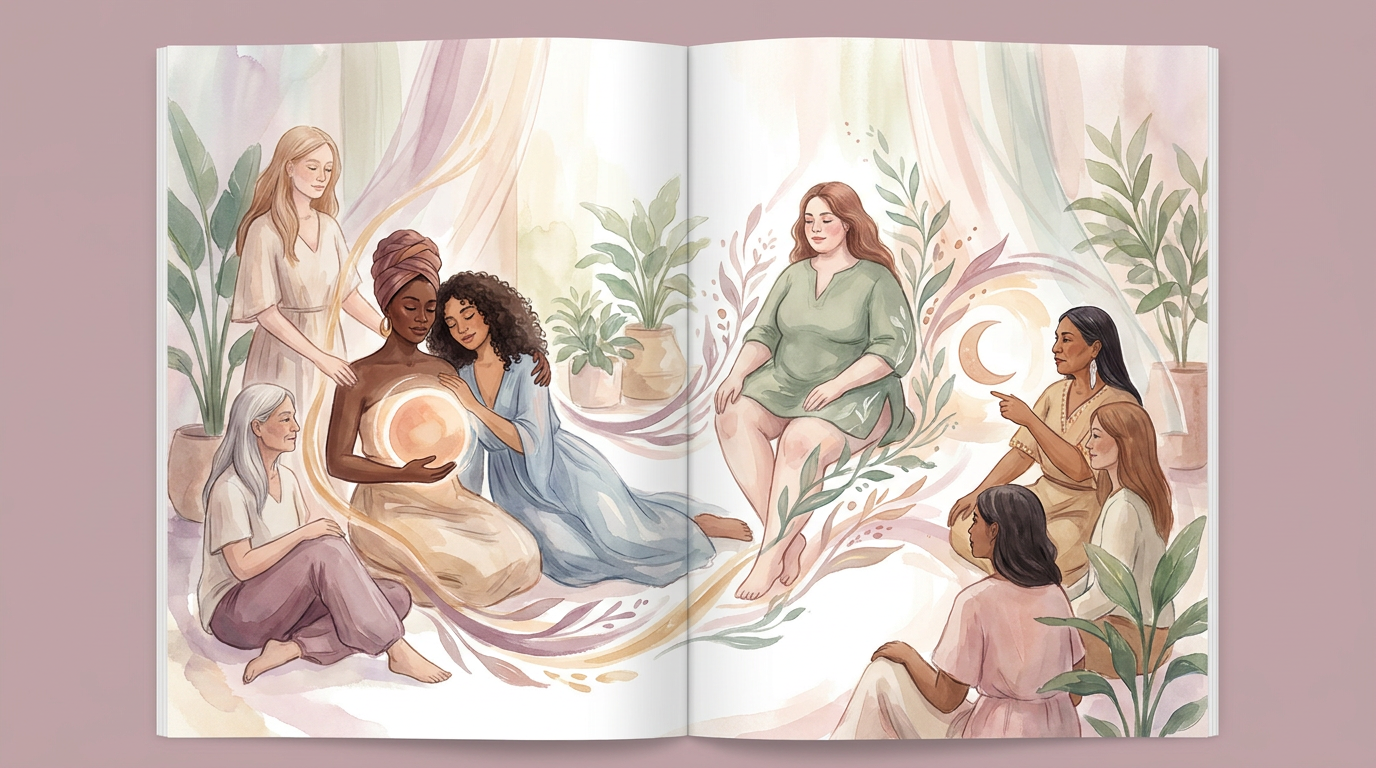
Reclaiming the Cycle: Healing from Colonial Body Shame Around Menstruation
Generated article about Reclaiming the Cycle: Healing from Colonial Body Shame Around Menstruation
Listen to this article
~20 min listen
Click play to generate audio narration with a calming voice
TL;DR Summary
- •Reclaiming ancestral menstrual wisdom helps Indigenous and Métis women heal from colonial body shame, fostering self-acceptance and cultural pride.
- •Decolonizing menstruation involves rejecting Western-imposed negative views and embracing traditional moon time practices as sacred and powerful.
- •Connecting with elders and knowledge keepers is crucial for authentically revitalizing traditional menstrual teachings and practices within communities.
Introduction
Reclaiming ancestral wisdom around menstruation is a profound journey for Indigenous and Métis women, serving as a powerful act of healing from the pervasive impact of colonial body shame. This process involves consciously decolonizing menstruation, shedding centuries of imposed negativity and embracing the sacred, powerful, and natural aspects of the menstrual cycle, often referred to as moon time. Colonialism systematically disrupted Indigenous societies, spiritual practices, and understandings of the body, particularly women's bodies and their reproductive cycles, framing menstruation as dirty, shameful, or taboo. For generations, this narrative has contributed to a deep-seated colonial body shame, disconnecting women from their inherent power and traditional knowledge. By actively engaging in the reclamation of traditional menstrual teachings, Indigenous and Métis women are not only restoring their personal well-being but also revitalizing cultural practices, strengthening community bonds, and asserting Indigenous body sovereignty over their own narratives and experiences.
What is Colonial Body Shame and How Does it Impact Menstruation?
Colonial body shame is the internalized belief that one's body, its natural functions, and its appearance are inherently flawed, undesirable, or dirty, a belief system directly imposed by colonial forces and perpetuated through systemic oppression. This shame is particularly acute around menstruation, which in many Indigenous cultures was traditionally viewed as a sacred, powerful, and spiritually significant time for women, known as moon time. European colonizers, driven by patriarchal and Judeo-Christian ideologies, often viewed menstruation with disgust, associating it with impurity, weakness, or a curse. This stark contrast led to the suppression of traditional menstrual practices, the shaming of menstruating women, and the imposition of Western biomedical models that often pathologize natural bodily functions. The impact of this colonial body shame on menstruation manifests as feelings of embarrassment, secrecy, discomfort, and a disconnection from one's body and cultural heritage. Women may internalize the idea that their natural cycles are something to hide or manage, rather than a source of strength and wisdom. This can lead to a lack of open dialogue about menstrual health, inadequate access to culturally appropriate care, and a perpetuation of negative self-perception, hindering a holistic understanding of well-being.
How Did Colonialism Disrupt Traditional Indigenous Menstrual Practices?
Colonialism systematically disrupted traditional Indigenous menstrual practices by actively suppressing spiritual ceremonies, demonizing traditional knowledge, and imposing foreign social structures and religious beliefs. Prior to colonization, many Indigenous nations held profound reverence for moon time, recognizing it as a period of heightened spiritual power, introspection, and connection to the Earth. Women often retreated to moon lodges or specific sacred spaces, engaging in ceremonies, vision quests, and communal support, free from daily responsibilities. These practices reinforced Indigenous body sovereignty, acknowledging women's unique connection to creation and their vital roles in community health and spiritual life. However, colonizers, often missionaries and government agents, viewed these practices as pagan, uncivilized, or even satanic. They imposed Christian doctrines that positioned women as inherently sinful or unclean during menstruation, actively discouraging or forbidding traditional ceremonies. The residential school system, a primary tool of assimilation, further severed generations of Indigenous children from their cultural knowledge, including menstrual teachings, instilling shame and fear. Land dispossession also curtailed access to traditional gathering places and medicinal plants used during moon time. The cumulative effect was a profound cultural trauma, leading to the erosion of ancestral knowledge, the breakdown of intergenerational transmission of wisdom, and the internalization of colonial body shame, pushing traditional moon time practices into secrecy or near extinction. This disruption not only affected spiritual well-being but also led to a loss of traditional health practices and community support systems for menstruating women.
What Does Decolonizing Menstruation Mean for Indigenous and Métis Women?
Decolonizing menstruation for Indigenous and Métis women signifies a deliberate and empowering process of dismantling the colonial narratives that have historically shamed and pathologized the menstrual cycle, and instead, reclaiming and revitalizing ancestral moon time teachings. It means rejecting the Western medicalized view that often treats menstruation as a nuisance or an illness, and re-embracing the holistic, spiritual, and powerful understanding of the cycle as a sacred gift. This involves actively unlearning internalized colonial body shame and replacing it with Indigenous body sovereignty – the inherent right and ability to define, understand, and care for one's body according to one's own cultural and personal values. Practically, decolonizing menstruation might involve seeking knowledge from elders and knowledge keepers about traditional moon time ceremonies, songs, stories, and plant medicines. It includes creating safe spaces for open dialogue about menstruation, celebrating its significance, and supporting young women in understanding their cycles as a source of strength. This process is not merely about returning to the past but about weaving ancestral wisdom into contemporary lives, fostering a renewed sense of pride, connection, and spiritual well-being within individuals and communities. It's an affirmation of cultural identity and a rejection of the ongoing impacts of colonization on Indigenous health and well-being.
How Can Indigenous Body Sovereignty Be Reclaimed Through Menstrual Practices?
Indigenous body sovereignty can be powerfully reclaimed through menstrual practices by consciously centering Indigenous worldviews, knowledge systems, and self-determination in how women understand, experience, and care for their bodies during moon time. This reclamation begins with education and dialogue, seeking out and sharing traditional teachings from elders and knowledge keepers about the sacredness and power of menstruation, challenging the negative colonial narratives that have been internalized. Practical steps include establishing or re-establishing moon lodges or equivalent sacred spaces where menstruating women can gather, rest, reflect, and support each other, free from daily responsibilities, mirroring pre-colonial practices. This fosters a sense of community and shared experience, reinforcing the idea that menstruation is a time for introspection and spiritual growth, not isolation or shame. Incorporating traditional plant medicines, such as specific teas for comfort or ceremonial use, reconnects women to the land and ancestral healing practices. Engaging in traditional ceremonies, songs, and prayers associated with moon time further solidifies this reclamation, grounding the experience in cultural identity and spiritual strength. By choosing to use reusable menstrual products, such as cloth pads or menstrual cups, some women also embrace an eco-conscious practice that aligns with traditional respect for the Earth, while rejecting reliance on disposable products often associated with Western consumerism. Ultimately, reclaiming Indigenous body sovereignty through menstrual practices is an act of self-love, cultural affirmation, and resistance against ongoing colonial pressures, empowering women to define their own health and well-being on their own terms.
What Are Practical Steps for Re-engaging with Traditional Moon Time Teachings?
Re-engaging with traditional moon time teachings requires intentional effort, respect, and a commitment to learning within one's own cultural context. Practical steps for Indigenous and Métis women seeking to reconnect include:
1. Seek Out Elders and Knowledge Keepers
The most crucial step is to respectfully connect with elders, grandmothers, and knowledge keepers within your own family, community, or nation. These individuals hold invaluable oral histories, ceremonies, songs, and teachings related to moon time. Approach them with humility, an open heart, and a genuine desire to learn. Offer tobacco or other traditional gifts as a sign of respect and gratitude for their time and wisdom. This direct connection ensures that knowledge is passed down authentically and with cultural integrity, honoring Indigenous sovereignty over traditional knowledge.
2. Participate in Community Gatherings and Ceremonies
Actively seek out opportunities to participate in women's circles, moon lodge gatherings, or other community ceremonies that honor menstruation. These spaces provide a supportive environment for learning, sharing experiences, and healing alongside other women. These gatherings can help to break down the isolation and shame often associated with colonial body shame, fostering a sense of belonging and collective strength. If such gatherings don't exist, consider working with community leaders to initiate them.
3. Learn About Traditional Plant Medicines
Research and learn about traditional plant medicines used by your ancestors for menstrual health and ceremonial purposes. This could involve identifying local plants, understanding their uses, and learning how to harvest and prepare them respectfully. Connecting with the land and its medicinal properties can be a powerful way to reconnect with ancestral practices and promote Indigenous body sovereignty. Always ensure you are learning from experienced herbalists or knowledge keepers to ensure safe and appropriate use.
4. Practice Mindful Cycle Tracking and Self-Reflection
Begin tracking your menstrual cycle with a focus on self-awareness and introspection, rather than merely for fertility or symptom management. Notice the subtle shifts in your energy, mood, and intuition throughout your moon time. Journaling, meditation, and spending time in nature during your cycle can deepen your connection to your body's rhythms and help you to identify patterns and messages. This is a personal practice of decolonizing menstruation, reframing it as a time for personal insight.
5. Create Your Own Sacred Moon Time Rituals
While respecting traditional protocols, you can also begin to create personal rituals that honor your moon time. This might involve setting aside dedicated time for rest, lighting a candle, offering a prayer, creating art, or spending time in quiet contemplation. The goal is to consciously acknowledge and celebrate this sacred time in a way that feels authentic and empowering to you, reinforcing your Indigenous body sovereignty.
6. Educate and Advocate
Share your knowledge and experiences with your daughters, nieces, and other young women in your community. Challenge colonial narratives about menstruation in conversations with family and friends. Advocate for culturally sensitive menstrual health education in schools and healthcare settings. By speaking openly and proudly about moon time, you contribute to breaking down stigma and fostering a more positive, culturally affirming environment for future generations.
Benefits by Life Stage
Reclaiming traditional menstrual wisdom and healing from colonial body shame offers profound benefits across all stages of a woman's life, fostering Indigenous body sovereignty and holistic well-being.
Menstrual Health (periods, cramps, PMS)
For those experiencing periods, reclaiming moon time teachings can transform the experience of menstruation from one of dread or discomfort into one of power and self-awareness. By understanding the cyclical nature of energy, mood, and physical sensations, women can learn to honor their body's needs during different phases. This can lead to a reduction in stress, which often exacerbates symptoms like cramps, PMS, and irregular cycles. Traditional plant medicines, guided by knowledge keepers, can offer natural remedies for discomfort. Embracing the idea of moon time as a period of rest and introspection can encourage women to slow down, reducing burnout and fostering a more harmonious relationship with their bodies. This shift from viewing symptoms as a problem to understanding them as messages from the body is a key aspect of decolonizing menstruation, leading to improved menstrual health and a greater sense of control and self-compassion.
Fertility Journey (TTC, ovulation, conception)
For women on a fertility journey, reclaiming ancestral menstrual knowledge can deepen their connection to their reproductive health and enhance their understanding of ovulation and conception. Traditional teachings often emphasize the sacredness of creation and the interconnectedness of body, spirit, and land. Learning to track one's cycle through natural observation, rather than solely relying on Western medical interventions, can empower women to better understand their fertile window. This approach supports Indigenous body sovereignty by encouraging intuition and body literacy. Healing colonial body shame around sexuality and reproduction can also reduce anxiety and stress, which are known to impact fertility. Embracing traditional prayers, ceremonies, and plant medicines (under guidance) can provide spiritual and physical support, fostering a more holistic and less stressful approach to conception, aligning the fertility journey with ancestral wisdom.
Pregnancy (trimesters, prenatal care)
During pregnancy, the principles of decolonizing menstruation extend to embracing the sacred journey of bringing new life into the world. Traditional knowledge often includes specific practices, plant medicines, and ceremonies for supporting a healthy pregnancy, honoring the mother-to-be, and preparing for birth. Reclaiming these practices can provide a sense of continuity, cultural strength, and spiritual protection throughout each trimester. Healing colonial body shame allows pregnant women to trust their bodies' innate wisdom and connect with the generations of mothers who came before them. This fosters Indigenous body sovereignty by centering traditional birthing practices and maternal care, potentially reducing reliance on medical interventions where culturally appropriate and safe. It emphasizes the holistic well-being of mother and baby, integrating spiritual, emotional, and physical health in prenatal care.
Menopause (perimenopause, hormonal changes)
Menopause, often referred to as "Crone time" or "Elder time" in many Indigenous traditions, is a powerful transition that colonial narratives have often medicalized and framed negatively as a loss of youth or fertility. Reclaiming ancestral wisdom transforms this view, celebrating menopause as a time of elevated wisdom, spiritual insight, and renewed purpose. Healing colonial body shame around aging and the cessation of menstruation allows women to embrace this stage with dignity and power. Traditional teachings emphasize the shift from a reproductive role to one of a revered elder, knowledge keeper, and community leader. This decolonizing menstruation approach encourages women to lean into their intuition, share their accumulated wisdom, and engage in practices that support hormonal balance naturally (with traditional plant medicines, if appropriate and guided). Embracing Indigenous body sovereignty during menopause means honoring this transition as a natural and sacred part of the life cycle, a time of profound spiritual growth and community contribution, rather than a decline.
Key Takeaways
- •Colonial body shame has deeply impacted Indigenous and Métis women's perceptions of menstruation, disconnecting them from traditional moon time wisdom.
- •Decolonizing menstruation involves actively rejecting Western-imposed negative narratives and embracing the sacred, powerful, and natural aspects of the menstrual cycle.
- •Indigenous body sovereignty is reclaimed by centering Indigenous worldviews and practices in understanding and caring for one's body.
- •Engaging with elders, participating in community ceremonies, learning about traditional plant medicines, and practicing mindful cycle tracking are crucial steps for re-engaging with ancestral teachings.
- •Healing from colonial body shame around menstruation offers profound benefits across all life stages, from menstrual health and fertility to pregnancy and menopause.
- •This reclamation journey is an act of cultural affirmation, personal empowerment, and resistance against ongoing colonial impacts.
Frequently Asked Questions
Q: What is colonial body shame in the context of menstruation?
Colonial body shame in the context of menstruation refers to the internalized negative beliefs and feelings of embarrassment or impurity about the menstrual cycle, which were imposed and perpetuated by colonial forces. These beliefs contrast sharply with many traditional Indigenous views that regarded menstruation (moon time) as a sacred and powerful period for women.
Q: Why is reclaiming ancestral menstrual knowledge important for Indigenous and Métis women?
Reclaiming ancestral menstrual knowledge is vital because it allows Indigenous and Métis women to heal from colonial body shame, reconnect with their cultural heritage, and assert Indigenous body sovereignty. It helps to restore a holistic understanding of their bodies, foster self-acceptance, and revitalize traditional practices that were suppressed.
Q: What is "moon time"?
"Moon time" is a term used by many Indigenous peoples to refer to the menstrual period, reflecting the deep connection between women's cycles and the lunar cycle. It signifies a sacred and powerful time of introspection, spiritual connection, and rejuvenation, often accompanied by specific traditional ceremonies and practices.
Q: How can I start decolonizing my menstruation practices?
To start decolonizing your menstruation practices, begin by seeking out knowledge from elders and knowledge keepers within your community, if possible. You can also engage in mindful cycle tracking, learn about traditional plant medicines, participate in community gatherings, and create personal rituals that honor your moon time, all while challenging internalized colonial narratives.
Q: Is it disrespectful for non-Indigenous people to adopt Indigenous menstrual practices?
It is crucial for non-Indigenous people to approach Indigenous menstrual practices with respect and an understanding of cultural appropriation. While universal themes of connecting with one's cycle are beneficial, it is generally considered disrespectful and appropriative to adopt specific Indigenous ceremonies, rituals, or plant medicines without being invited or guided by Indigenous elders. It is best to honor Indigenous sovereignty over traditional knowledge by supporting Indigenous women in their reclamation efforts and focusing on your own ancestral roots or developing personal, respectful practices.
Q: What is Indigenous body sovereignty?
Indigenous body sovereignty is the inherent right and ability of Indigenous individuals and communities to define, control, and make decisions about their own bodies, health, and well-being according to their own cultural values, traditions, and self-determination. In the context of menstruation, it means reclaiming the narrative and practices around moon time from a culturally Indigenous perspective, free from colonial imposition.
Q: How does decolonizing menstruation benefit overall women's health?
Decolonizing menstruation benefits overall women's health by reducing stress and shame associated with natural bodily functions, fostering a deeper connection to one's body, and promoting holistic well-being. It encourages self-care, intuition, and culturally appropriate health practices, which can lead to improved physical symptoms, mental clarity, and emotional balance across all life stages.
Start Your Wellness Journey Today
Ready to track your cycle, fertility, pregnancy, or menopause journey? Download PERIODiQ - your iQ-powered wellness companion designed for every stage of your health journey.
Get PERIODiQ Free: https://periodiq.app
Your Wellness Journey Starts Here
Download PERIODiQ
Scan the QR code or tap the link to get started with your personalized health tracking.
periodiq.app • iOS & Android
Cite this article
PERIODiQ Editorial Team (2026). "Reclaiming the Cycle: Healing from Colonial Body Shame Around Menstruation." PERIODiQ. https://periodiq.app/library/reclaiming-the-cycle-healing-from-colonial-body-shame-around-menstruation
"Reclaiming the Cycle: Healing from Colonial Body Shame Around Menstruation." PERIODiQ, 2026, https://periodiq.app/library/reclaiming-the-cycle-healing-from-colonial-body-shame-around-menstruation.
Send this to a friend — PERIODiQ is free for them too. No card. No paywall.
Loved this? Save articles, track your cycle, and unlock meditations — free forever.
Disclaimer: PERIODiQ™ offers general wellness information only. It does not provide medical advice, diagnosis, or treatment. Always speak with a licensed health professional about your health.