
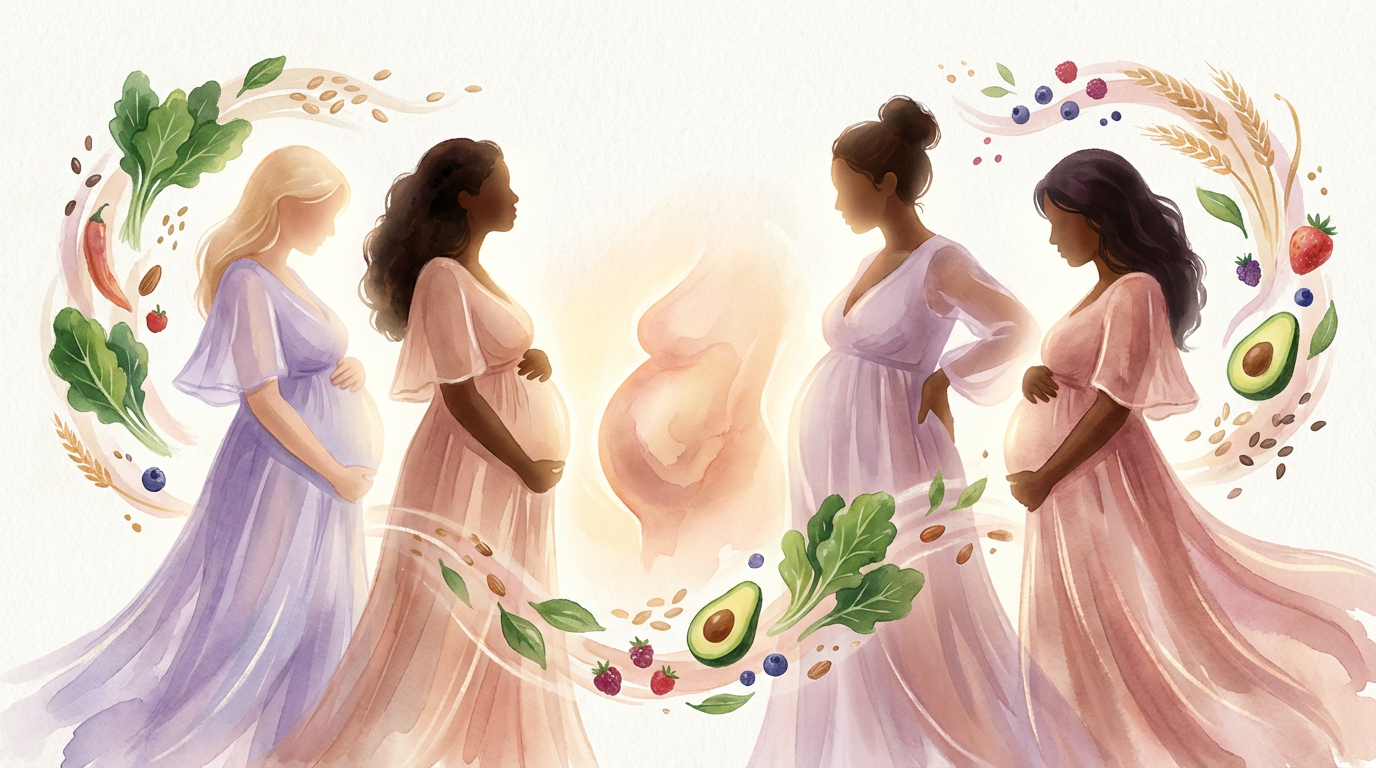
Natural Foods to Nourish Your Body During Pregnancy
Whole, natural foods provide the foundation for a healthy pregnancy. Explore nutrient-dense options that support your changing body and your baby's development, plus practical tips for building nourishing meals throughout your pregnancy.
Listen to this article
~15 min listen
Click play to generate audio narration with a calming voice
Natural Foods to Nourish Your Body During Pregnancy
Your body is performing the extraordinary work of creating new life. Fueling it with whole, nutrient-dense natural foods provides the building blocks your baby needs while supporting your own health throughout pregnancy.
The Power of Whole Foods During Pregnancy
Natural, minimally processed foods offer superior nutrition compared to their processed counterparts. Whole foods provide essential vitamins and minerals in their most bioavailable forms, contain beneficial fiber for digestive health, offer natural energy without blood sugar spikes, and support optimal fetal brain and organ development.
Essential Nutrients and Their Natural Sources
Folate-Rich Foods
Folate (vitamin B9) is crucial for preventing neural tube defects and supporting rapid cell growth. Excellent natural sources include dark leafy greens like spinach and kale, legumes including lentils and chickpeas, asparagus and broccoli, and avocados. Aim for 400-600 mcg daily from food plus your prenatal supplement.
Iron for Blood Volume
Your blood volume increases by 50% during pregnancy, requiring significant iron intake. Choose lean red meat and poultry, leafy green vegetables, fortified whole grain cereals, and dried fruits like apricots and figs. Pair iron-rich foods with vitamin C sources for better absorption.
Calcium and Vitamin D
These nutrients work together to build your baby's bones and teeth. Prioritize dairy products like yogurt and cheese, fortified plant-based milk alternatives, sardines with bones, almonds and sesame seeds, and safe sun exposure for vitamin D. Target 1000 mg calcium daily.
Omega-3 Fatty Acids
Critical for fetal brain and eye development, omega-3s come from wild-caught salmon and other fatty fish, chia seeds and flaxseeds, walnuts, and omega-3 fortified eggs. Aim for two servings of low-mercury fish weekly.
First Trimester: Managing Nausea Through Food
Gentle, Digestible Options
Combat morning sickness with whole grain crackers and toast, ginger tea or crystallized ginger, bananas and applesauce, small frequent meals, and cold foods that don't have strong odors. Listen to your body and eat what you can tolerate.
Hydration Strategies
Staying hydrated is crucial but can be challenging with nausea. Try coconut water for natural electrolytes, herbal teas like peppermint, water-rich fruits like watermelon and cucumber, small sips throughout the day, and ice chips if plain water is unappealing.
Second Trimester: Building Strength
Protein-Packed Meals
As your baby grows rapidly, protein needs increase. Include eggs (fully cooked), Greek yogurt, quinoa and ancient grains, nuts and nut butters, and legumes like black beans and chickpeas. Aim for 70-100 grams of protein daily in the second and third trimesters.
Energy-Sustaining Carbohydrates
Choose complex carbohydrates that provide sustained energy without blood sugar crashes. Prioritize oatmeal and whole grain bread, sweet potatoes and winter squash, brown rice and wild rice, fresh fruits with fiber, and whole wheat pasta. Balance carbs with protein and healthy fats.
Third Trimester: Preparing for Labor
Foods That May Support Labor
While no food guarantees labor, some may help prepare your body. Consider dates (6 daily in late pregnancy), red raspberry leaf tea, pineapple (contains bromelain), and spicy foods if you tolerate them well. Always discuss with your healthcare provider first.
Managing Late Pregnancy Discomforts
Certain foods can alleviate common third-trimester issues. For heartburn, eat smaller frequent meals and avoid triggers like citrus and tomatoes. For constipation, increase fiber from fruits, vegetables, and whole grains plus adequate water. For swelling, reduce sodium and increase water-rich foods.
Superfoods for Pregnancy
Eggs
Nature's perfect protein package contains choline for fetal brain development, high-quality protein for tissue growth, vitamin D for calcium absorption, and B vitamins for energy metabolism. Choose organic when possible and cook thoroughly.
Berries
Packed with antioxidants, vitamin C, and fiber, berries support immune function and combat inflammation. Blueberries, strawberries, raspberries, and blackberries are all excellent choices. Add to yogurt, oatmeal, or smoothies.
Leafy Greens
Spinach, kale, Swiss chard, and other greens provide folate, iron, calcium, vitamin K, and antioxidants. Eat raw in salads, sautéed as side dishes, or blended into smoothies for concentrated nutrition.
Legumes
Beans, lentils, and chickpeas offer plant-based protein, fiber, iron, folate, and complex carbohydrates. They're budget-friendly, versatile, and filling. Try them in soups, salads, or as meat alternatives.
Building Balanced Pregnancy Meals
The Pregnancy Plate Formula
Create nourishing meals with 1/4 plate lean protein, 1/4 plate whole grains or starchy vegetables, 1/2 plate non-starchy vegetables and fruits, plus a serving of healthy fats and calcium-rich foods. This formula ensures balanced nutrition at every meal.
Sample Daily Menu
Start your day with overnight oats with berries, nuts, and chia seeds. For a morning snack, enjoy Greek yogurt with granola. Lunch could be a quinoa bowl with roasted vegetables, chickpeas, and tahini dressing. Have an afternoon snack of apple slices with almond butter, then finish with a dinner of baked salmon, sweet potato, and sautéed greens, followed by an evening snack of herbal tea with whole grain crackers and cheese.
Foods to Limit or Avoid
While focusing on nourishing foods, be aware of pregnancy safety concerns. Limit high-mercury fish like swordfish and king mackerel, unpasteurized dairy and juices, raw or undercooked eggs and meat, and deli meats unless heated until steaming. Avoid alcohol completely and limit caffeine to 200mg daily. When in doubt, ask your healthcare provider.
Practical Shopping and Preparation Tips
Smart Grocery Shopping
Shop the perimeter where fresh foods live, buy seasonal produce for best quality and value, choose organic for the "dirty dozen" when possible, read labels to avoid unnecessary additives, and batch cook and freeze meals for later. Planning ahead makes healthy eating sustainable.
Quick Pregnancy-Friendly Recipes
Keep meal prep simple with smoothie bowls (blend frozen berries, banana, spinach, and top with granola and nuts), sheet pan dinners (roast protein and vegetables together), overnight oats (prep several jars for the week), and veggie-packed stir-fries (use pre-cut vegetables for speed).
Conclusion
Nourishing your body with natural, whole foods during pregnancy is one of the most loving things you can do for yourself and your baby. Focus on variety, listen to your body's hunger and fullness cues, and remember that perfection isn't the goal—consistent, nourishing choices are what matter most.
Cite this article
PERIODiQ Editorial Team (2025). "Natural Foods to Nourish Your Body During Pregnancy." PERIODiQ. https://periodiq.app/library/pregnancy-nourishing-foods
"Natural Foods to Nourish Your Body During Pregnancy." PERIODiQ, 2025, https://periodiq.app/library/pregnancy-nourishing-foods.
Send this to a friend — PERIODiQ is free for them too. No card. No paywall.
Loved this? Save articles, track your cycle, and unlock meditations — free forever.
Disclaimer: PERIODiQ™ offers general wellness information only. It does not provide medical advice, diagnosis, or treatment. Always speak with a licensed health professional about your health.