
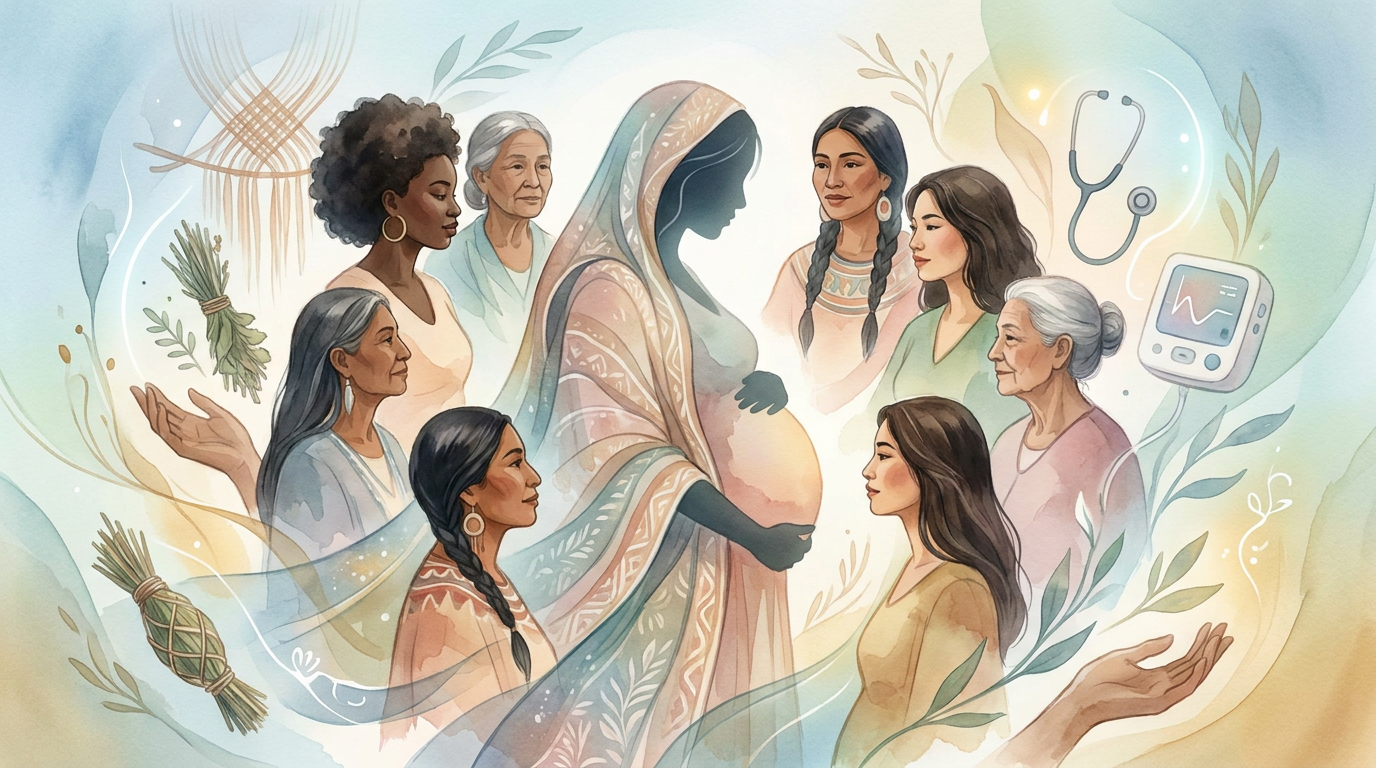
Pregnancy and Birth in Indigenous Traditions: Modern Care Alongside Ancestral Practice
Integrating indigenous pregnancy traditions with modern medical care offers a holistic approach to maternal health, honoring cultural wisdom while ensuring clinical safety. This fusion supports the physical, emotional, and spiritual well-being of Indigenous parents and their babies, fostering a culturally resonant birthing experience. It emphasizes community support, traditional knowledge, and respect for ancestral practices throughout the journey.
Listen to this article
~24 min listen
Click play to generate audio narration with a calming voice
TL;DR Summary
- •Integrating indigenous pregnancy traditions with contemporary medical practices creates a holistic, culturally safe birthing experience for Indigenous families.
- •Ancestral knowledge, including traditional foods, ceremonies, and community support, is vital for the physical, emotional, and spiritual well-being of expectant parents.
- •Respectful collaboration between healthcare providers and Indigenous communities is crucial for ensuring equitable, culturally competent care that honors First Nations birthing practices and sovereignty.
Pregnancy and Birth in Indigenous Traditions: Modern Care Alongside Ancestral Practice
Integrating indigenous pregnancy traditions with modern medical care offers a deeply holistic and culturally affirming approach to maternal health, prioritizing the well-being of Indigenous parents and their babies by weaving ancestral wisdom into contemporary healthcare frameworks. This approach acknowledges that health is not merely the absence of disease but a state of balance encompassing physical, emotional, spiritual, and community dimensions, deeply rooted in land, language, and cultural identity. For Indigenous peoples, pregnancy and birth are sacred journeys, often viewed as a continuum of life, deeply connected to the Earth and ancestral spirits. The historical context of colonization, which often disrupted traditional birthing practices and removed Indigenous women from their communities for hospital births, underscores the critical importance of reclaiming and revitalizing these ancestral ways while ensuring access to safe, evidence-based modern medical care. This article explores how these two vital systems can respectfully and effectively coexist, supporting a culturally rich and clinically sound pregnancy and birthing experience.
What Are Indigenous Pregnancy Traditions and Their Significance?
Indigenous pregnancy traditions encompass a diverse range of practices, beliefs, and ceremonies passed down through generations, reflecting the unique cultural heritage of various Indigenous nations worldwide. These traditions are profoundly significant because they connect expectant parents and their babies to their ancestral lineage, community, and land, fostering a sense of identity, belonging, and spiritual strength. For example, First Nations birthing practices often involve specific ceremonies, dietary guidelines, the use of traditional medicines, and the integral role of elders and knowledge keepers. These practices are not merely rituals; they are comprehensive health systems that address the holistic needs of the pregnant individual, preparing them for childbirth and parenthood within a cultural framework that has sustained their communities for millennia. The significance lies in their ability to provide culturally safe spaces, emotional support, and spiritual guidance that Western medicine often overlooks, contributing to a sense of empowerment and well-being.
Traditional knowledge systems view pregnancy as a powerful, transformative period for the individual, their family, and the entire community. The focus extends beyond the physical act of birth to the spiritual preparation, the strengthening of family bonds, and the teaching of cultural values to the new generation. For example, in many Indigenous cultures, specific songs, stories, and teachings are shared with the pregnant person and their partner to instill courage, wisdom, and connection. The act of bringing a new life into the world is often seen as a community responsibility, with aunties, grandmothers, and other community members playing active roles in supporting the expectant family. This collective care model stands in contrast to more individualized Western approaches, highlighting the importance of social and cultural determinants of health in Indigenous contexts. Revitalizing these traditions is a form of cultural reclamation and resistance against historical attempts to erase Indigenous identities.
How Do Traditional Birthing Practices Support Holistic Well-being?
Traditional birthing practices inherently support holistic well-being by addressing the physical, emotional, spiritual, and social dimensions of pregnancy and childbirth, moving beyond a purely biomedical model. These practices often involve a deep connection to the land, traditional foods, ceremonial practices, and the unwavering support of family and community, all of which contribute to a sense of balance and harmony. For instance, Māori hapū tikanga (Māori pregnancy customs) emphasize the spiritual connection between the mother, baby, ancestors, and the natural world, often involving karakia (prayers/incantations) and specific practices to ensure a safe passage. The use of traditional midwifery, often by skilled and respected elders, provides continuous, personalized care that integrates cultural understanding with practical support.
Physically, traditional practices often include specific herbal remedies for common pregnancy discomforts, traditional massage techniques, and dietary guidance based on locally sourced, nutrient-dense foods. Emotionally and spiritually, ceremonies, storytelling, and community gatherings provide spaces for sharing fears, hopes, and wisdom, reducing isolation and fostering emotional resilience. The presence of birth companions, often female relatives or traditional birth attendants, offers continuous emotional and physical support during labor, creating a calm and familiar environment. Socially, these practices reinforce community ties and intergenerational knowledge transfer, ensuring that the new parents are welcomed into an existing network of support and guidance. This holistic framework is designed to empower the birthing person, instilling confidence and connection to their cultural heritage, which has been shown to positively impact birth outcomes and parental well-being.
What Is the Role of Community and Elders in Indigenous Birthing?
The role of community and elders in Indigenous birthing is foundational and deeply integrated, serving as the backbone of support, knowledge, and spiritual guidance throughout the entire pregnancy and postpartum journey. Elders, as knowledge keepers and respected members of the community, transmit ancestral wisdom, traditional healing practices, and cultural protocols related to pregnancy, birth, and parenting. Their presence offers a sense of continuity, cultural safety, and spiritual strength, often acting as mentors and guides for expectant parents. For example, in many Indigenous communities, elders might share specific stories, songs, or prayers meant to protect the mother and child, or provide guidance on traditional parenting practices.
Community involvement extends to practical support, such as preparing traditional foods, helping with household duties, and providing childcare for older siblings, allowing the birthing person to focus on rest and recovery. This collective approach to care, often absent in Western medical models, mitigates the isolation many new parents experience. The concept of aboriginal birthing on country exemplifies this deep connection, where birth occurs on ancestral lands, often with the support of family and community, reinforcing the spiritual ties to the land and cultural identity. This practice is not just about location; it's about reclaiming sovereignty over birth and ensuring that new life is welcomed into a culturally rich and supportive environment. The community acts as a protective shield, nurturing both the physical and spiritual aspects of the birthing family, and ensuring the healthy integration of the new baby into the cultural fabric.
How Can Modern Healthcare Respectfully Integrate Indigenous Practices?
Modern healthcare can respectfully integrate Indigenous practices by adopting a framework of cultural humility, active listening, and genuine collaboration, moving beyond mere cultural sensitivity to a deeper understanding and respect for Indigenous worldviews and sovereignty. This integration requires healthcare providers to acknowledge the historical trauma Indigenous communities have experienced with Western medical systems and to actively work towards building trust through culturally safe care. Key steps include the employment of Indigenous healthcare professionals, the establishment of Indigenous-led birthing centers, and the implementation of cultural competency training for all staff.
One effective approach is the creation of co-designed care plans that incorporate both Western medical recommendations and Indigenous preferences, such as traditional birthing positions, the presence of traditional birth attendants or elders, and the use of traditional medicines alongside conventional treatments. For example, a birthing plan could include routine prenatal check-ups by an obstetrician while also scheduling visits with a traditional healer or elder for spiritual guidance and traditional remedies. Facilitating First Nations birthing experiences often means supporting families who wish to birth in their communities or on country, which may require flexible hospital policies, transportation assistance, and partnerships with community health organizations. Furthermore, ensuring access to interpreters, culturally appropriate educational materials, and respectful communication styles are vital. This collaborative model recognizes Indigenous knowledge as a legitimate and valuable healthcare system, not merely as an add-on, thereby empowering Indigenous families to make informed decisions about their care in a way that honors their heritage.
What Are the Benefits of a Dual Approach to Pregnancy and Birth?
A dual approach, integrating both Indigenous pregnancy traditions and modern medical care, offers numerous benefits that contribute to superior maternal and infant health outcomes, as well as enhanced cultural well-being. This synergistic model provides the best of both worlds: the clinical safety and advanced interventions of Western medicine combined with the holistic, culturally affirming, and deeply supportive aspects of ancestral practices. The primary benefit is improved health equity, ensuring Indigenous families receive care that is not only medically sound but also culturally relevant and respectful, addressing historical disparities and fostering trust in healthcare systems.
From a physical health perspective, access to modern prenatal screening, emergency obstetric care, and evidence-based interventions can significantly reduce risks associated with pregnancy and childbirth. Simultaneously, the inclusion of traditional diets, herbal remedies, and stress-reducing ceremonies can complement these medical interventions, promoting overall well-being and potentially reducing the need for certain medical interventions. Emotionally and spiritually, this dual approach empowers expectant parents by validating their cultural identity and providing a sense of control over their birthing journey. The presence of cultural supports, such as elders and traditional birth attendants, can reduce anxiety, increase feelings of safety, and enhance the spiritual significance of birth. For the baby, being born into a culturally rich environment, surrounded by ancestral practices, helps to establish a strong cultural identity from the very beginning. This comprehensive care model leads to better psychological outcomes for parents, stronger family bonds, and healthier community dynamics, contributing to the revitalization of indigenous pregnancy traditions and improved generational health.
Can Traditional Practices Address Mental Health During Pregnancy?
Yes, traditional practices are profoundly effective in addressing mental health during pregnancy and the postpartum period by providing robust social support, spiritual grounding, and culturally resonant coping mechanisms. In many Indigenous cultures, pregnancy is viewed as a sacred and transformational journey, and traditions are designed to support the expectant parent's emotional and spiritual well-being, reducing stress, anxiety, and the risk of postpartum depression. The communal nature of First Nations birthing and child-rearing means that pregnant individuals are rarely isolated; they are surrounded by a network of family and community members who offer practical and emotional assistance.
Ceremonies, storytelling, and songs often serve as therapeutic tools, providing outlets for emotional expression and connection to ancestral wisdom, which can be incredibly grounding during times of change. The guidance of elders and traditional healers can offer spiritual reassurance and practical advice for navigating emotional challenges. Traditional foods and medicines, often used for their nourishing and balancing properties, can also contribute to mental clarity and emotional stability. For instance, the practice of Māori hapū tikanga emphasizes a holistic approach that includes mental and spiritual preparation, ensuring the expectant parent feels supported and empowered. By fostering a strong sense of identity, belonging, and connection to cultural heritage, these practices build resilience and provide a buffer against the stressors of modern life, offering a powerful antidote to mental health challenges that can arise during pregnancy.
What Are the Challenges and Solutions for Integration?
The integration of Indigenous pregnancy traditions with modern healthcare faces several significant challenges, primarily rooted in systemic inequities, historical trauma, and a lack of cultural understanding within mainstream medical institutions. One major challenge is the pervasive nature of systemic racism and discrimination within healthcare, which can lead to negative experiences for Indigenous patients and erode trust. Another is the legal and policy frameworks that often prioritize biomedical models, making it difficult to fund or formally recognize traditional birthing practices and providers. Logistical challenges, such as geographic barriers for remote communities seeking specialized care or the lack of culturally safe birthing facilities, also hinder effective integration. Furthermore, the risk of cultural appropriation or tokenism, where Indigenous practices are superficially acknowledged without genuine respect or power-sharing, is a constant concern.
Solutions require a multi-faceted approach centered on Indigenous self-determination and co-governance. This includes advocating for policy changes that formally recognize and fund traditional Indigenous birthing practices and midwifery. Building culturally safe healthcare environments through mandatory, comprehensive cultural humility training for all healthcare staff, led by Indigenous educators, is crucial. Establishing Indigenous-led birthing centers and clinics that blend traditional practices with modern medical equipment offers a powerful model for integration. Developing partnerships between hospitals and Indigenous community organizations can facilitate referrals, allow for flexible birthing options like aboriginal birthing on country, and ensure continuity of care that respects cultural protocols. Most importantly, empowering Indigenous communities to lead the design and delivery of their own maternal health services is paramount, shifting from a model of consultation to one of true collaboration and shared decision-making, thereby ensuring that integration is respectful, authentic, and beneficial.
Benefits by Life Stage
While the primary focus of this article is pregnancy and birth, it's important to acknowledge that the principles of integrating ancestral practices with modern care can benefit women across various life stages. The holistic approach inherent in indigenous pregnancy traditions is applicable to a broader spectrum of women's health needs.
Menstrual Health (periods, cramps, PMS)
Integrating traditional Indigenous knowledge can offer valuable perspectives and practices for menstrual health. Many Indigenous cultures have specific teachings, ceremonies, and herbal remedies associated with menstruation, viewing it as a sacred time of introspection and power rather than a burden. Traditional diets, often rich in whole, natural foods, can help regulate hormones and reduce inflammation, alleviating cramps and PMS symptoms. The communal support and wisdom shared by elders can provide emotional and spiritual comfort during menstruation, reframing the experience from discomfort to a natural, celebrated part of a woman's cycle. Modern care can complement this by offering diagnostic tools for underlying conditions like endometriosis, while traditional practices empower women to connect more deeply with their bodies and cycles.
Fertility Journey (TTC, ovulation, conception)
For those on a fertility journey, traditional Indigenous practices can offer profound support, both physically and spiritually. Many cultures have specific ceremonies, plant medicines, and dietary recommendations aimed at enhancing fertility and preparing the body for conception. The emphasis on spiritual connection to land and ancestors can reduce stress and emotional burden often associated with trying to conceive. Traditional healers might offer guidance on balancing the body's energy and addressing blockages, which can work in tandem with Western fertility treatments like ovulation tracking or IVF. The holistic approach ensures that not only the physical aspects of fertility are addressed, but also the emotional and spiritual readiness for parenthood, fostering a sense of peace and hope.
Pregnancy (trimesters, prenatal care)
As extensively discussed, pregnancy is where the integration of Indigenous traditions truly shines. Throughout the trimesters, traditional practices offer continuous physical, emotional, and spiritual support. Early pregnancy might involve ceremonies for protection and blessing, traditional foods for nourishment, and guidance from elders on preparing for motherhood. Mid-pregnancy often sees continued emphasis on community support, storytelling, and preparing the birthing space. In the third trimester, practices might focus on preparing the body for labor through specific movements, herbal teas, and mental preparation, often guided by traditional birth attendants. Modern prenatal care provides essential medical monitoring, screenings, and interventions when necessary, while traditional practices ensure a culturally safe, empowering, and holistic experience, exemplified by Māori hapū tikanga and aboriginal birthing on country.
Menopause (perimenopause, hormonal changes)
Even in the stage of menopause, Indigenous traditions offer a rich tapestry of support. Historically, menopause was often viewed as a transition into a new phase of wisdom and leadership within the community, rather than a decline. Traditional teachings might involve specific ceremonies to honor this transition, herbal remedies to alleviate symptoms like hot flashes, and dietary adjustments. The guidance of elders can provide spiritual and emotional support, helping women navigate hormonal changes with grace and embracing their role as matriarchs and knowledge keepers. Modern medicine can offer hormone therapy if desired, but traditional practices provide a holistic framework that values and celebrates this significant life stage, promoting well-being beyond mere symptom management.
Key Takeaways
- •Integration of Indigenous pregnancy traditions and modern medical care provides holistic, culturally safe support for expectant Indigenous families.
- •Traditional practices, including ceremonies, traditional foods, and community support, are crucial for physical, emotional, and spiritual well-being.
- •Elders and community members play vital roles as knowledge keepers and support networks in First Nations birthing practices.
- •Respectful collaboration, cultural humility, and Indigenous-led initiatives are essential for effective integration in modern healthcare settings.
- •A dual approach offers superior health outcomes, cultural affirmation, and empowerment for Indigenous parents and their babies, including practices like Māori hapū tikanga and aboriginal birthing on country.
- •Traditional practices significantly contribute to mental health support during pregnancy and postpartum periods.
- •Addressing systemic challenges through policy reform and Indigenous self-determination is critical for successful integration.
Frequently Asked Questions
Q: What does "culturally safe care" mean in the context of Indigenous pregnancy?
Culturally safe care, in the context of Indigenous pregnancy, means healthcare services that are delivered in a way that respects and validates the cultural beliefs, values, and practices of Indigenous people. It goes beyond cultural sensitivity by actively addressing power imbalances, historical trauma, and systemic racism within healthcare. This involves creating environments where Indigenous families feel respected, understood, and empowered to make decisions about their care in alignment with their cultural heritage, supported by practices such as indigenous pregnancy traditions.
Q: How can I find a traditional birth attendant in my Indigenous community?
To find a traditional birth attendant in your Indigenous community, it is best to connect with local elders, community leaders, or Indigenous health organizations. They can provide guidance on who serves in this role, how to approach them, and what cultural protocols might be involved. Local band offices or tribal councils often have resources or can direct you to knowledge keepers who can help facilitate these connections, ensuring you respect community structures for First Nations birthing.
Q: Are traditional Indigenous herbal medicines safe to use during pregnancy alongside Western medicine?
Traditional Indigenous herbal medicines can be safe and effective when used knowledgeably, but it is crucial to consult with both a traditional healer or knowledge keeper and your Western medical provider. Some herbs may interact with prescription medications or have effects that are not recommended during pregnancy. Open communication between your traditional healers and medical team is vital to ensure safety and avoid potential contraindications, especially when integrating practices like those in Māori hapū tikanga.
Q: What is "birthing on country" and why is it important for Aboriginal communities?
"Birthing on country" refers to the practice of Aboriginal women giving birth on their ancestral lands, often within their communities and supported by family and traditional birth attendants. This practice is profoundly important because it reconnects women and babies to their cultural heritage, land, and community, reinforcing identity and spiritual well-being. It is a reclamation of sovereignty over birth, counteracting the historical trauma of forced removal from traditional birthing practices and fostering stronger cultural ties and positive health outcomes for aboriginal birthing on country.
Q: How can non-Indigenous healthcare providers offer culturally competent care for Indigenous pregnant individuals?
Non-Indigenous healthcare providers can offer culturally competent care by engaging in continuous cultural humility, actively listening to and respecting the preferences of Indigenous patients, and educating themselves on the specific traditions and histories of the Indigenous communities they serve. This includes acknowledging historical trauma, building trust, advocating for Indigenous-led care models, and being open to collaborating with traditional healers and elders. Prioritizing Indigenous voices and perspectives in care planning is fundamental.
Q: Can Indigenous pregnancy traditions help with postpartum recovery?
Absolutely. Indigenous pregnancy traditions often include extensive postpartum care practices designed to support the new parent's physical, emotional, and spiritual recovery. This can involve specific diets, herbal remedies, massage, and dedicated rest periods. The community plays a vital role in providing practical support like preparing meals and childcare, allowing the birthing person to focus on healing and bonding with their baby, contributing to a holistic and supported postpartum experience.
Q: Where can I find more resources on integrating Indigenous birthing practices into modern care?
For more resources on integrating Indigenous birthing practices into modern care, look for organizations like the National Council of Urban Indian Health, Indigenous doula networks, tribal health departments, and academic institutions with Indigenous health programs. Many Indigenous-led health centers and community organizations are at the forefront of this work and can provide valuable information, support, and connections to local resources and knowledge keepers.
Start Your Wellness Journey Today
Ready to track your cycle, fertility, pregnancy, or menopause journey? Download PERIODiQ - your iQ-powered wellness companion designed for every stage of your health journey.
Get PERIODiQ Free: https://periodiq.app
Your Wellness Journey Starts Here
Download PERIODiQ
Scan the QR code or tap the link to get started with your personalized health tracking.
periodiq.app • iOS & Android
Cite this article
PERIODiQ Editorial Team (2026). "Pregnancy and Birth in Indigenous Traditions: Modern Care Alongside Ancestral Practice." PERIODiQ. https://periodiq.app/library/pregnancy-and-birth-in-indigenous-traditions-modern-care-alongside-ancestral-practice
"Pregnancy and Birth in Indigenous Traditions: Modern Care Alongside Ancestral Practice." PERIODiQ, 2026, https://periodiq.app/library/pregnancy-and-birth-in-indigenous-traditions-modern-care-alongside-ancestral-practice.
Send this to a friend — PERIODiQ is free for them too. No card. No paywall.
Loved this? Save articles, track your cycle, and unlock meditations — free forever.
Disclaimer: PERIODiQ™ offers general wellness information only. It does not provide medical advice, diagnosis, or treatment. Always speak with a licensed health professional about your health.