
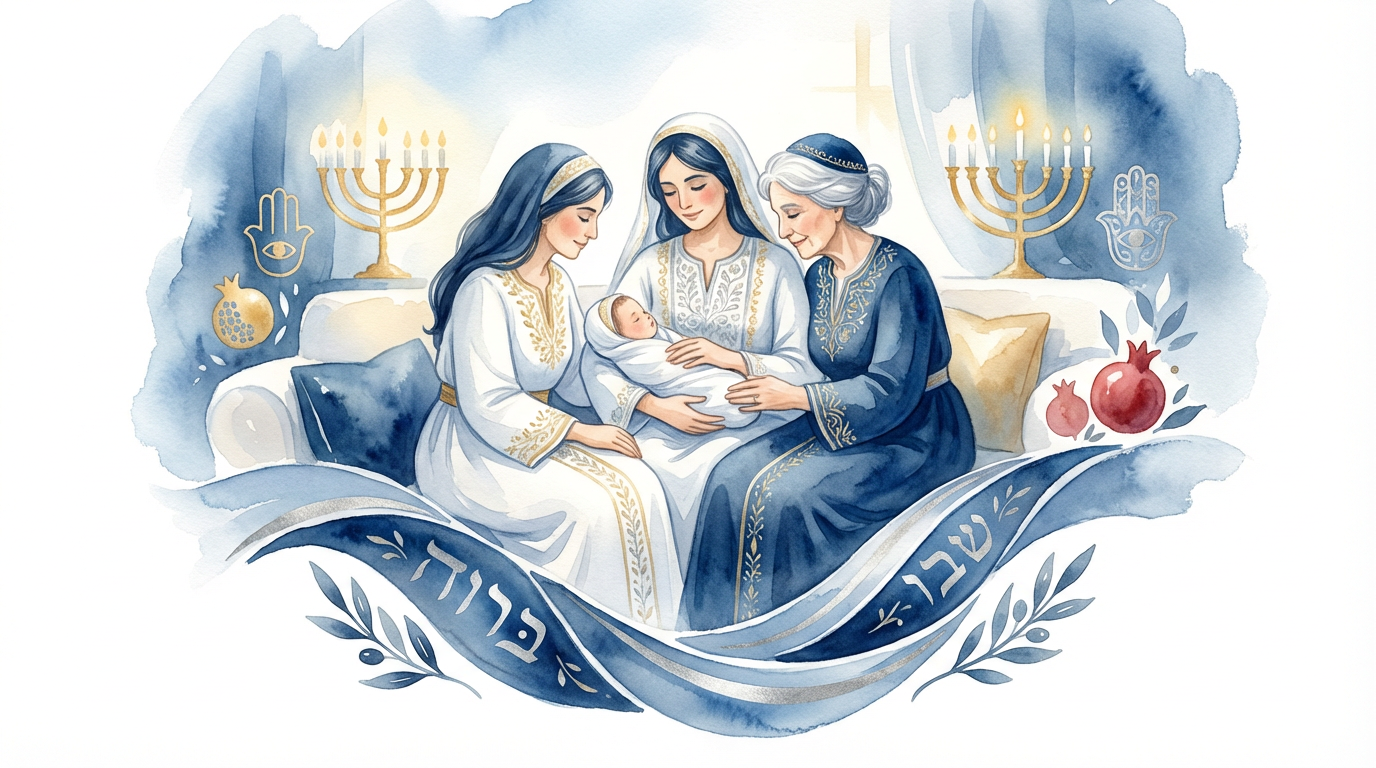
Postpartum Care in Jewish Tradition
Jewish tradition offers a profound and holistic approach to postpartum care, emphasizing rest, nourishment, community support, and spiritual well-being for the new mother. This comprehensive guide explores ancient wisdom and modern applications to ensure a gentle and supported transition into motherhood.
Listen to this article
~17 min listen
Click play to generate audio narration with a calming voice
TL;DR Summary
- •Jewish postpartum traditions prioritize the new mother's physical recovery, emotional well-being, and spiritual reconnection through a community-centric approach.
- •Key elements include dedicated rest (Shabbat for the mother), nourishing foods, practical household support, and a focus on intimacy and family bonding.
- •These ancient practices offer invaluable lessons for modern postpartum care, advocating for a village approach to support mothers during a vulnerable and transformative period.
Introduction: How Does Jewish Tradition Approach Postpartum Care?
Jewish tradition, rich in its emphasis on family, community, and the sanctity of life, offers a remarkably comprehensive and empathetic framework for postpartum care. Far from being an afterthought, the period following childbirth – often referred to as the 'puerperium' or 'niddah' period in a broader sense – is recognized as a sacred and crucial time for the new mother's physical, emotional, and spiritual recovery. This ancient wisdom, rooted in millennia of practice and enshrined in Jewish law (Halakha) and custom (Minhag), understands implicitly what modern science is only now fully appreciating: that the health and well-being of the mother are paramount for the health and well-being of the entire family. It’s a philosophy that champions dedicated rest, profound nourishment, unwavering community support, and a gentle reintegration into daily life, ensuring a supported and celebrated transition into motherhood.
Unlike many contemporary societies that often leave new mothers feeling isolated and overwhelmed, Jewish tradition builds in a built-in support system. It’s not merely about surviving the postpartum period; it’s about thriving in it, recognizing the immense physical and emotional demands of childbirth and early motherhood. This article will delve into the multifaceted aspects of postpartum care within Jewish tradition, exploring its historical roots, its practical applications, and its enduring relevance for expectant mothers and women planning pregnancy today.
What are the Core Principles of Postpartum Care in Jewish Tradition?
The foundational principles of Jewish postpartum care are deeply intertwined with core Jewish values: Pikuach Nefesh (the sanctity of life), Chesed (loving-kindness), and Shalom Bayit (peace in the home). These values translate into actionable practices designed to protect, nurture, and empower the new mother.
Prioritizing the Mother's Physical Recovery
Jewish law places a significant emphasis on the mother's physical recovery after childbirth. The period immediately following birth is considered a time of vulnerability and intense healing. Just as a woman's body undergoes monumental changes during pregnancy and labor, it requires dedicated time and resources to recover. This isn't just about 'bouncing back'; it's about deep, physiological restoration.
One of the most profound aspects is the concept of niddah, or ritual purity, which applies after childbirth. While primarily a set of laws related to marital intimacy, its practical implications for the postpartum woman are profound. For a minimum of seven days after the birth of a boy and fourteen days after the birth of a girl (with longer periods for certain circumstances), a woman refrains from marital intimacy. During this time, the focus naturally shifts away from conjugal relations and towards healing, rest, and bonding with the newborn. While the primary purpose of niddah is spiritual, its secondary effect is to provide an enforced period of physical recuperation, reducing external demands on the mother and allowing her body to heal without the added physical strain of intimacy.
Beyond niddah, there's a strong cultural emphasis on physical rest. Historically, women were often relieved of household duties for an extended period, sometimes up to 30 days or even 40 days, allowing them to focus solely on their recovery and their newborn. This isn't just about sleeping; it's about minimizing physical exertion, avoiding heavy lifting, and allowing the body's systems to re-regulate after the immense effort of childbirth.
The Importance of Nourishment and Healing Foods
Food plays a central role in Jewish culture, and never more so than during the postpartum period. The tradition understands that proper nutrition is fundamental to healing, energy replenishment, and successful lactation. There’s a strong emphasis on easily digestible, nutrient-dense, and warming foods.
- •Warming Foods: In many Jewish communities, especially those with Eastern European or Middle Eastern roots, there's a belief in 'warming' the mother. This isn't literal temperature, but rather foods believed to restore internal heat and energy, which are thought to be depleted during childbirth. Chicken soup, often referred to as 'Jewish penicillin,' is a quintessential example. Rich in collagen, electrolytes, and easily absorbed nutrients, it’s considered highly restorative. Other warming foods might include stews, cooked grains, and specific spices.
- •Nutrient-Dense Meals: Families and community members often bring meals to the new mother, ensuring she doesn't have to cook. These meals are typically wholesome, balanced, and designed to support recovery. Think lentil soups, fish, slow-cooked meats, and plenty of vegetables. The focus is on iron, protein, and healthy fats to rebuild strength and support milk production.
- •Hydration: Ample fluids are also crucial, especially for breastfeeding mothers. Herbal teas, often with fenugreek or other galactagogues (milk-producing herbs), are common, as are broths and water.
This communal provision of food alleviates a significant burden from the new parents, allowing them to focus on the baby and the mother’s healing without the added stress of meal preparation.
Community Support: The 'Village' Mentality
Perhaps the most distinctive and impactful aspect of Jewish postpartum care is the unwavering community support. The adage 'it takes a village' is not just a saying; it's a lived reality. From the moment the baby is born, friends, family, and synagogue members rally around the new family.
- •Meal Trains (Chessed Committees): It's common for a 'meal train' to be organized, where different individuals or families sign up to bring a meal each day for a specified period (often 2-4 weeks). This ensures a steady supply of nourishing food without the mother or partner needing to cook.
- •Practical Assistance: Beyond meals, community members offer practical help: watching older children, running errands, cleaning the house, or simply offering a listening ear. This practical support is invaluable, especially for mothers recovering from birth and navigating sleep deprivation.
- •Emotional and Spiritual Support: The community also provides emotional and spiritual solace. Friends visit, offering warmth and companionship. Rabbis and rebbetzins (rabbi's wives) may offer guidance and blessings. This social fabric helps combat feelings of isolation and postpartum depression, creating a sense of belonging and care.
This robust support system is not seen as charity, but as an obligation – a mitzvah (commandment) – to care for fellow community members in need. It fosters a deep sense of connection and mutual responsibility.
Renewing Spiritual Connection and Family Bonding
While focused on physical recovery, Jewish postpartum care also acknowledges the profound spiritual and emotional transformation of motherhood. The birth of a child is a sacred event, and the postpartum period is a time for the family to bond and for the mother to reconnect with her spiritual self.
- •Shabbat: The sanctity of Shabbat (the Sabbath) takes on new meaning for the new mother. While typically a day of rest from creative work, for a postpartum woman, it extends to a deeper sense of permission to rest, to be served, and to simply be. The spiritual tranquility of Shabbat can be profoundly healing.
- •Blessings and Prayers: Prayers of thanksgiving and blessings for the new child and mother are common. These rituals help frame the experience within a spiritual context, acknowledging the miracle of life and offering gratitude.
- •Family Inclusion: The birth of a child is a family affair. Older siblings are often involved in welcoming the new baby, helping to foster family unity and ease the transition for everyone.
How Do Jewish Traditions Address Specific Postpartum Challenges?
Jewish tradition, through its holistic approach, inherently addresses many of the common challenges faced by new mothers.
Battling Exhaustion and Sleep Deprivation
The emphasis on rest and community support directly combats exhaustion. By having meals prepared and household chores managed, the mother is freed up to sleep when the baby sleeps, and to prioritize her own rest. There's an understanding that sleep is not a luxury but a necessity for healing and good mental health. The niddah period, by temporarily removing the demands of spousal intimacy, further encourages undisturbed rest.
Supporting Breastfeeding and Lactation
While not explicitly mandated by Halakha, breastfeeding is highly encouraged and revered in Jewish thought as a natural and beneficial act. The focus on nourishing foods, particularly broths and hydrating drinks, directly supports lactation. Furthermore, the community support system allows the mother to focus on establishing breastfeeding without the added stress of daily chores. In some communities, experienced mothers offer guidance and support to new mothers struggling with breastfeeding, sharing practical tips and emotional encouragement.
Addressing Emotional Well-being and Postpartum Depression
The robust community network is a powerful buffer against postpartum depression (PPD) and anxiety. The constant presence of supportive individuals, the practical help, and the freedom from immediate responsibilities reduce stress and feelings of isolation – key risk factors for PPD. The emphasis on spiritual connection can also provide a sense of purpose and comfort during a time of intense emotional fluctuation. While PPD was not formally recognized in ancient times, the traditional practices inherently create an environment that promotes mental well-being and provides a safety net for mothers experiencing emotional distress.
Reintegrating into Daily Life and Intimacy
The niddah period, while initially a time of separation, also serves as a structured reintegration. At its conclusion, often marked by a visit to the mikvah (ritual bath), the woman symbolically and spiritually re-enters a state of ritual purity, signifying her healing and readiness to resume marital intimacy and full participation in community life. This structured transition provides a clear demarcation, allowing the mother to focus solely on healing before being expected to resume all pre-birth roles. It acknowledges that resuming intimacy is a gradual process and provides a built-in pause.
Modern Applications: Bringing Ancient Wisdom to Contemporary Motherhood
The timeless wisdom of Jewish postpartum care offers profound lessons for all expectant mothers and those planning pregnancy, regardless of their religious background. These principles can be adapted and integrated into modern life to create a more supportive and nurturing postpartum experience.
1. Build Your Village BEFORE the Baby Arrives
- •Proactive Planning: Don't wait until after birth to seek help. Discuss with your partner, family, and close friends how they can support you. Create a 'postpartum plan' that outlines who will help with meals, childcare for older children, errands, and house cleaning.
- •Meal Train Coordination: Utilize online tools to organize a meal train. Delegate a friend or family member to be the coordinator. Specify dietary preferences or restrictions.
- •Identify Key Supporters: Think about who you can lean on for emotional support, practical help, or just a friendly visit. Don't be afraid to ask for specific help.
2. Prioritize Rest and Healing Above All Else
- •'Mother the Mother': Embrace the idea that your primary job in the first few weeks is to heal and bond with your baby. Everything else can wait. Let go of the need for a perfectly clean house or to entertain guests.
- •Sleep When the Baby Sleeps: This classic advice is easier said than done, but crucial. Ask your partner, family, or a trusted friend to take the baby for a few hours so you can get uninterrupted sleep.
- •Limit Visitors: While community is important, too many visitors can be overwhelming. Set boundaries. Don't feel obligated to host or entertain. It's okay to say 'no' or to suggest a later date.
3. Embrace Nourishing Foods for Recovery
- •Prepare in Advance: Before birth, stock your freezer with nutrient-dense, easy-to-reheat meals. Think soups, stews, casseroles, and lactation-friendly snacks.
- •Accept All Offers of Food: Politely accept meals from friends and family. This is not a time to be shy or proud.
- •Focus on Whole Foods: Prioritize protein, healthy fats, complex carbohydrates, and plenty of fruits and vegetables. Stay hydrated with water, broths, and herbal teas.
4. Lean on Your Community and Don't Be Afraid to Ask for Help
- •Communicate Your Needs: People often want to help but don't know how. Be specific: 'Could you please pick up groceries?' or 'Could you watch the baby for an hour so I can shower?'
- •Delegate Tasks: Empower your partner and other family members to take on significant roles in household management and baby care. This is a shared journey.
- •Connect with New Mother Groups: Find local or online groups for new mothers. Sharing experiences and advice can be incredibly validating and reduce feelings of isolation.
5. Honor Your Emotional and Spiritual Journey
- •Acknowledge the Transformation: Recognize that becoming a mother is a profound identity shift. Allow yourself to feel all the emotions – joy, fear, exhaustion, love – without judgment.
- •Mindfulness and Reflection: Even short moments of mindfulness, prayer, or quiet reflection can help you connect with yourself and your baby. This could be as simple as a few deep breaths while breastfeeding or a quiet walk.
- •Seek Professional Help if Needed: While community support is vital, it's not a substitute for professional medical or mental health care if you suspect you are experiencing postpartum depression or anxiety. Don't hesitate to reach out to your doctor or a therapist.
Key Takeaways
- •Jewish postpartum care is a holistic, community-driven model emphasizing the mother's recovery.
- •Rest, nourishing foods, and practical support are paramount for physical healing and energy replenishment.
- •The 'village' approach provides crucial emotional and practical assistance, combating isolation.
- •Spiritual connection and family bonding are integrated into the postpartum experience.
- •Modern mothers can adapt these ancient principles by proactively building support networks, prioritizing rest, and accepting help.
FAQ Section
Q1: What is the significance of the 'niddah' period in postpartum care?
A1: The niddah period, or ritual purity, applies after childbirth, requiring a woman to refrain from marital intimacy for a minimum of seven days after a boy's birth and fourteen days after a girl's birth (with variations for specific circumstances). While primarily a spiritual law, its practical significance for postpartum care is profound. It provides an enforced period of physical rest and recuperation, allowing the mother's body to heal without the added physical demands of intimacy. It also shifts focus towards the mother's recovery and bonding with the newborn, reducing external pressures during a vulnerable time. The return to the mikvah (ritual bath) at its conclusion symbolizes a spiritual and physical renewal, marking her readiness to fully resume marital relations and community life.
Q2: How long does the traditional Jewish postpartum support typically last?
A2: The duration of traditional Jewish postpartum support varies, but it is generally much longer and more comprehensive than what is often seen in modern Western societies. While the niddah period has specific durations (7-14 days minimum), the broader community support, especially for meals and practical help, often extends for 2-4 weeks, and sometimes even longer, depending on the family's needs and community customs. Historically, mothers might have been relieved of major household duties for up to 30 or even 40 days. The underlying principle is to ensure the mother is fully recovered and integrated before resuming all previous responsibilities, emphasizing a gradual transition rather than an immediate return to normalcy.
Q3: Are there specific foods or recipes recommended in Jewish tradition for postpartum recovery?
A3: Yes, there's a strong emphasis on easily digestible, nutrient-dense, and 'warming' foods. Chicken soup, often called 'Jewish penicillin,' is a quintessential example, valued for its restorative properties, rich in collagen, and electrolytes. Other common recommendations include hearty stews, slow-cooked meats, lentils, cooked grains like farro or barley, and plenty of vegetables. Hydration is key, with broths and herbal teas (sometimes with galactagogues like fenugreek) being popular. The focus is on foods that replenish iron, protein, and healthy fats, supporting healing, energy levels, and milk production, while avoiding overly spicy or 'cold' foods that might be perceived as depleting.
Q4: How does Jewish tradition address emotional well-being and potential postpartum depression?
A4: While the term 'postpartum depression' is modern, Jewish tradition inherently creates a robust support system that acts as a powerful buffer against isolation and emotional distress – key risk factors for PPD. The constant presence of community members offering practical help (meals, childcare, errands) significantly reduces stress and feelings of overwhelm. The emphasis on rest allows for better emotional regulation, and the spiritual framework often provides comfort and meaning during a transformative time. Furthermore, the strong social fabric ensures that a new mother is rarely alone, providing a built-in network for emotional check-ins and support, which can help identify and mitigate emotional struggles early on. Seeking professional medical or mental health help, if needed, is also encouraged within a Jewish framework, as Pikuach Nefesh (saving a life) extends to mental health.
Q5: Can non-Jewish expectant mothers apply these traditional Jewish postpartum practices?
A5: Absolutely! The core principles of Jewish postpartum care are universal and beneficial for any new mother, regardless of religious background. The emphasis on dedicated rest, nutrient-dense foods, building a strong community support system, and allowing for a gentle transition into motherhood are all evidence-based practices that promote optimal maternal recovery and well-being. Non-Jewish expectant mothers can proactively plan for a 'village' of support (friends, family, neighbors, hired help), prepare freezer meals, prioritize sleep, and communicate their needs openly. The essence is to create an environment where the mother is nurtured and supported, allowing her to focus on healing and bonding with her baby, which is a goal shared by all new parents.
Cite this article
PERIODiQ Editorial Team (2026). "Postpartum Care in Jewish Tradition." PERIODiQ. https://periodiq.app/library/postpartum-care-in-jewish-tradition
"Postpartum Care in Jewish Tradition." PERIODiQ, 2026, https://periodiq.app/library/postpartum-care-in-jewish-tradition.
Send this to a friend — PERIODiQ is free for them too. No card. No paywall.
Loved this? Save articles, track your cycle, and unlock meditations — free forever.
Disclaimer: PERIODiQ™ offers general wellness information only. It does not provide medical advice, diagnosis, or treatment. Always speak with a licensed health professional about your health.