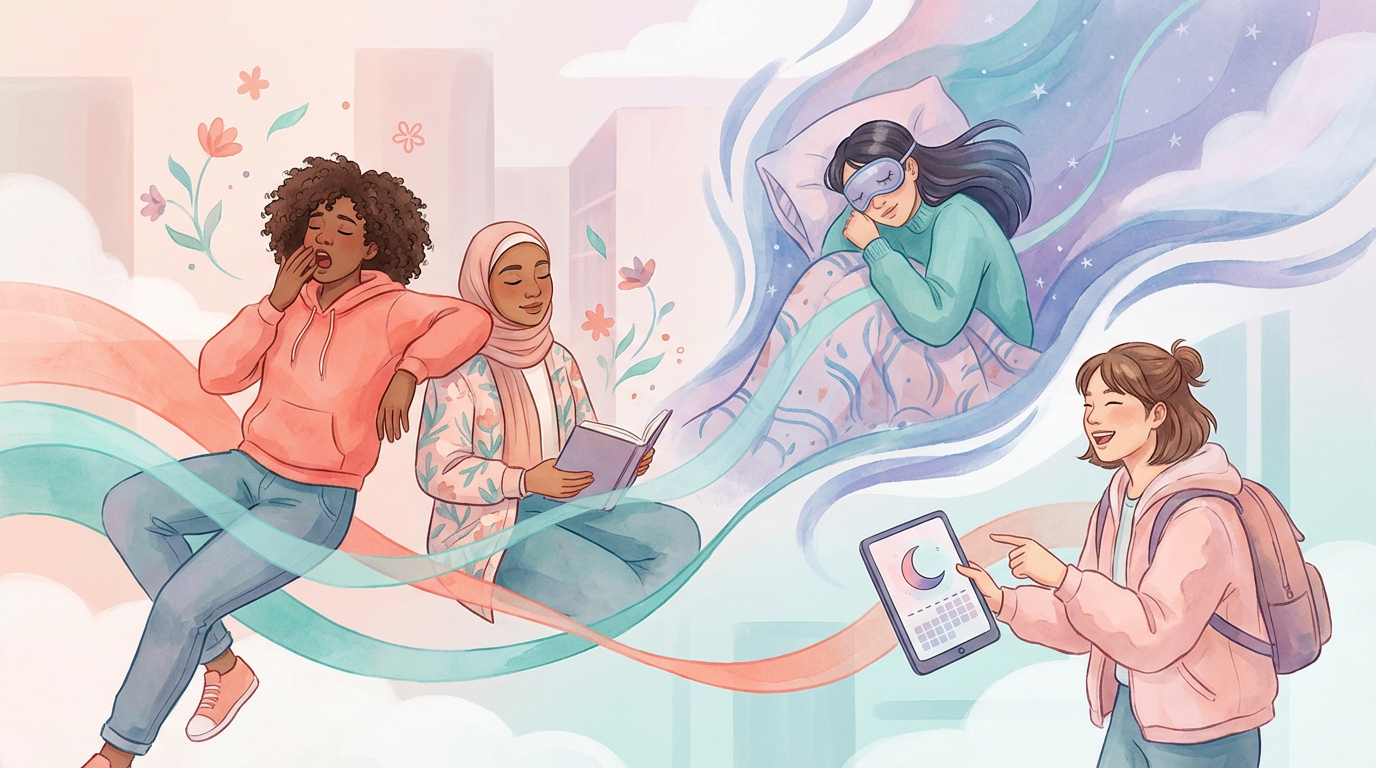
Period Fatigue: Why You're So Tired During Your Cycle
Feeling super sleepy before or during your period is totally normal! Hormonal changes, especially progesterone shifts, can mess with your sleep and energy levels. Understanding your cycle helps you manage period fatigue better.
Listen to this article
~13 min listen
Click play to generate audio narration with a calming voice
TL;DR Summary
- •Hormones are the Boss: Fluctuations in estrogen and progesterone throughout your menstrual cycle are the main reason you might feel extra sleepy or have trouble sleeping at different times.
- •Progesterone's Role: After ovulation, rising progesterone can make you feel drowsy, but its sudden drop right before your period can disrupt sleep, leading to tired before period feelings.
- •Listen to Your Body: Understanding your unique teen sleep cycle and how it links to your period helps you plan for rest and manage period fatigue effectively.
Why Are You So Tired Some Weeks? Your Period & Sleep Explained
Ever feel like you could sleep for a year straight right before your period, or suddenly find yourself tossing and turning even when you're exhausted? You're definitely not alone! Many teens experience significant changes in their energy levels and sleep patterns throughout their menstrual cycle. This isn't just you being "lazy" or imagining things – it's your hormones at work, influencing everything from how deeply you sleep to how much energy you have during the day. Understanding these natural shifts can help you feel more in control and less frustrated when period fatigue kicks in.
What's Actually Happening Inside Your Body?
Your menstrual cycle is like a finely tuned orchestra, with hormones acting as the conductors. The two main hormones we're talking about are estrogen and progesterone. They rise and fall at different times, and these changes directly impact your brain, body temperature, and even how your body handles stress – all of which affect your sleep.
Think of your cycle in roughly four phases:
- •Menstrual Phase (Period Time!): This is when you're bleeding. Both estrogen and progesterone levels are low. You might feel tired from blood loss or discomfort, but sometimes sleep improves as your body prepares for the next phase.
- •Follicular Phase (Post-Period Glow): After your period ends, estrogen starts to rise. Many people report feeling more energetic, focused, and generally better during this phase. Sleep tends to be pretty good here.
- •Ovulatory Phase (Mid-Cycle Peak): Estrogen peaks just before ovulation, and then drops quickly. Some might feel a burst of energy, while others might experience a slight dip.
- •Luteal Phase (Pre-Period Blues & Zzz's): This is the phase after ovulation and before your next period. This is often where the biggest sleep challenges and period fatigue come into play. Progesterone levels rise significantly, and then drop sharply just before your period starts. This fluctuating progesterone is a major player in why you might be tired before period.
How Do Hormones Mess with Your Sleep?
The Progesterone Puzzle: "Sleepy Hormone" or Sleep Disruptor?
Progesterone is often called the "sleepy hormone" because it has sedative-like effects. After you ovulate, your body produces a lot more progesterone. This can make you feel super drowsy during the day and might even make you feel like you're sleeping more deeply at night. Sounds good, right?
Well, not always! While it can make you feel sleepy, rising progesterone can also:
- •Increase Body Temperature: Progesterone causes a slight but noticeable rise in your core body temperature. While a cozy bed is nice, being too warm can make it harder to fall asleep and stay asleep. Your body likes to cool down a bit to initiate sleep. (Source: Lee, J. Y., & Kim, M. K. (2014). Effects of menstrual cycle on sleep and body temperature. Journal of Korean Medical Science, 29(1), 1-6.)
- •Impact REM Sleep: Some research suggests that high progesterone levels can actually reduce the amount of REM (Rapid Eye Movement) sleep you get. REM sleep is super important for learning, memory, and emotional processing. Less REM sleep can leave you feeling less refreshed, even if you're sleeping for many hours.
- •Increase Anxiety/Irritability: For some, the hormonal shifts of the luteal phase can lead to increased anxiety, mood swings, or irritability. These feelings can make it much harder to relax and drift off to sleep, leading to more tired before period symptoms.
Then, just before your period starts, progesterone levels drop dramatically. This sudden drop can be a big shock to your system, throwing off your sleep architecture and contributing to insomnia or restless nights, even though you feel overwhelmingly tired. This is a classic reason for tired before period feelings.
Estrogen's Role: The Energy Booster (Mostly!)
Estrogen generally has an energizing effect. When estrogen levels are high (like in the follicular phase), you might feel more alert, focused, and have more stamina. It also helps regulate your serotonin levels, a neurotransmitter that contributes to feelings of well-being and helps with sleep regulation.
However, the rapid drop in estrogen right before your period, along with progesterone, can also contribute to feelings of fatigue, mood changes, and even headaches, all of which can interfere with quality sleep. (Source: Baker, F. C., & Lee, K. A. (2018). Menstrual cycle effects on sleep. Sleep medicine clinics, 13(3), 313-322.)
The Link Between PMS and Sleep Problems
If you experience Premenstrual Syndrome (PMS) symptoms, you're even more likely to struggle with sleep. PMS symptoms like bloating, cramps, headaches, breast tenderness, and mood changes can be incredibly uncomfortable and make it difficult to find a comfortable position or simply relax enough to fall asleep. The pain and discomfort can wake you up during the night, leading to fragmented sleep and severe period fatigue the next day.
(Research indicates that up to 70% of women report sleep disturbances during the premenstrual phase. Source: Amer, M., & Metwally, A. A. (2018). Sleep disturbances among women with premenstrual syndrome. Journal of Nursing Education and Practice, 8(1), 1-10.)
Other Factors Contributing to Your Teen Sleep Cycle & Tiredness
While hormones are a huge part of the puzzle, other things can make period fatigue even worse:
- •Blood Loss: During your period, especially if it's heavy, you lose iron. Iron deficiency (anemia) can lead to extreme tiredness. Make sure you're eating iron-rich foods or talk to a trusted adult or doctor if you suspect this.
- •Cramps and Discomfort: It's hard to sleep when you're in pain! Cramps, backaches, and headaches can make it nearly impossible to get comfortable and fall asleep.
- •Mood Swings & Anxiety: The hormonal rollercoaster can bring on feelings of anxiety, stress, or sadness, especially in the luteal phase. These emotions can keep your mind racing at night, preventing restful sleep.
- •Lifestyle Choices: Are you staying up late studying or scrolling? Drinking too much caffeine? Not getting enough exercise? These can all impact your teen sleep cycle and worsen tired before period feelings.
- •Food Cravings: Sometimes, we crave sugary or unhealthy foods before our period. While satisfying in the moment, these can lead to blood sugar crashes and disrupt sleep later.
Navigating Sleep Challenges During Your Cycle: Practical Tips for Teens
Understanding why you're tired is the first step. Now, let's talk about what you can do about it!
1. Track Your Cycle 🗓️
This is probably the most important step! Using an app like PERIODiQ can help you learn your unique cycle patterns. When do you feel most energetic? When does period fatigue hit hardest? When do your cramps usually start? Knowing this can help you prepare.
- •Plan Ahead: If you know you're usually tired before period, you can plan lighter activities, schedule less homework, or even tell your parents you might need an earlier bedtime during that week.
- •Identify Triggers: Tracking can help you see if certain foods, stress levels, or activities worsen your sleep issues during specific cycle phases.
2. Prioritize Sleep Hygiene 😴
Good sleep habits are always important, but they're extra crucial when your hormones are trying to throw you off.
- •Consistent Sleep Schedule: Try to go to bed and wake up around the same time every day, even on weekends. This helps regulate your body's natural sleep-wake cycle.
- •Create a Bedtime Routine: About an hour before bed, start winding down. This could include reading a book (not on a screen!), taking a warm bath or shower, listening to calm music, or doing some light stretching.
- •Optimize Your Sleep Environment: Make sure your bedroom is dark, quiet, and cool. Remember that rising body temperature during the luteal phase? Keeping your room cool can counteract that.
- •Limit Screen Time: The blue light from phones, tablets, and computers can interfere with melatonin production, the hormone that tells your body it's time to sleep. Try to put screens away at least an hour before bed.
- •Avoid Caffeine and Heavy Meals: Especially in the afternoon and evening. Caffeine can stay in your system for hours, and a heavy meal right before bed can make digestion work overtime, disrupting sleep.
3. Manage Discomfort & Pain 🩹
If cramps or other PMS symptoms are keeping you awake, address them!
- •Pain Relievers: Over-the-counter pain relievers like ibuprofen (Advil, Motrin) or naproxen (Aleve) can help with cramps and headaches. Always follow dosage instructions and check with a parent or doctor if you're unsure.
- •Heat Therapy: A heating pad or warm bath can do wonders for soothing cramps and relaxing muscles.
- •Gentle Movement: Light exercise like walking or gentle yoga can sometimes help alleviate cramps and improve mood.
4. Fuel Your Body Right 🍎
What you eat plays a big role in your energy levels and sleep quality.
- •Iron-Rich Foods: If you have heavy periods, focus on foods like lean meats, beans, lentils, spinach, and fortified cereals. Vitamin C helps your body absorb iron, so pair them with things like oranges or bell peppers.
- •Balanced Diet: Aim for whole foods, plenty of fruits and vegetables, and healthy fats. This helps keep your blood sugar stable and provides sustained energy.
- •Stay Hydrated: Drink plenty of water throughout the day. Dehydration can contribute to fatigue and headaches.
5. Talk to a Trusted Adult 💬
Don't keep your struggles to yourself! Your parents, school nurse, or another trusted adult can offer support and help you find solutions.
- •Share Your Symptoms: Let them know how your period affects your sleep and energy. They might be able to help you adjust your schedule or seek professional advice if needed.
- •Doctor's Visit: If your period fatigue is severe, your periods are extremely painful, or you're constantly struggling with sleep, it's a good idea to talk to a doctor. They can rule out underlying conditions, discuss pain management options, or suggest ways to regulate your cycle if necessary.
Relatable Scenarios: How Period Fatigue Shows Up
- •School Days: You might find yourself drifting off in class, struggling to focus on homework, or feeling too wiped out to join after-school clubs during your luteal or menstrual phase. "Ugh, I have a big test tomorrow and I can't even keep my eyes open!" 😩
- •Sports & Activities: Normally you're a powerhouse on the field or court, but some weeks, you feel sluggish and can't push yourself. Your energy just isn't there. "Coach, I feel like I'm running in quicksand today." 🏃♀️💨
- •Social Life: Missing out on hangouts or sleepovers because you're just too exhausted to function. Your friends might not understand why you're suddenly so tired. "Sorry, can't make it tonight, I'm literally going to fall asleep standing up." 😴
- •Mood & Emotions: Being tired can make you more irritable, sensitive, or prone to mood swings, which can affect your relationships with friends and family. "Why am I crying over this silly video? I must be exhausted." 😭
Remember, these experiences are valid and often linked to your cycle. It's not just "in your head"! Acknowledging and preparing for these changes can make a huge difference in managing your teen sleep cycle.
The Bottom Line: Be Kind to Yourself
Your body is doing amazing, complex things every month, and it's totally normal for that to impact your energy and sleep. Listen to your body, give yourself permission to rest when you need it, and don't be afraid to ask for help or adjust your schedule. Understanding your cycle is a powerful tool for taking care of your overall well-being.
Key Takeaways
- •Hormonal Rollercoaster: Estrogen and progesterone fluctuations are the primary drivers of changes in your sleep and energy throughout your menstrual cycle.
- •Luteal Phase Fatigue: The pre-period (luteal) phase is often when tired before period feelings and sleep disturbances are most common due to progesterone's effects and its subsequent drop.
- •PMS Impact: PMS symptoms like cramps, bloating, and mood swings can directly interfere with quality sleep.
- •Track & Plan: Use a cycle tracking app to understand your patterns and proactively plan for periods of period fatigue.
- •Prioritize Sleep Hygiene: Stick to a consistent sleep schedule, create a relaxing bedtime routine, and optimize your sleep environment.
- •Self-Care is Key: Manage pain, eat well, stay hydrated, and don't hesitate to talk to trusted adults or healthcare providers if fatigue is severe.
Frequently Asked Questions
Q1: Why am I so tired before my period, even if I sleep a lot?
A1: Feeling tired before period is very common. This is largely due to the dramatic drop in progesterone and estrogen right before menstruation. While progesterone makes you feel sleepy, its sudden decrease can disrupt sleep architecture, leading to restless nights and fragmented sleep, making you feel exhausted even if you've spent many hours in bed. PMS symptoms like pain and mood changes also contribute.
Q2: Is it normal for my sleep to change throughout my menstrual cycle?
A2: Absolutely! It's completely normal for your teen sleep cycle to vary. Many people experience better sleep during the follicular phase (after your period) when estrogen is rising, and more difficulty sleeping or increased fatigue during the luteal phase (before your period) due to hormonal shifts, particularly progesterone's impact on body temperature and sleep structure.
Q3: Can period cramps keep me from sleeping well?
A3: Yes, definitely! Period cramps, backaches, headaches, and other PMS symptoms can cause significant discomfort and pain, making it very hard to get comfortable and fall asleep. They can also wake you up during the night, leading to fragmented and unrefreshing sleep, contributing to period fatigue.
Q4: What can I do to feel less tired during my period?
A4: To combat period fatigue, try to prioritize sleep, manage pain with over-the-counter relievers or heating pads, eat iron-rich foods, stay hydrated, and practice gentle exercise. Tracking your cycle can also help you anticipate and plan for these lower energy days, allowing you to schedule more rest.
Q5: Should I talk to a doctor if my period fatigue is really bad?
A5: Yes, if your period fatigue is severe, interferes with your daily life, or if you also experience extremely heavy periods or intense pain, it's a good idea to talk to a trusted adult or a doctor. They can help rule out underlying conditions like anemia, offer stronger pain relief options, or discuss strategies to better manage your cycle and symptoms.
Q6: Does my diet affect how tired I feel during my cycle?
A6: Yes, what you eat can definitely impact your energy levels and sleep. Eating a balanced diet with plenty of whole foods, fruits, and vegetables helps maintain stable blood sugar, preventing energy crashes. Iron-rich foods can help if you experience heavy periods, and avoiding excessive caffeine and sugary snacks, especially before bed, can improve sleep quality and reduce period fatigue.
Q7: How does stress affect my sleep during my period?
A7: Stress and anxiety can significantly worsen sleep problems at any time, but they can be particularly impactful during the premenstrual phase when hormonal shifts can already make you more prone to mood swings and emotional sensitivity. High stress levels can make it harder to relax and fall asleep, creating a cycle of poor sleep and increased fatigue. Finding ways to manage stress, like deep breathing or light exercise, can be very helpful.
Start Your Wellness Journey Today
Ready to track your cycle, fertility, pregnancy, or menopause journey? Download PERIODiQ - your iQ-powered wellness companion designed for every stage of your health journey.
Get PERIODiQ Free: https://periodiq.app
Your Wellness Journey Starts Here
Download PERIODiQ
Scan the QR code or tap the link to get started with your personalized health tracking.
periodiq.app • iOS & Android
Cite this article
PERIODiQ Editorial Team (2026). "Period Fatigue: Why You're So Tired During Your Cycle." PERIODiQ. https://periodiq.app/library/period-fatigue-why-you-re-so-tired-during-your-cycle
"Period Fatigue: Why You're So Tired During Your Cycle." PERIODiQ, 2026, https://periodiq.app/library/period-fatigue-why-you-re-so-tired-during-your-cycle.
Send this to a friend — PERIODiQ is free for them too. No card. No paywall.
Loved this? Save articles, track your cycle, and unlock meditations — free forever.
Disclaimer: PERIODiQ™ offers general wellness information only. It does not provide medical advice, diagnosis, or treatment. Always speak with a licensed health professional about your health.