
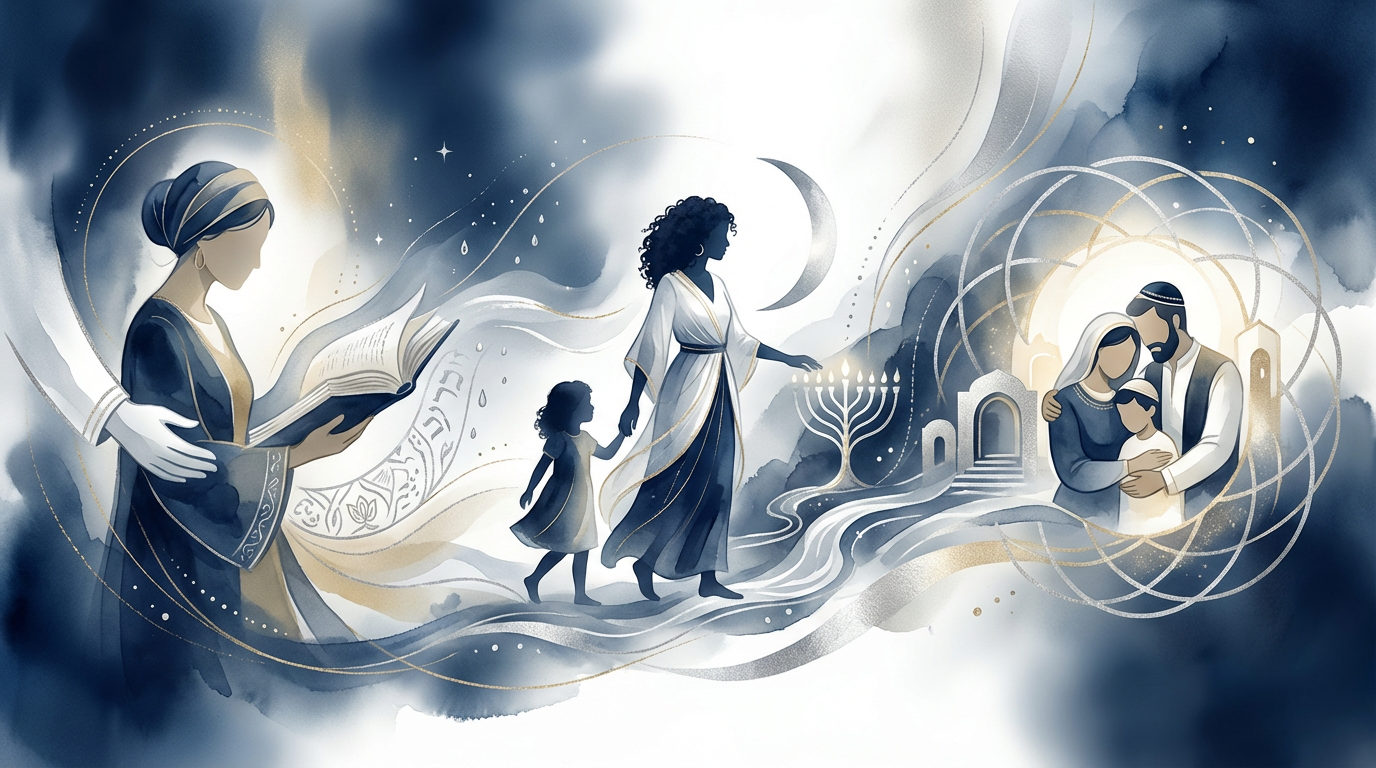
Niddah & Modern Life: Navigating Jewish Period Laws with Confidence
Niddah, or Jewish period laws, are ancient traditions governing marital intimacy during menstruation, emphasizing spiritual purity and connection. Modern Jewish women navigate these laws by integrating them with contemporary life, focusing on personal growth, marital harmony, and utilizing resources like mikvah for ritual immersion. Understanding Niddah offers a unique framework for self-care and relationship enrichment.
Listen to this article
~13 min listen
Click play to generate audio narration with a calming voice
TL;DR Summary
- •Niddah are Jewish laws of family purity, primarily governing marital intimacy during a woman's menstrual period and for seven 'clean days' thereafter.
- •Mikvah immersion is a central ritual concluding the Niddah period, symbolizing spiritual purification and renewal before resuming marital intimacy.
- •Modern observance allows women to integrate these traditions into contemporary life, fostering deeper connections, self-awareness, and spiritual growth while balancing career, family, and personal well-being.
Introduction: What is Niddah in Modern Jewish Life?
Niddah, often translated as 'separation' or 'family purity laws,' refers to a set of Jewish legal traditions that define a period during which a husband and wife refrain from physical intimacy, beginning with the onset of the wife's menstrual period and extending for seven 'clean days' after bleeding has ceased. This period concludes with the woman's immersion in a mikvah, a ritual bath. For women balancing demanding careers, fertility planning, and family life within a traditional Jewish framework, understanding and observing Niddah can be a profound, enriching, and sometimes challenging aspect of their spiritual and marital lives. Rather than viewing these as restrictive 'Jewish period laws,' many women perceive them as an opportunity for spiritual growth, self-discovery, and enhancing marital connection. This article delves into the nuances of Niddah in the context of modern life, offering practical insights and empathetic guidance for contemporary Jewish women.
Why Are Niddah Laws Observed in Judaism?
The observance of Niddah is rooted in biblical commandments (Leviticus 15:19-30) and further elaborated upon in rabbinic literature, particularly the Talmud and later codes of Jewish law. The primary reasons for these laws are multifaceted:
- •Spiritual Purity (Tumah and Taharah): In ancient times, menstruation was associated with a state of ritual impurity (tumah), which prevented participation in certain Temple rituals. While the Temple no longer stands, the concept of tumah and its counter-state, taharah (purity), continues to hold spiritual significance. The mikvah immersion symbolizes a return to a state of spiritual readiness and purity.
- •Marital Renewal and Desire: The period of separation, followed by the anticipation and reunion, is often cited as a powerful mechanism for refreshing marital intimacy and preventing complacency. It allows couples to reconnect on non-physical levels and appreciate their physical connection anew.
- •Respect for the Woman's Body: Some interpretations view Niddah as a period of rest and respect for a woman's body during menstruation, acknowledging its cyclical nature and the physical demands it undergoes. It provides a structured time for introspection and self-care.
- •Sanctity of Marriage: By establishing boundaries around intimacy, Niddah elevates the marital relationship, transforming physical union into a sacred act performed within specific spiritual parameters.
For many contemporary women, these reasons resonate deeply, offering a framework for intentional living and a unique approach to relationships and self-care. The observance is not about viewing menstruation as inherently 'dirty' but rather as a natural bodily process with spiritual implications.
How Do Niddah Laws Work: The Practicalities of Observance?
Observing Niddah involves several practical steps and considerations, which can be integrated into a busy modern schedule with careful planning and communication.
The Onset of Niddah: What Triggers the Separation?
The Niddah period begins as soon as a woman experiences any uterine bleeding, even a small drop, outside of childbirth. This can be challenging for women with irregular cycles, spotting, or those using hormonal birth control that can cause breakthrough bleeding. Consulting a knowledgeable rabbi or a Yoetzet Halacha (a woman trained in Jewish law, particularly Niddah) is crucial for clarifying specific situations and determining the exact start of the Niddah period.
Prohibitions During Niddah: Navigating Physical Boundaries
During the Niddah period, husband and wife refrain from all physical contact that is typically intimate. This includes:
- •Sexual intercourse
- •Touching, hugging, kissing
- •Sleeping in the same bed (typically separate beds are used)
- •Passing objects directly to each other
- •Sitting on the same couch if it's considered 'affectionate' sitting
The specific stringencies can vary based on individual custom and rabbinic guidance. The intention behind these prohibitions is to prevent inadvertent intimacy and to create a clear separation. For couples accustomed to constant physical affection, this period requires conscious effort and communication. Many couples find alternative ways to connect emotionally and intellectually during this time, strengthening other aspects of their relationship.
The Seven 'Clean Days': Preparing for Mikvah Immersion
Once menstrual bleeding has completely stopped, the woman begins counting seven 'clean days' (shiv'a neki'im). During this time, she performs internal examinations to confirm that no bleeding is present. This involves:
- •Hefsek Taharah: An internal examination performed at dusk on the day bleeding is believed to have stopped, using a white cloth to confirm no blood. This officially marks the beginning of the seven clean days.
- •Bedikot: Regular internal examinations (typically morning and evening) throughout the seven clean days to ensure no further bleeding. The cloths used for these examinations must be white and free of colored stains.
This meticulous process requires attention to detail and can sometimes feel cumbersome. However, many women view it as an active participation in their spiritual journey, a period of self-awareness and preparation for renewal. Again, a Yoetzet Halacha can provide invaluable guidance on the correct procedures, especially for those with unique medical circumstances.
The Mikvah: A Ritual of Renewal and Reconnection
The culmination of the Niddah period is immersion in a mikvah, a ritual bath containing naturally gathered water. This immersion symbolizes spiritual purification and readiness to resume marital intimacy. Before going to the mikvah, a woman undergoes extensive preparation, which usually includes:
- •Bathing and Hair Washing: A thorough bath or shower, ensuring the entire body is clean.
- •Nail Care: Trimming nails, removing polish, and cleaning under them.
- •Oral Hygiene: Brushing teeth, flossing, and ensuring no food particles remain.
- •Removing Obstructions: Removing any bandages, contact lenses, makeup, or jewelry that could prevent the water from touching every part of the body. This includes even tiny knots in hair.
The preparation process is meticulous because the immersion must be complete, with every part of the body, including hair, fully submerged in the water without any separating barrier. The immersion itself is performed in the presence of a balanit (mikvah attendant), who ensures the entire body is covered by the water. After reciting a blessing, the woman emerges from the water, spiritually purified and ready to resume intimacy with her husband.
Many women describe the mikvah experience as deeply spiritual, empowering, and a moment of profound connection to their heritage and to God. It marks a clear transition, allowing for a fresh start in their marital relationship.
Niddah and Fertility Planning: A Modern Woman's Perspective
For women in their reproductive years, especially those actively trying to conceive, Niddah can intersect significantly with fertility planning. The timing of mikvah immersion is critical, as it determines when a couple can resume intimacy. If the mikvah night consistently falls after ovulation, it can make conception challenging. This is a common concern for women utilizing fertility awareness methods or undergoing fertility treatments.
Jewish law recognizes the importance of procreation (Pru U'Rvu) and offers various halachic leniencies and solutions for such situations. These might include:
- •Shortening the Niddah Period: In certain cases, a rabbi might permit a woman to begin counting her seven clean days sooner than usual, especially if her bleeding is minimal.
- •Medical Interventions: For women with irregular cycles, medical interventions to regulate ovulation can help align the mikvah night with the fertile window.
- •Targeted Mikvah Nights: With careful tracking and rabbinic guidance, adjustments can sometimes be made to ensure intimacy during the most fertile days.
Open communication with a knowledgeable rabbi or Yoetzet Halacha is paramount. They can offer guidance that respects both halachic requirements and personal fertility goals. Modern women often use fertility tracking apps and medical insights alongside traditional halachic considerations to navigate this delicate balance.
Balancing Career, Family, and Niddah: Practical Strategies
Integrating Niddah observance into a busy life requires intentionality and effective strategies. Here are some actionable tips for women balancing career, family, and these Jewish period laws:
- •Open Communication with Your Partner: This is foundational. Discuss expectations, challenges, and how you both can support each other during the Niddah period. Plan non-physical dates, intellectual discussions, or shared activities to maintain connection.
- •Cycle Tracking: Utilize period tracking apps (like PERIODiQ!) to predict your cycle and the approximate start and end of your Niddah period. This allows for better planning of social events, travel, and intimate moments.
- •Proactive Mikvah Planning: Book your mikvah appointment in advance, especially if you have a tight schedule. Prepare your mikvah bag with all necessities a day or two beforehand to reduce stress on the immersion night.
- •Educate Yourself: Learn the laws thoroughly from reliable sources or a Yoetzet Halacha. Understanding the 'why' behind the 'what' can make observance more meaningful and less burdensome.
- •Self-Care Emphasis: View the Niddah period as an opportunity for self-care and introspection. This can be a time to focus on personal growth, hobbies, or spiritual practices that don't involve your partner.
- •Seek Community Support: Connect with other women who observe Niddah. Sharing experiences and tips can provide encouragement and practical advice.
- •Flexibility and Compassion: While adherence to halacha is important, also practice self-compassion. If a mistake is made, learn from it and move forward without excessive guilt. Judaism emphasizes seeking guidance and continuous learning.
- •Kosher Nutrition Perspective: While not directly related to Niddah, the holistic approach to Jewish living often includes kosher dietary laws. Just as these laws bring intentionality to eating, Niddah brings intentionality to marital intimacy. Both reflect a commitment to sanctifying daily life.
Cultural Sensitivity and Respect: Niddah in Diverse Settings
Observing Niddah in a diverse, often secular, modern world requires a degree of cultural sensitivity and privacy. While some couples are open about their observance, others prefer to keep it private. This is a personal choice. When traveling or staying with family, discreet planning might be necessary to ensure separate sleeping arrangements or to manage shared spaces respectfully.
It's important to remember that Niddah is a deeply personal and spiritual practice. While it defines boundaries within a marriage, it does not define a woman's worth or her ability to engage fully in society. The practice is about elevating a sacred relationship within a private context, not about public display or judgment.
Key Takeaways
- •Niddah is a spiritual discipline: It's a framework for marital intimacy, not merely a set of restrictions.
- •Mikvah is central: The ritual bath signifies purification and renewal, marking the transition from separation to reunion.
- •Communication is vital: Open dialogue with your partner and halachic authorities is crucial for navigating Niddah successfully.
- •Modern resources exist: Utilize period trackers, Yoatzot Halacha, and community support to integrate Niddah into contemporary life.
- •Empowerment through observance: Many women find Niddah to be an empowering practice that enhances self-awareness and marital connection.
Frequently Asked Questions
Q1: What is the primary purpose of Niddah in modern Jewish life?
A1: The primary purpose of Niddah in modern Jewish life is to foster spiritual purity, enhance marital intimacy through periods of separation and reunion, and provide a framework for self-awareness and sacred connection within marriage. It's viewed as an ancient tradition offering profound benefits for contemporary relationships.
Q2: How does the mikvah fit into the Niddah observance?
A2: The mikvah is the culminating ritual of the Niddah period. After a woman has ceased bleeding and completed seven 'clean days,' she immerses in a mikvah (ritual bath) to achieve spiritual purification (taharah) before resuming physical intimacy with her husband. It symbolizes renewal and a fresh start.
Q3: Can Niddah laws be adjusted for fertility challenges?
A3: Yes, Jewish law recognizes the importance of procreation. For women facing fertility challenges where Niddah observance might impact their fertile window, halachic authorities (rabbis or Yoatzot Halacha) can often provide guidance and, in certain circumstances, permit leniencies or adjustments to the counting of the Niddah period to facilitate conception.
Q4: Are there any specific dietary restrictions associated with Niddah?
A4: Niddah itself does not impose specific dietary restrictions beyond the general Jewish dietary laws of Kashrut (kosher). However, the holistic approach to Jewish living often integrates adherence to kosher nutrition with other mitzvot, including Niddah, as both contribute to sanctifying daily life.
Q5: How do modern Jewish women balance career and family with Niddah observance?
A5: Modern Jewish women balance Niddah with career and family by utilizing careful cycle tracking, open communication with partners, proactive mikvah planning, and seeking guidance from Yoatzot Halacha. They often view the Niddah period as an opportunity for self-care and non-physical connection, integrating it thoughtfully into their busy lives.
Q6: What if I accidentally touch my husband during Niddah?
A6: Jewish law emphasizes the intention behind actions. If an accidental touch occurs, there is no need for panic or extreme measures. The focus is on conscious adherence to the laws. Couples should simply be mindful and continue to be careful to avoid further physical contact until the Niddah period concludes with mikvah immersion.
Q7: Who can I consult for personal guidance on Niddah laws?
A7: For personalized and authoritative guidance on Niddah laws, it is highly recommended to consult a knowledgeable Orthodox rabbi or, for women, a Yoetzet Halacha. These trained women scholars specialize in family purity laws and can offer empathetic, detailed, and halachically sound advice for individual circumstances.
Start Your Wellness Journey Today
Ready to track your cycle, fertility, pregnancy, or menopause journey? Download PERIODiQ - your iQ-powered wellness companion designed for every stage of your health journey.
Get PERIODiQ Free: https://periodiq.app
Your Wellness Journey Starts Here
Download PERIODiQ
Scan the QR code or tap the link to get started with your personalized health tracking.
periodiq.app • iOS & Android
Cite this article
PERIODiQ Editorial Team (2026). "Niddah & Modern Life: Navigating Jewish Period Laws with Confidence." PERIODiQ. https://periodiq.app/library/niddah-modern-life-navigating-jewish-period-laws-with-confidence
"Niddah & Modern Life: Navigating Jewish Period Laws with Confidence." PERIODiQ, 2026, https://periodiq.app/library/niddah-modern-life-navigating-jewish-period-laws-with-confidence.
Send this to a friend — PERIODiQ is free for them too. No card. No paywall.
Loved this? Save articles, track your cycle, and unlock meditations — free forever.
Disclaimer: PERIODiQ™ offers general wellness information only. It does not provide medical advice, diagnosis, or treatment. Always speak with a licensed health professional about your health.