Moon Time Teachings: An Educational Guide to Indigenous Menstrual Wisdom
Moon time teachings offer profound Indigenous wisdom regarding menstruation, viewing it as a sacred, powerful, and regenerative experience rather than a burden. These ancient traditions provide holistic perspectives on cyclical living, emphasizing connection to nature, community, and personal introspection for menstrual health and well-being.
Listen to this article
~19 min listen
Click play to generate audio narration with a calming voice
TL;DR Summary
- •Moon time teachings are Indigenous wisdom traditions that honor menstruation as a sacred, powerful, and regenerative experience.
- •These practices emphasize cyclical living, connection to nature, community support, and personal introspection for holistic menstrual wellness.
- •Honoring moon time involves understanding cultural protocols, which are best learned directly from local Elders and Knowledge Keepers.
Introduction: What Are Moon Time Teachings and Why Are They Important?
Moon time teachings are ancient Indigenous wisdom traditions that offer a profound understanding and reverence for menstruation, viewing it not as a curse or an inconvenience, but as a sacred, powerful, and regenerative experience. These teachings are integral to many First Nations, Native American, and Indigenous cultures globally, providing a holistic framework for understanding women's cycles in connection with the moon, the Earth, and the community. The importance of these teachings lies in their ability to foster a deeper sense of self-respect, spiritual connection, and well-being for menstruating individuals, counteracting the often negative and shame-filled narratives surrounding periods in Western societies. By re-centering menstruation as a source of strength and wisdom, moon time teachings empower individuals to embrace their natural rhythms, cultivate self-care practices, and strengthen community bonds through shared understanding and support.
What Is the Significance of "Moon Time" in Indigenous Cultures?
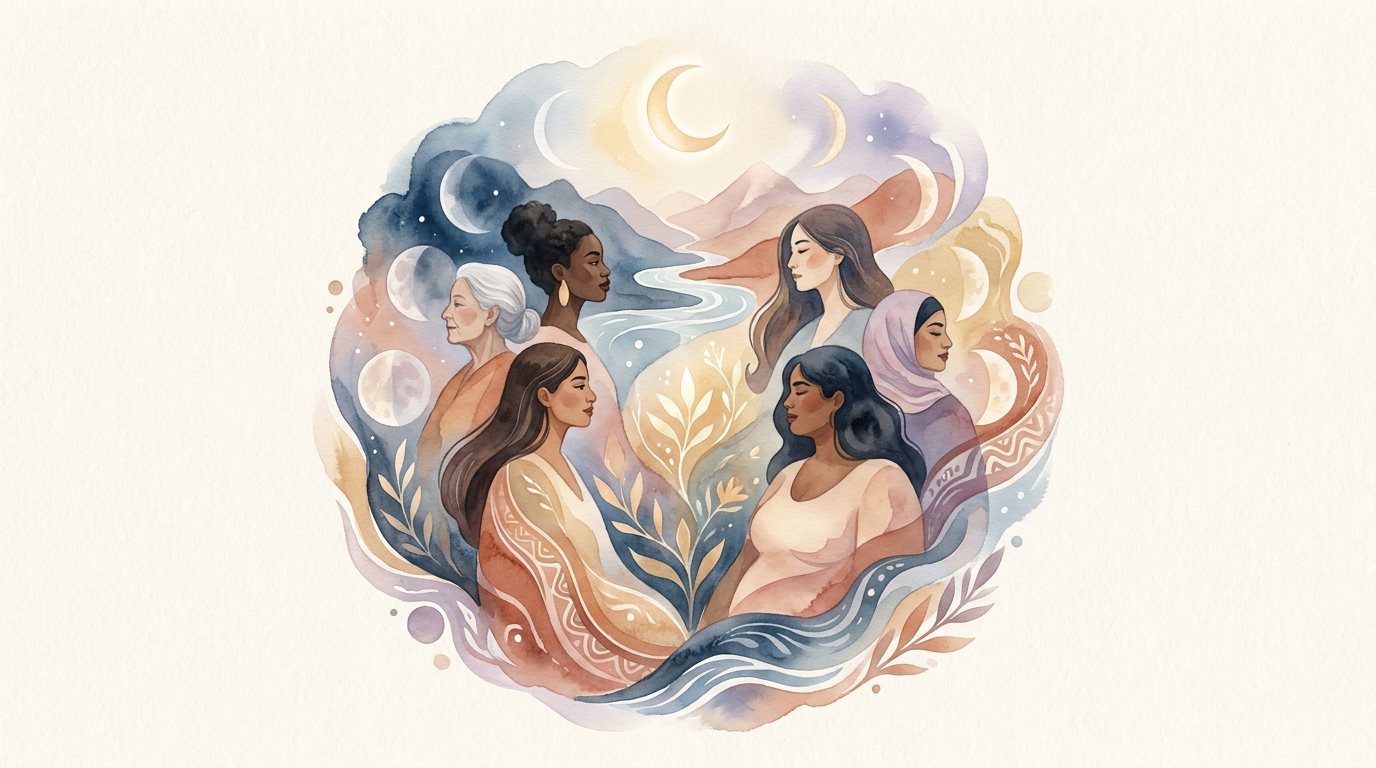
"Moon time" is a term widely used in many Indigenous cultures to refer to menstruation, reflecting the deep spiritual and energetic connection between the female reproductive cycle and the lunar cycle. Just as the moon governs the tides and influences natural rhythms, it is understood to profoundly impact the menstrual cycle, typically aligning with a 28-day lunar month. This connection signifies that menstruation is not merely a biological event but a cosmic one, deeply interwoven with the universe's natural order. The significance lies in recognizing this alignment as a period of heightened intuition, spiritual connection, and cleansing. During moon time, individuals are often encouraged to slow down, reflect, and engage in practices that honor this sacred period, fostering a sense of reverence for their bodies and their place within the natural world.
How Do Indigenous Perspectives Differ from Western Views on Menstruation?
Indigenous perspectives on menstruation fundamentally differ from Western views by framing it as a sacred, powerful, and often celebrated time, in stark contrast to the common Western narrative that often portrays periods as inconvenient, dirty, or a source of shame. In many Indigenous cultures, indigenous menstruation is seen as a time of immense spiritual power, a natural cleansing process, and an opportunity for deep introspection and connection to the Earth and ancestral wisdom. Women on their native american period traditions were historically often excused from daily chores, not as a sign of weakness, but to allow them to focus on spiritual practices, ceremony, and rest, recognizing their heightened energetic state. Western views, heavily influenced by patriarchal and biomedical models, tend to pathologize menstruation, focusing on symptoms like pain and discomfort, and often promoting ways to suppress or manage periods rather than honor them. This cultural divergence highlights a fundamental difference in how female bodies and their natural processes are valued and understood, with Indigenous traditions offering a more holistic and empowering framework.
What Are the Core Principles of Moon Time Teachings?
The core principles of moon time teachings revolve around reverence, connection, introspection, and community. Reverence is shown for the body's natural processes, acknowledging menstruation as a sacred gift and a source of power. Connection is emphasized, linking the individual's cycle to the lunar cycle, the Earth's rhythms, and the broader cosmos, fostering a sense of belonging and interconnectedness. Introspection is encouraged as a vital practice during moon time, providing an opportunity for deep self-reflection, spiritual insight, and emotional processing. Finally, community plays a crucial role, with teachings often passed down through generations of women, creating a supportive network where experiences are shared, wisdom is exchanged, and individuals are held in their sacred practice. These principles collectively guide individuals to embrace their cycles with honor and intention.
How Are Moon Lodges and Red Tents Connected to Indigenous Menstrual Practices?
Moon lodges, also known as red tents or women's lodges in various Indigenous traditions, are sacred spaces historically and contemporaneously dedicated to women during their moon time. These spaces provided a sanctuary where menstruating individuals could gather, rest, share wisdom, conduct ceremonies, and connect with other women in a supportive and empowering environment. The concept behind these lodges is rooted in the understanding that women are particularly powerful and energetically sensitive during their periods, making it an ideal time for spiritual work, visioning, and deep rest. While specific practices vary greatly among different First Nations moon time traditions, the common thread is the creation of a dedicated space to honor the moon time, away from daily responsibilities, allowing for introspection, connection to ancestral knowledge, and mutual support among women. These lodges served as vital community hubs for the transmission of indigenous menstruation teachings and the strengthening of women's bonds.
What Role Does Ceremony Play in Honoring Moon Time?
Ceremony plays a central and profound role in honoring moon time within many Indigenous cultures, serving as a structured and intentional way to acknowledge, celebrate, and integrate the sacredness of menstruation. These ceremonies can range from personal rituals of gratitude and cleansing to communal gatherings in moon lodges, depending on specific cultural protocols and teachings. Common ceremonial practices might include offerings to the Earth, smudge ceremonies for purification, prayer, storytelling, singing, drumming, and sharing circles. The purpose of these ceremonies is to mark the transition into moon time, to express gratitude for the body's wisdom, to release what no longer serves, and to set intentions for the coming cycle. By engaging in ceremony, individuals actively participate in and reaffirm their connection to the sacredness of their bodies and the natural world, reinforcing the spiritual significance of indigenous menstruation and native american period traditions.
How Can Individuals Connect with Authentic Indigenous Moon Time Teachings?
Connecting with authentic Indigenous moon time teachings requires a respectful and humble approach, prioritizing direct engagement with Indigenous communities and their Knowledge Keepers. The most appropriate and ethical way to learn is by seeking out local Indigenous Elders, community leaders, or cultural centers within your specific region. Many Indigenous communities offer workshops, sharing circles, or cultural events where these teachings are shared with both Indigenous and non-Indigenous participants, always under the guidance of those who hold the traditional knowledge. It is crucial to understand that these teachings are diverse and specific to individual nations, and what is appropriate in one community may not be in another. Therefore, active listening, asking permission to learn, and supporting Indigenous initiatives are paramount. Avoid appropriating or commercializing these sacred practices; instead, approach them with genuine respect for Indigenous sovereignty over their traditional knowledge and the understanding that these are living, breathing traditions passed down through generations.
What Are the Ethical Considerations for Non-Indigenous People Learning About Moon Time?
For non-Indigenous people learning about moon time, ethical considerations are paramount to ensure respect, avoid appropriation, and uphold Indigenous sovereignty. The primary ethical consideration is to approach these teachings with deep humility and a commitment to non-appropriation. This means recognizing that moon time teachings are part of specific cultural and spiritual traditions, not commodities to be consumed or repackaged for personal gain. Non-Indigenous individuals should prioritize learning directly from Indigenous Elders and Knowledge Keepers, always seeking permission and following their guidance. It is crucial to avoid claiming these teachings as one's own, teaching them without proper authorization, or profiting from them. Support Indigenous voices and initiatives, acknowledge the source of knowledge, and understand that the goal is not to become an expert in another culture's practices, but to learn respectfully and apply universal principles of cyclical living in a way that honors Indigenous wisdom without infringing upon it. This includes understanding the historical context of colonization and its impact on Indigenous spiritual practices, and actively working against perpetuating such harms.
How Do Moon Time Teachings Promote Holistic Wellness?
Moon time teachings promote holistic wellness by integrating physical, emotional, mental, and spiritual aspects of an individual's life, recognizing that these are interconnected and influence overall well-being. Physically, these teachings encourage rest, nourishment, and listening to the body's needs during menstruation, which supports reproductive health and reduces stress. Emotionally, they provide a framework for understanding and processing feelings, validating the emotional shifts that can occur during the cycle as natural and meaningful. Mentally, the emphasis on introspection and reflection fosters clarity, insight, and self-awareness. Spiritually, moon time teachings connect individuals to ancestral wisdom, the natural world, and a sense of sacredness within their own bodies, cultivating a deeper sense of purpose and belonging. By honoring the entire cycle and the wisdom it brings, individuals can achieve a more balanced and integrated state of health, embodying the principles of indigenous menstruation for overall vitality.
Benefits by Life Stage
Moon time teachings offer profound benefits across various stages of a woman's life, fostering a deeper connection to self and natural rhythms.
Menstrual Health (periods, cramps, PMS)
Moon time teachings profoundly benefit menstrual health by reframing periods from a burden to a sacred time of rest and introspection, which can significantly alleviate symptoms like cramps and PMS. By encouraging individuals to slow down, listen to their bodies, and prioritize self-care during their native american period traditions, the physical and emotional stress associated with menstruation can be reduced. Practices such as mindful rest, nourishing foods, gentle movement, and connecting with nature, as guided by indigenous menstruation wisdom, can help balance hormones and ease discomfort. The spiritual emphasis on cleansing and renewal during moon time also provides a positive mental framework, transforming the experience of pain into an opportunity for growth and release, fostering a more harmonious relationship with one's cycle and mitigating the severity of PMS symptoms.
Fertility Journey (TTC, ovulation, conception)
For those on a fertility journey, including trying to conceive (TTC) or understanding ovulation and conception, moon time teachings offer a powerful framework for connecting with the body's natural rhythms and cycles. These teachings emphasize the sacredness of creation and the interconnectedness of all life, encouraging a mindful and respectful approach to fertility. By understanding the ebb and flow of one's cycle in relation to the moon, individuals can become more attuned to their ovulation patterns, enhancing their chances of conception. The focus on introspection and spiritual connection during moon time also helps to reduce stress and foster a sense of calm and acceptance, which are beneficial for fertility. Embracing indigenous menstruation as a source of power and life-giving energy can transform the fertility journey into a more spiritual and less stressful experience, promoting a holistic environment for conception.
Pregnancy (trimesters, prenatal care)
During pregnancy, moon time teachings continue to offer invaluable guidance, providing a spiritual and holistic lens for understanding and navigating the profound changes of each trimester and the journey of prenatal care. Although menstruation ceases during pregnancy, the principles of cyclical wisdom, connection to nature, and honoring the body's transformative power remain deeply relevant. These teachings encourage expectant mothers to deeply connect with their inner wisdom, their growing baby, and the ancestral lineage of birth. Practices such as mindful breathing, spending time in nature, receiving community support, and engaging in personal ceremony can nurture emotional well-being, reduce anxiety, and foster a strong bond with the unborn child. The emphasis on reverence for the life-giving process, inherent in first nations moon time teachings, can empower pregnant individuals to approach birth with confidence and spiritual strength, seeing it as a sacred journey.
Menopause (perimenopause, hormonal changes)
Moon time teachings provide a deeply empowering perspective on menopause, reframing it not as an ending but as a profound transition into a new phase of wisdom, power, and leadership, often referred to as the 'Crone' or 'Wise Woman' stage. For individuals navigating perimenopause and the associated hormonal changes, these teachings offer a roadmap for embracing the shifts with grace and intention. The focus on introspection, spiritual connection, and community support, central to indigenous menstruation, becomes even more vital during this time. Rather than viewing hormonal changes as a deficiency, moon time wisdom encourages individuals to see them as a natural recalibration, leading to deeper self-knowledge and an enhanced capacity for spiritual insight. Practices like meditation, sharing circles with elder women, and engaging in new forms of creative expression can ease the transition, allowing individuals to step into their elder years with confidence and purpose, celebrating the accumulated wisdom that comes with age.
Key Takeaways
- •Moon time teachings view menstruation as a sacred, powerful, and regenerative experience, contrasting sharply with Western narratives.
- •These Indigenous traditions emphasize the deep connection between the menstrual cycle, the lunar cycle, and the Earth.
- •Core principles include reverence for the body, connection to nature and community, and vital introspection during moon time.
- •Moon lodges and red tents are sacred spaces for women to gather, rest, share wisdom, and conduct ceremonies during their periods.
- •Ceremony is crucial for honoring moon time, fostering gratitude, releasing, and setting intentions for the new cycle.
- •Ethical engagement for non-Indigenous learners requires humility, seeking direct guidance from Elders, and avoiding appropriation.
- •These teachings promote holistic wellness by integrating physical, emotional, mental, and spiritual well-being across all life stages.
Frequently Asked Questions
Q: What is the primary difference between moon time teachings and modern menstrual education?
The primary difference is that moon time teachings honor menstruation as a sacred, powerful, and spiritually significant event, emphasizing rest and introspection, whereas modern menstrual education often focuses on the biological aspects, hygiene, and management of symptoms, sometimes perpetuating negative perceptions.
Q: Are moon time teachings practiced by all Indigenous cultures?
No, while many Indigenous cultures share similar reverence for menstruation, the specific moon time teachings, ceremonies, and protocols vary significantly among different First Nations, Native American, and Indigenous groups. Each nation has its unique traditions and wisdom.
Q: Can non-Indigenous people adopt moon time practices?
Non-Indigenous people can respectfully learn about the universal principles of cyclical living, self-care, and connection to nature that are often embedded in moon time teachings. However, it is crucial to do so with humility, seek guidance from local Indigenous Elders, avoid appropriation, and not claim specific cultural practices as their own. The focus should be on respectful learning and support for Indigenous sovereignty.
Q: How do moon time teachings address menstrual pain or discomfort?
Moon time teachings often address menstrual pain or discomfort by encouraging rest, introspection, gentle self-care, and spiritual practices during indigenous menstruation. Rather than solely focusing on symptom suppression, they encourage listening to the body's signals and understanding pain as a message, promoting holistic healing and a deeper connection to the body's wisdom.
Q: What is a moon lodge or red tent, and why were they used?
A moon lodge or red tent is a sacred space, historically and currently used by many Indigenous women during their moon time (menstruation). They were used to provide a sanctuary for rest, spiritual connection, sharing wisdom, and conducting ceremonies, recognizing women's heightened power and sensitivity during their native american period traditions.
Q: How can I support Indigenous communities and their moon time teachings?
To support Indigenous communities and their moon time teachings, you can donate to Indigenous-led organizations, purchase from Indigenous artists and businesses, attend cultural events when invited, amplify Indigenous voices, and advocate for Indigenous rights and sovereignty. Always ensure your support is respectful and directed by the community itself.
Q: Do moon time teachings have relevance for men or two-spirit individuals?
Yes, while moon time teachings are primarily centered on women's experiences, the underlying principles of cyclical living, respect for natural rhythms, and community connection are relevant for everyone. Many Indigenous traditions also have teachings for men on how to support and honor menstruating women, and two-spirit individuals often hold unique and sacred roles within these frameworks, contributing to the holistic well-being of the community.
Start Your Wellness Journey Today
Ready to track your cycle, fertility, pregnancy, or menopause journey? Download PERIODiQ - your iQ-powered wellness companion designed for every stage of your health journey.
Get PERIODiQ Free: https://periodiq.app
Your Wellness Journey Starts Here
Download PERIODiQ
Scan the QR code or tap the link to get started with your personalized health tracking.
periodiq.app • iOS & Android
Cite this article
PERIODiQ Editorial Team (2026). "Moon Time Teachings: An Educational Guide to Indigenous Menstrual Wisdom." PERIODiQ. https://periodiq.app/library/moon-time-teachings-an-educational-guide-to-indigenous-menstrual-wisdom
"Moon Time Teachings: An Educational Guide to Indigenous Menstrual Wisdom." PERIODiQ, 2026, https://periodiq.app/library/moon-time-teachings-an-educational-guide-to-indigenous-menstrual-wisdom.
Send this to a friend — PERIODiQ is free for them too. No card. No paywall.
Loved this? Save articles, track your cycle, and unlock meditations — free forever.
Disclaimer: PERIODiQ™ offers general wellness information only. It does not provide medical advice, diagnosis, or treatment. Always speak with a licensed health professional about your health.