
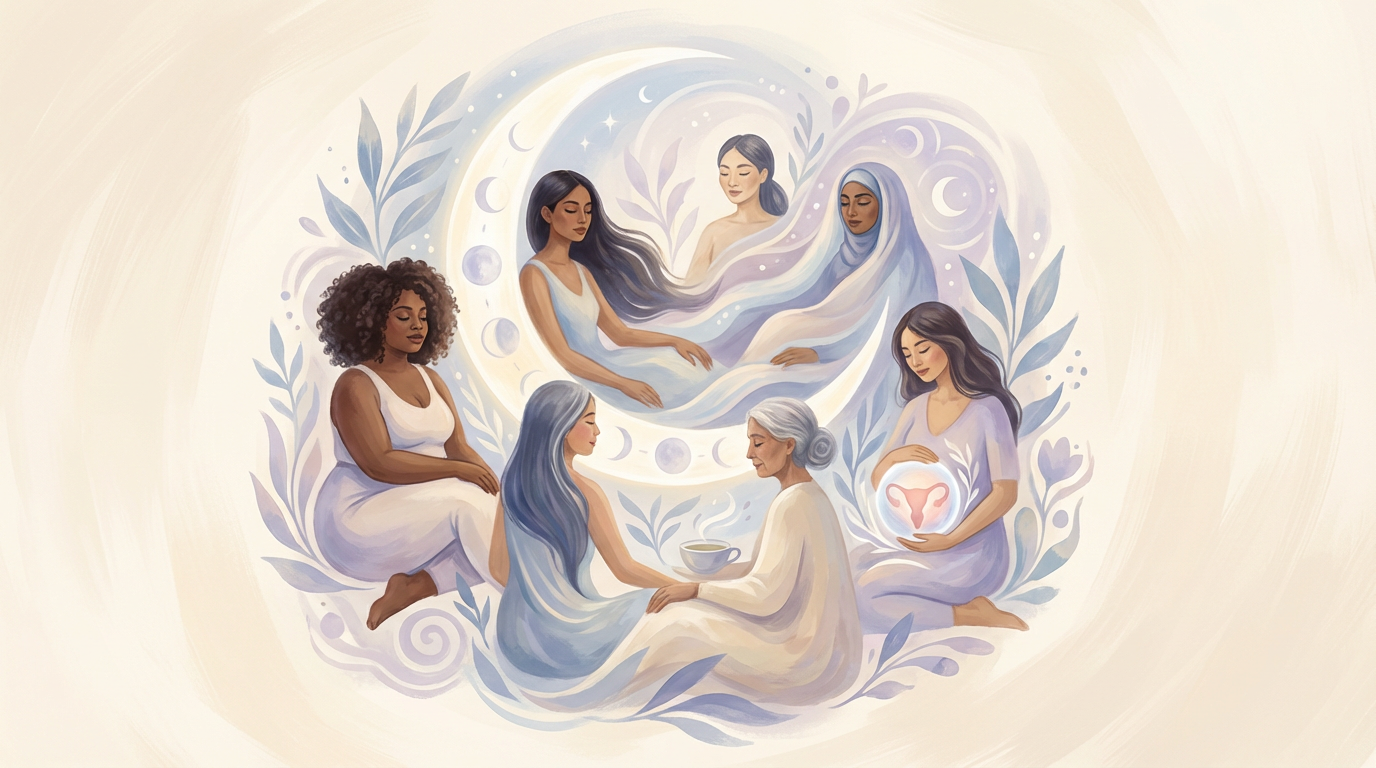
The Moon and Your Menstrual Cycle: Separating Myth from Science
While popular culture often links the moon's phases to the menstrual cycle, scientific evidence largely refutes a direct, synchronous connection. The average menstrual cycle length of 29.5 days is indeed close to the lunar cycle, but research indicates no consistent synchronization between ovulation or menstruation and specific lunar phases across large populations. Understanding this distinction empowers women with accurate information about their bodies.
Listen to this article
~17 min listen
The Moon and Your Menstrual Cycle: Separating Myth from Science
TL;DR Summary
- •Scientific research largely disproves a direct, synchronous link between the moon's phases and individual menstrual cycles.
- •The perceived connection stems from the similar average lengths of the lunar cycle (29.5 days) and the menstrual cycle (29 days), but this is likely a coincidence.
- •While the moon influences tides, its gravitational pull is too weak to directly impact human physiological processes like menstruation or ovulation.
Can the Moon Influence Your Menstrual Cycle?
For centuries, popular culture, ancient traditions, and anecdotal evidence have suggested a profound connection between the lunar cycle and the female menstrual cycle. Many women feel an intuitive pull, believing their bodies are in sync with the moon's ebb and flow. However, while the average human menstrual cycle length (around 29 days) remarkably aligns with the lunar cycle (approximately 29.5 days), scientific studies largely indicate that this is a fascinating coincidence rather than a direct, causal relationship. This article delves into the historical beliefs, explores the scientific evidence, and helps separate the myths from the verifiable facts regarding the moon's potential influence on your menstrual health.
What Is the Lunar Cycle and How Does It Work?
The lunar cycle, also known as the synodic month, is the period it takes for the Moon to complete all its phases as observed from Earth, lasting approximately 29.5 days. This cycle begins with the New Moon, progresses through waxing crescent, first quarter, waxing gibbous, Full Moon, waning gibbous, last quarter, and waning crescent, before returning to the New Moon. These phases are determined by the changing angles at which we view the sunlit portion of the Moon as it orbits our planet. The Moon's gravitational pull is a primary driver of Earth's ocean tides, causing them to ebb and flow with its proximity and phase.
What Is the Menstrual Cycle and Its Phases?
The menstrual cycle is a complex, hormone-driven process that prepares a woman's body for potential pregnancy each month. It typically lasts between 21 and 35 days, with an average of 29 days, and is divided into four main phases: menstruation, follicular phase, ovulation, and luteal phase. Hormones like estrogen and progesterone fluctuate throughout these phases, regulating the growth of the uterine lining, the development and release of an egg, and the eventual shedding of the uterine lining if pregnancy doesn't occur. Understanding these phases is crucial for comprehending the intricate biological mechanisms that govern female reproductive health.
Why Do People Believe the Moon Affects Menstruation?
The belief that the moon influences menstruation is deeply rooted in historical observations, cultural narratives, and the striking similarity in the average lengths of the two cycles. Ancient civilizations often revered the moon as a powerful feminine symbol, linking its cycles to fertility, birth, and the rhythms of life. Many traditional practices and spiritual beliefs associate the New Moon with menstruation (a time of shedding and new beginnings) and the Full Moon with ovulation (a time of peak fertility and abundance). This intuitive connection has been passed down through generations, leading many to feel a natural synchronicity with lunar phases, even without direct scientific proof. The moon's visible influence on tides further fuels the idea that it could affect the 'tides' within the human body, which is composed largely of water.
What Does Scientific Research Say About the Moon-Menstrual Link?
Despite the pervasive anecdotal evidence and cultural beliefs, scientific research largely indicates that there is no consistent, direct, or significant synchronization between the lunar cycle and the human menstrual cycle. Multiple large-scale studies have investigated this potential link, often analyzing menstrual cycle data from thousands of women over extended periods.
For example, a comprehensive study published in Science Advances in 2021, analyzing data from 1.5 million menstrual cycles of 22 women over 15 years, found no evidence of synchronized menstrual cycles with the lunar phases. While some individual cycles might briefly align, this alignment was not sustained and appeared to be random. Earlier studies from the 1970s and 80s also largely concluded that any observed synchronicity was either coincidental or due to methodological flaws.
Researchers point out that while the moon's gravitational pull is strong enough to affect large bodies of water like oceans, its effect on the relatively small amount of fluid within the human body is negligible. Furthermore, the complex hormonal interplay that governs the menstrual cycle is internally regulated and not designed to respond to external gravitational forces of this magnitude. Therefore, while the average cycle lengths are similar, this appears to be a fascinating, yet ultimately coincidental, numerical alignment rather than a biologically driven connection.
Can Lunar Phases Affect Sleep and Hormones?
While the moon's direct impact on menstruation is scientifically unsubstantiated, there is some emerging research suggesting that lunar phases might indirectly influence human physiology, particularly sleep patterns, which in turn could affect hormones. A 2013 study published in Current Biology found that sleep architecture changed across the lunar cycle, with participants experiencing less deep sleep and taking longer to fall asleep around the Full Moon. More recent research, including a study in Science Advances in 2021, also observed that sleep onset tended to occur later and sleep duration was shorter during the nights leading up to a Full Moon, regardless of light pollution.
Disrupted sleep can impact the delicate balance of hormones that regulate the menstrual cycle, such as melatonin, cortisol, and even reproductive hormones. While this doesn't mean the moon directly triggers menstruation or ovulation, it suggests a potential indirect pathway where lunar-induced sleep disturbances could subtly influence cycle regularity or symptoms in some individuals. However, more robust research is needed to establish a definitive and significant link between lunar-influenced sleep, hormonal changes, and menstrual cycle outcomes.
Are There Cultural or Spiritual Connections to the Moon and Menstruation?
Absolutely. Across diverse cultures and spiritual traditions worldwide, the moon has long been revered as a powerful symbol connected to femininity, fertility, and the cyclical nature of life. Many ancient societies, including those in Mesopotamia, Egypt, and indigenous cultures, observed the moon's phases and integrated them into their understanding of natural rhythms and human reproduction. The monthly shedding of the uterine lining during menstruation was often seen as a sacred process of cleansing and renewal, mirroring the moon's own cyclical renewal.
For example, some traditions associate the New Moon with menstruation, symbolizing a time for introspection, rest, and releasing what no longer serves. The Full Moon, conversely, is often linked to ovulation, representing peak energy, creativity, and fertility. These cultural narratives provide a framework for many women to connect with their bodies and the natural world, fostering a sense of empowerment and understanding of their own cyclical nature, irrespective of scientific evidence for a direct biological link. This spiritual connection can be a meaningful aspect of personal wellness.
Benefits by Life Stage
Menstrual Health (Periods, Cramps, PMS)
For women experiencing menstrual health challenges like irregular periods, severe cramps (dysmenorrhea), or premenstrual syndrome (PMS), understanding the moon's influence, or lack thereof, is important. While aligning your cycle with the moon might feel empowering, focusing on evidence-based strategies is key. Regular sleep, stress management, balanced nutrition, and exercise are scientifically proven to positively impact menstrual health. If you feel a connection to lunar phases, using them as a mindfulness tool for introspection or setting intentions can be beneficial for emotional well-being, but should not replace medical advice for persistent symptoms.
Fertility Journey (TTC, Ovulation, Conception)
For those trying to conceive (TTC), pinpointing ovulation is critical. While some traditions link ovulation to the Full Moon, relying on this for fertility tracking is not scientifically accurate and can lead to missed opportunities. Instead, focus on proven methods like basal body temperature (BBT) tracking, ovulation predictor kits (OPKs), and cervical mucus monitoring. These methods provide concrete data to identify your fertile window, significantly increasing your chances of conception. While the moon can be a beautiful symbol of fertility, it's not a reliable biological indicator for timing intercourse.
Pregnancy (Trimesters, Prenatal Care)
During pregnancy, many old wives' tales surface, including beliefs about the moon influencing labor onset or gender of the baby. Scientifically, there is no evidence to support these claims. Labor is initiated by a complex interplay of maternal and fetal hormones, not by lunar phases. Focusing on comprehensive prenatal care, maintaining a healthy lifestyle, and following your healthcare provider's recommendations are the most important steps for a healthy pregnancy and birth. The moon remains a beautiful celestial body, but its role in pregnancy is purely symbolic, not physiological.
Menopause (Perimenopause, Hormonal Changes)
As women transition through perimenopause and into menopause, menstrual cycles become irregular and eventually cease. While some women might notice a perceived alignment of their last cycles with lunar phases, this is likely coincidental. The hormonal shifts during menopause are driven by declining ovarian function, not external lunar forces. Managing menopausal symptoms effectively involves evidence-based approaches like hormone therapy (if appropriate), lifestyle modifications, and stress reduction techniques. The moon can still offer a sense of cyclical wisdom and connection to nature during this significant life stage, but its influence remains spiritual rather than biological.
Key Takeaways
- •The average menstrual cycle (29 days) is remarkably similar to the lunar cycle (29.5 days), but this is considered a coincidence by science.
- •Multiple scientific studies, including large-scale analyses, have found no consistent evidence of synchronization between menstrual phases (menstruation or ovulation) and lunar phases.
- •The moon's gravitational pull is too weak to directly influence human physiological processes like menstruation.
- •While the moon may indirectly affect sleep patterns, which can then influence hormones, a direct causal link to menstrual cycle regulation is not established.
- •Cultural and spiritual connections between the moon and menstruation are significant for many women, offering a sense of connection and understanding, but these are distinct from biological effects.
- •For fertility tracking and menstrual health management, rely on scientifically validated methods rather than lunar phase predictions.
Frequently Asked Questions
Q: Does the Full Moon really make people go crazy or affect emotions?
While the term "lunacy" originates from the Latin word for moon, suggesting a historical belief in its power to affect mental state, scientific evidence does not support a direct link between the Full Moon and increased psychiatric emergencies, crime rates, or significant emotional disturbances in the general population. Any perceived patterns are often attributed to confirmation bias or anecdotal observations rather than statistical significance.
Q: Can the moon affect my mood or energy levels?
Some individuals report feeling more energetic, restless, or experiencing mood shifts around the Full Moon. While there's no direct scientific consensus on the moon causing these changes, the subtle influence on sleep patterns (as some studies suggest) could indirectly impact mood and energy. Additionally, cultural beliefs and personal expectations can play a role in how individuals perceive and report their experiences during different lunar phases.
Q: Is it true that more babies are born during a Full Moon?
This is a persistent myth that has been debunked by numerous studies. Research analyzing birth records from hospitals around the world has consistently found no statistically significant increase in birth rates during a Full Moon compared to other lunar phases. Labor and delivery are complex biological processes primarily driven by maternal and fetal factors.
Q: If my period starts with the New Moon, is that just a coincidence?
Yes, if your period consistently starts around the New Moon, it's most likely a coincidence. Given that the menstrual cycle and lunar cycle are both roughly a month long, it's statistically probable that some women's cycles will align with certain lunar phases at various times. However, this alignment tends to be temporary and is not indicative of a biological synchronization driven by the moon.
Q: Should I track my cycle based on the moon?
For accurate health and fertility tracking, it is recommended to use established methods such as cycle tracking apps that record your period start and end dates, symptoms, basal body temperature, and ovulation predictor kit results. While you can certainly observe lunar phases for personal interest or spiritual connection, they should not be the primary method for understanding your menstrual cycle or making health decisions.
Q: Could ancient humans have been more in sync with the Moon than modern humans?
It's a fascinating hypothesis that has been explored, suggesting that without artificial light, ancient humans might have experienced more profound light-dark cycles influenced by the moon, potentially affecting their circadian rhythms and, by extension, menstrual cycles. However, there is no concrete scientific evidence to prove that ancient humans had a more synchronized menstrual cycle with the moon than modern humans. The internal hormonal regulation of the menstrual cycle is a robust biological process.
Q: Does the moon affect fertility in animals?
While there is some research suggesting lunar influences on reproductive cycles in certain marine animals (like corals or some fish that spawn during specific moon phases), these are often direct environmental triggers tied to light levels or tidal patterns in their specific ecosystems. This does not translate directly to human physiology, where internal hormonal regulation is the primary driver of fertility.
Start Your Wellness Journey Today
Ready to track your cycle, fertility, pregnancy, or menopause journey? Download PERIODiQ - your iQ-powered wellness companion designed for every stage of your health journey.
Get PERIODiQ Free: https://periodiq.app
Your Wellness Journey Starts Here
Download PERIODiQ
Scan the QR code or tap the link to get started with your personalized health tracking.
periodiq.app • iOS & Android
Cite this article
PERIODiQ Editorial (2025). "The Moon and Your Menstrual Cycle: Separating Myth from Science." PERIODiQ. https://periodiq.app/library/moon-menstrual-cycle-science
"The Moon and Your Menstrual Cycle: Separating Myth from Science." PERIODiQ, 2025, https://periodiq.app/library/moon-menstrual-cycle-science.
Send this to a friend — PERIODiQ is free for them too. No card. No paywall.
Loved this? Save articles, track your cycle, and unlock meditations — free forever.
Disclaimer: PERIODiQ™ offers general wellness information only. It does not provide medical advice, diagnosis, or treatment. Always speak with a licensed health professional about your health.