
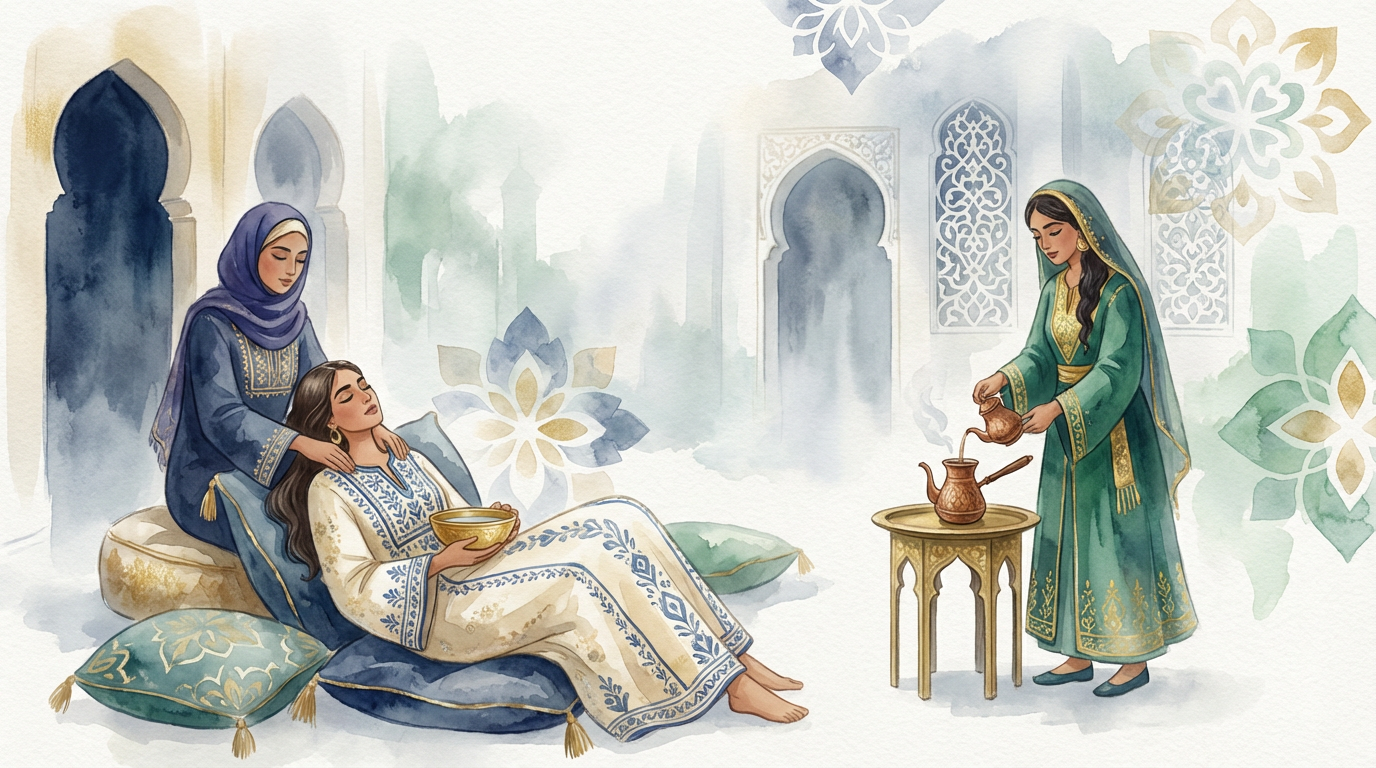
Middle Eastern Postpartum Traditions: Nurturing New Mothers
Middle Eastern postpartum traditions offer a holistic, community-centered approach to new motherhood, focusing on rest, nutrient-rich foods, spiritual support, and practical aid for the mother's physical and emotional recovery. These practices, deeply rooted in Islamic guidance and cultural wisdom, emphasize a dedicated period of care to ensure the mother's well-being and successful bonding with her newborn. Key elements include specific dietary regimens, traditional remedies, and extensive family support.
Listen to this article
~13 min listen
Click play to generate audio narration with a calming voice
TL;DR Summary
- •Middle Eastern postpartum care prioritizes a dedicated 40-day (or longer) period of rest, recovery, and nourishment for the new mother.
- •Traditional practices emphasize nutrient-dense, warming foods, herbal remedies, and spiritual support, often guided by Islamic principles.
- •Extensive family and community involvement provides practical assistance, allowing the mother to focus on healing and bonding with her baby.
Introduction: How Do Middle Eastern Traditions Support New Mothers Postpartum?
Middle Eastern postpartum traditions offer a comprehensive and deeply supportive framework for new mothers, recognizing the profound physical, emotional, and spiritual changes experienced after childbirth. Far from a solitary journey, this period, often referred to as the 'Nifas' in Islamic contexts and typically lasting 40 days (though varying culturally), emphasizes rest, specialized nutrition, spiritual solace, and abundant practical assistance from family and community. These time-honored customs are designed to facilitate the mother's complete recovery, prevent future health issues, and ensure a strong start to her bonding with the newborn, all while respecting cultural norms and Islamic guidance on modesty and spiritual well-being.
This holistic approach integrates centuries of wisdom, focusing on restoring the mother's strength, balancing her internal 'heat' (as understood in traditional medicine), and protecting her from perceived vulnerabilities during this delicate time. For women balancing modern careers, fertility planning, and family life, understanding these traditions can offer valuable insights into self-care and community support, enriching their own postpartum experiences.
What are the Core Principles of Middle Eastern Postpartum Care?
At the heart of Middle Eastern postpartum care lie several fundamental principles that guide all practices, ensuring the new mother's optimal recovery and well-being. These principles are often interwoven with Islamic teachings, emphasizing modesty, gratitude, and the importance of family.
The Importance of Rest and Confinement (Nifas)
The concept of 'Nifas' (postnatal bleeding) in Islam marks a period of ritual impurity, during which a woman is exempt from certain religious duties like prayer and fasting. Culturally, this period extends to a recommended confinement, typically lasting 40 days, where the mother is primarily expected to rest. This isn't merely about physical repose; it's a profound cultural acknowledgment of the body's need to heal from the immense effort of childbirth. During this time, the mother is largely excused from household chores, cooking, and extensive social obligations. This dedicated rest period is crucial for uterine involution, wound healing (especially after a C-section or episiotomy), and replenishing energy reserves.
- •Actionable Advice: Even if a full 40-day confinement isn't feasible due to modern life demands, prioritize rest. Delegate tasks, accept help, and limit visitors to conserve your energy.
Nourishment and Warming Foods: The Role of Diet
Diet plays a pivotal role in Middle Eastern postpartum care, with a strong emphasis on nutrient-dense, easily digestible, and 'warming' foods. Traditional beliefs often suggest that childbirth leaves the mother's body in a 'cold' state, making her vulnerable to illness. Therefore, foods and spices believed to generate internal heat and aid recovery are highly valued.
Common dietary staples include:
- •
Soups and Stews: Rich broths made with chicken, lamb, or lentils, often spiced with ginger, turmeric, and black pepper, are considered highly restorative. These provide essential protein, minerals, and hydration.
- •
Dates: A staple in Islamic tradition, dates are highly recommended. The Prophet Muhammad (peace be upon him) reportedly advised consuming dates during and after childbirth. They are an excellent source of natural sugars for energy, fiber, and vital minerals like potassium and magnesium. Research Context: Dates have been shown to facilitate labor and provide energy, making them ideal for postpartum recovery. (Al-Kuran, O. (2011). The effect of dates on labor and delivery. Journal of Obstetrics and Gynaecology, 31(1), 29-32.)
- •
Fenugreek (Helba): Often consumed as a drink or incorporated into dishes, fenugreek is revered for its galactagogue properties, believed to boost milk supply. It's also thought to aid uterine contraction and digestion. Cultural Note: While widely used, fenugreek has a distinct smell that can be noticeable.
- •
Ghee and Olive Oil: These healthy fats are used generously in cooking, providing energy and aiding in nutrient absorption.
- •
Herbal Teas: Chamomile, anise, and ginger teas are commonly consumed for their calming, digestive, and warming properties.
- •
Actionable Advice: Focus on warm, cooked meals. Prepare nutrient-dense broths and stews in advance or ask family members to bring them. Incorporate dates as a snack and consider fenugreek supplements or tea if you are breastfeeding and cleared by your healthcare provider.
Spiritual and Emotional Support: Islamic Guidance and Community
Beyond the physical, Middle Eastern traditions deeply integrate spiritual and emotional well-being. The postpartum period is often seen as a time for heightened spiritual reflection and gratitude. Reciting Quranic verses, making dua (supplication), and remembering Allah are encouraged as sources of comfort and strength.
Family and community support are paramount. Grandmothers, aunts, and sisters often play active roles, providing not only practical help with chores and childcare but also emotional reassurance and wisdom gleaned from their own experiences. This communal care mitigates feelings of isolation and overwhelming responsibility, which are common in the postpartum period.
- •Actionable Advice: Lean on your support system. Don't hesitate to ask for help, whether it's for childcare, meal preparation, or simply a listening ear. Engage in spiritual practices that bring you comfort and peace, such as daily dhikr (remembrance of Allah) or listening to Quran recitations.
How Do Traditional Practices Aid Physical Recovery?
Middle Eastern postpartum traditions include several specific practices aimed at accelerating physical recovery and promoting overall well-being.
Belly Binding (Shadd al-Batn)
Belly binding, or shadd al-batn, is a common practice where the abdomen is tightly wrapped with a long piece of cloth. This is believed to provide support to the abdominal muscles and uterus as they return to their pre-pregnancy size, reduce swelling, and improve posture. It is also thought to help in repositioning internal organs.
- •Actionable Advice: If considering belly binding, research traditional methods or consult with a physiotherapist for safe and effective techniques. Ensure the binding is snug but not uncomfortably tight, allowing for proper breathing and circulation.
Herbal Baths and Washes
Herbal baths and vaginal washes are often used to promote healing of the perineum and prevent infection, especially after a vaginal birth. Ingredients like warm water infused with sea salt, chamomile, or specific regional herbs are common. These are believed to have antiseptic and soothing properties.
- •Actionable Advice: Discuss with your healthcare provider before using any herbal washes, especially if you have stitches. A simple warm sitz bath can provide immense relief and aid healing.
Massage and Bodywork
Gentle massage, often with warmed olive oil or other traditional oils, is sometimes performed to soothe sore muscles, improve circulation, and promote relaxation. It can also be a way for family members to provide nurturing touch and care.
- •Actionable Advice: Ask your partner or a family member for a gentle massage, focusing on areas of tension like the shoulders and back. Ensure the environment is warm and comfortable.
What Role Does Modest Wellness Play in Postpartum Care?
Modest wellness in the Middle Eastern context extends beyond clothing to encompass a holistic approach to self-care that aligns with Islamic principles. During the postpartum period, this means prioritizing privacy, comfort, and practices that support both physical and spiritual purity.
Privacy and Personal Space
While family support is extensive, there is also an understanding of the new mother's need for privacy, especially during personal care routines. Traditions ensure that the mother can attend to her physical needs, including hygiene and breastfeeding, in a discreet and comfortable manner.
Spiritual Purity and Ghusl
Upon the cessation of Nifas (postnatal bleeding), a woman performs Ghusl (a full ritual bath) to regain ritual purity, allowing her to resume prayers, fasting (if not breastfeeding or otherwise exempt), and other religious duties. This act is not just physical cleansing but also a spiritual renewal, marking the transition from the confinement period back to regular life.
- •Actionable Advice: Create a serene and private space for your personal care. Understand that the Ghusl is a significant spiritual milestone, offering a sense of renewal and closure to the postpartum bleeding period.
How Do Fasting Considerations Apply to Postpartum Mothers?
For Muslim women, the postpartum period often overlaps with months that include obligatory fasting, such as Ramadan. Islamic jurisprudence provides specific guidance for new mothers regarding fasting.
Exemption from Fasting
Women in Nifas (postnatal bleeding) are explicitly exempt from fasting. They are also generally exempt if they are breastfeeding and fear that fasting would harm themselves or their babies. This exemption is a mercy from Allah, recognizing the physical demands on a new mother.
Making Up Missed Fasts
Missed fasts due to Nifas must be made up later, once the mother has recovered and is no longer bleeding. For missed fasts due to breastfeeding, there is scholarly discussion on whether only the fasts need to be made up (qada) or if an additional expiation (fidya) in the form of feeding a poor person for each missed day is also required. It is advisable to consult with a knowledgeable Islamic scholar for personalized guidance.
- •Actionable Advice: Do not fast if you are in Nifas or if you are breastfeeding and concerned about your health or your baby's nutrition. Prioritize your recovery and your baby's well-being. Plan to make up missed fasts when you are physically able, or seek scholarly advice on fidya if applicable.
Key Takeaways
- •Middle Eastern postpartum traditions emphasize a dedicated period of rest and recovery, often 40 days, for the new mother.
- •Nutrient-rich, warming foods, particularly dates and fenugreek, are central to dietary recovery and milk production.
- •Extensive family and community support provides practical and emotional assistance, alleviating the mother's burdens.
- •Traditional practices like belly binding and herbal washes aid physical healing.
- •Modest wellness principles guide privacy, spiritual purity, and respectful self-care.
- •Islamic guidance exempts new mothers from fasting during Nifas and often during breastfeeding, with provisions for making up missed obligations.
Frequently Asked Questions
Q1: What is the significance of the 40-day period in Middle Eastern postpartum traditions?
A1: The 40-day period, often aligned with the 'Nifas' (postnatal bleeding) in Islamic tradition, is a culturally significant time dedicated to the new mother's complete physical and emotional recovery. It emphasizes rest, nourishment, and spiritual reflection, allowing her body to heal and her bond with the baby to strengthen without the pressures of daily life.
Q2: Are there specific foods that are considered essential for postpartum recovery in Middle Eastern cultures?
A2: Yes, a diet rich in 'warming' and nutrient-dense foods is crucial. Essential items include dates (for energy and nutrients), fenugreek (believed to boost milk supply and aid uterine contraction), rich broths and stews (for protein and hydration), and spices like ginger and turmeric. These foods are thought to restore the mother's strength and balance her body's 'heat'.
Q3: How do Middle Eastern traditions address emotional well-being after childbirth?
A3: Emotional well-being is primarily supported through extensive family and community involvement. Grandmothers, aunts, and sisters provide practical help, emotional reassurance, and a sense of belonging, preventing isolation. Spiritual practices like prayer and dua also offer comfort and strength, fostering a sense of gratitude and peace.
Q4: Is belly binding a common practice, and what are its perceived benefits?
A4: Belly binding (shadd al-batn) is a very common practice. It is believed to support the abdominal muscles and uterus as they return to pre-pregnancy size, reduce swelling, improve posture, and help reposition internal organs. It provides external support to the core during the recovery period.
Q5: What is the Islamic perspective on fasting for postpartum mothers, especially during Ramadan?
A5: In Islam, women in Nifas (postnatal bleeding) are explicitly exempt from fasting. Breastfeeding mothers are also generally exempted if fasting would harm their health or their baby's. Missed fasts due to Nifas must be made up later, while for breastfeeding, there's scholarly discussion on whether only making up the fasts or also offering fidya (feeding the poor) is required.
Q6: How do these traditions facilitate modesty and privacy for the new mother?
A6: Modesty is integrated through practices that ensure the mother's comfort and discretion, particularly during personal care and breastfeeding. While family support is abundant, there's an inherent understanding of her need for private space. The ritual Ghusl after Nifas is also performed privately, marking a spiritual renewal.
Q7: Can a woman who has had a C-section follow these postpartum traditions?
A7: Yes, many Middle Eastern postpartum traditions are adaptable for mothers who have had C-sections. The emphasis on rest, nutrient-rich foods, and family support is even more crucial for C-section recovery. Belly binding might be adjusted or started later, and specific herbs for external use would need to be cleared by a medical professional to ensure incision site healing is not compromised.
Start Your Wellness Journey Today
Ready to track your cycle, fertility, pregnancy, or menopause journey? Download PERIODiQ - your iQ-powered wellness companion designed for every stage of your health journey.
Get PERIODiQ Free: https://periodiq.app
Your Wellness Journey Starts Here
Download PERIODiQ
Scan the QR code or tap the link to get started with your personalized health tracking.
periodiq.app • iOS & Android
Cite this article
PERIODiQ Editorial Team (2026). "Middle Eastern Postpartum Traditions: Nurturing New Mothers." PERIODiQ. https://periodiq.app/library/middle-eastern-postpartum-traditions-nurturing-new-mothers
"Middle Eastern Postpartum Traditions: Nurturing New Mothers." PERIODiQ, 2026, https://periodiq.app/library/middle-eastern-postpartum-traditions-nurturing-new-mothers.
Send this to a friend — PERIODiQ is free for them too. No card. No paywall.
Loved this? Save articles, track your cycle, and unlock meditations — free forever.
Disclaimer: PERIODiQ™ offers general wellness information only. It does not provide medical advice, diagnosis, or treatment. Always speak with a licensed health professional about your health.