Menstruation & Prayer in Islam: A Muslim Woman's Guide
During menstruation, Muslim women are exempt from performing ritual prayers (Salat) and fasting due to their state of ritual impurity (najasah). This exemption is a divine mercy, allowing women to rest and focus on other forms of worship like remembrance of Allah (Dhikr) and supplication (Dua). Understanding these guidelines promotes spiritual well-being and adherence to Islamic teachings.
Listen to this article
~13 min listen
Click play to generate audio narration with a calming voice
Menstruation and Prayer: Islamic Perspectives Explained
TL;DR Summary
- •Muslim women are exempt from performing ritual prayers (Salat) and fasting during their menstrual period, a divine mercy to accommodate their physical state.
- •While ritual prayer is not permitted, women can engage in other forms of worship such as Dhikr (remembrance of Allah), Dua (supplication), and reading Islamic texts (without touching the Quran directly).
- •The end of menstruation requires a full ritual bath (Ghusl) to regain ritual purity before resuming prayers and fasting.
Understanding Menstruation and Prayer in Islam
During menstruation, Muslim women are exempt from performing ritual prayers (Salat) and fasting, as they are considered to be in a state of ritual impurity (najasah) that prevents the performance of these specific acts of worship. This exemption is a divinely ordained mercy within Islam, designed to ease the burden on women during a physically demanding time. It acknowledges the natural physiological processes of the female body and offers spiritual allowances, ensuring that faith remains accessible and compassionate. This guide delves into the nuances of Islamic menstruation guidelines, offering a comprehensive understanding for women balancing their faith, career, and family life, while respecting cultural and modest wellness principles.
Why Are Women Exempt from Prayer During Menstruation?
This exemption stems from the concept of ritual purity (tahara) in Islam. To perform Salat (ritual prayer) or to fast, a Muslim must be in a state of ritual purity, free from major impurities (janabah) as well as minor impurities (hadath). Menstruation (hayd) is considered a major impurity. The Quran and Sunnah (teachings and practices of Prophet Muhammad, peace be upon him) explicitly outline these guidelines. For instance, the Quran states in Surah Al-Baqarah (2:222): "They ask you concerning menstruation. Say: It is a discomfort. So keep away from women during menstruation. And do not approach them until they are pure." While this verse primarily addresses marital relations, the broader Islamic jurisprudence (fiqh) extends the concept of ritual impurity to acts of worship requiring purity.
Prophet Muhammad (peace be upon him) also clarified this extensively. When asked about women during their periods, he said, "Isn't it true that a woman does not pray and does not fast when she menstruates?" (Bukhari). This hadith clearly establishes the exemption. The wisdom behind this is manifold:
- •Physical Comfort: Menstruation can be accompanied by pain, fatigue, and discomfort. Exempting women from the physical demands of prayer (standing, bowing, prostrating) and fasting (abstaining from food and drink) is a compassionate allowance.
- •Spiritual Focus: While ritual actions are paused, women are encouraged to maintain their spiritual connection through other means, preventing feelings of disconnection from their faith.
- •Divine Mercy: It highlights Allah's boundless mercy and understanding of human nature, particularly the unique physiological aspects of women.
Understanding this exemption is crucial for a Muslim period guide, as it helps women navigate their spiritual duties with peace of mind and full adherence to Islamic principles.
What Acts of Worship Are Prohibited During Menstruation?
During her menstrual cycle, a Muslim woman is prohibited from performing several specific acts of worship that require a state of ritual purity. These prohibitions are not meant as a punishment but as a divine regulation to ensure the sanctity of worship.
- •Salat (Ritual Prayer): The five daily obligatory prayers are suspended. Women are not required to make up these prayers after their period ends.
- •Sawm (Fasting): Obligatory fasts, such as those during Ramadan, are not permitted. However, unlike prayers, these missed fasts must be made up, day for day, after the period concludes and before the next Ramadan, or as soon as she is able.
- •Touching the Quran (Mushaf): While opinions vary slightly among scholars, the majority view is that a woman in a state of major impurity, including menstruation, should not directly touch the physical copy of the Quran. She can, however, recite from memory, listen to its recitation, or read from a digital device or a translation.
- •Tawaf (Circumambulation of the Kaaba): This ritual, performed during Hajj and Umrah, requires ritual purity. Therefore, a menstruating woman cannot perform Tawaf.
- •Sexual Intercourse: As mentioned in the Quran (2:222), sexual intimacy is prohibited during menstruation. Other forms of physical intimacy that do not involve penetration are permissible.
- •Entering a Mosque: While some scholars permit entering a mosque for non-worship purposes (e.g., attending a lecture), the majority opinion discourages menstruating women from staying in the prayer area (musallah) of a mosque, especially if there's a risk of soiling it. Passing through is generally considered permissible if necessary.
These guidelines are fundamental to Islamic menstruation practices and are followed by Muslim women globally, including those observing modest wellness principles.
What Acts of Worship Are Permissible and Recommended?
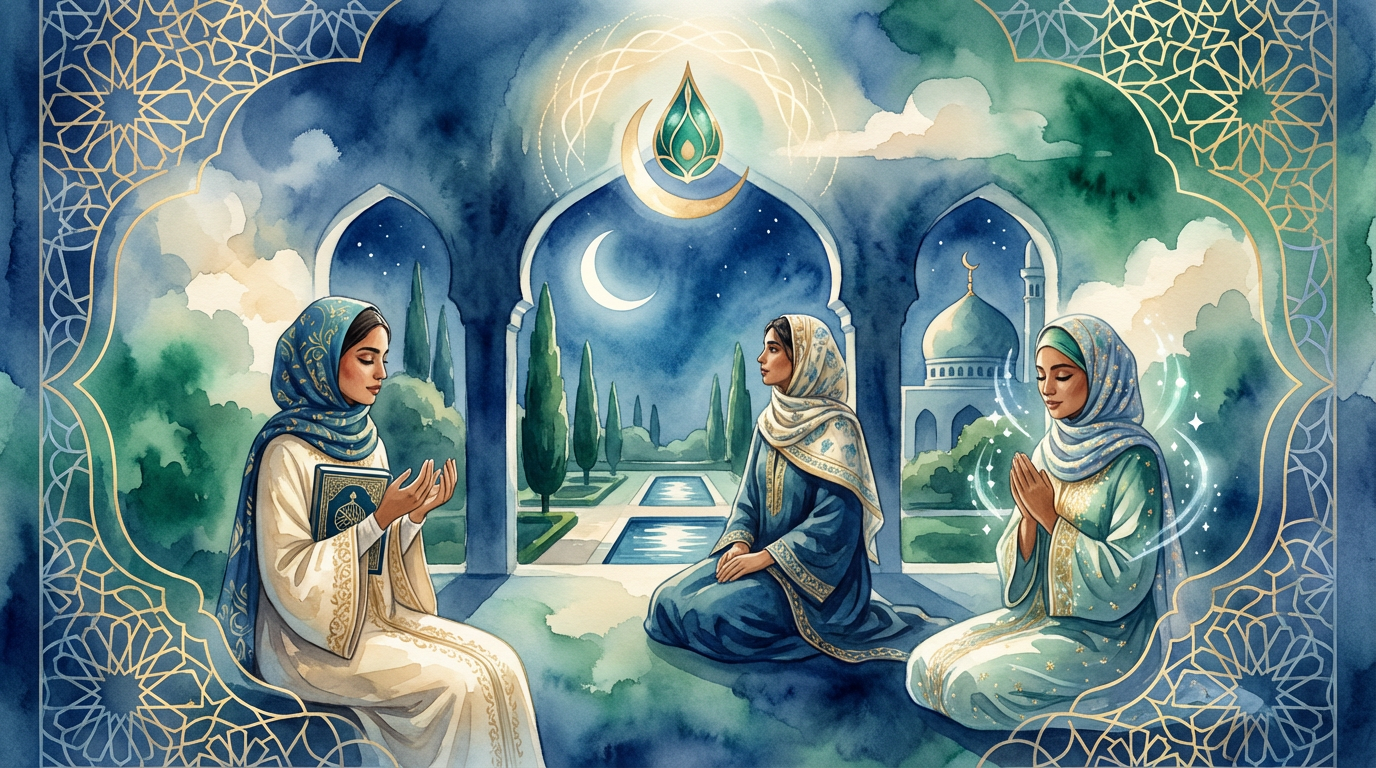
While certain acts are prohibited, Islam provides ample opportunities for a menstruating woman to maintain and even strengthen her spiritual connection with Allah. This emphasis on continuous remembrance and supplication ensures that the period is not seen as a time of spiritual disconnect but rather an opportunity for different forms of devotion.
- •Dhikr (Remembrance of Allah): This includes reciting phrases like 'SubhanAllah' (Glory be to Allah), 'Alhamdulillah' (Praise be to Allah), 'La ilaha illallah' (There is no god but Allah), and 'Allahu Akbar' (Allah is the Greatest). Dhikr can be done at any time, in any state, and is highly encouraged.
- •Dua (Supplication): Making personal prayers and asking Allah for needs, guidance, and blessings is always permissible and encouraged. A woman can raise her hands and supplicate to Allah in her own language or in Arabic, seeking His mercy and assistance.
- •Listening to Quran Recitation: Listening to the beautiful recitation of the Quran is a highly rewarding act. This can be done through audio recordings, apps, or by listening to someone else recite.
- •Reading Islamic Books and Tafsir (Exegesis): Studying the meanings of the Quran (Tafsir), reading books on Hadith, Islamic jurisprudence (fiqh), biography of the Prophet (Seerah), or other religious texts is a great way to gain knowledge and deepen understanding of Islam.
- •Giving Charity (Sadaqah): Donating to the poor and needy is a virtuous act that is highly rewarded and can be performed at any time.
- •Seeking Knowledge: Attending Islamic lectures, online courses, or studying religious sciences is a continuous act of worship.
- •Repentance (Istighfar): Asking Allah for forgiveness is always encouraged.
These permissible acts highlight the richness and flexibility of Islamic worship, allowing women to remain spiritually active and connected even during their periods. This holistic approach is integral to a Muslim period guide that supports modest wellness and spiritual growth.
How is Purity Regained After Menstruation?
Upon the cessation of menstrual bleeding, a Muslim woman must perform a full ritual bath known as Ghusl to regain her state of ritual purity (tahara). This is a mandatory act before she can resume prayers, fasting, and other acts requiring purity.
The Procedure of Ghusl:
- •Intention (Niyyah): Make the intention in your heart to perform Ghusl to remove major impurity (janabah) and regain purity for worship.
- •Wash Hands: Wash both hands up to the wrists three times.
- •Wash Private Parts: Wash the private parts thoroughly to remove any traces of blood or impurity.
- •Perform Wudu (Ablution): Perform a complete Wudu as if preparing for prayer, including washing the face, arms, wiping the head, and washing the feet. Some scholars say this Wudu can be done fully, or just up to the wiping of the head, with the feet washed at the end of the Ghusl.
- •Pour Water Over Head: Pour water over the head three times, ensuring it reaches the roots of the hair. If a woman has braided hair, she does not need to undo it, but she must ensure water reaches the scalp.
- •Wash Right Side of Body: Pour water over the entire right side of the body, from the shoulder down, ensuring all parts are washed.
- •Wash Left Side of Body: Pour water over the entire left side of the body, from the shoulder down, ensuring all parts are washed.
- •Ensure Thorough Washing: Rub the entire body with water, ensuring no part is left dry, including armpits, navel, and between toes.
Once Ghusl is completed, the woman is considered ritually pure and can resume all acts of worship that require purity, including prayer during period cessation and fasting. It's important to note that if bleeding resumes before the next period is due, it may be considered irregular bleeding (istihada), which has different rulings, typically allowing prayer after performing Wudu for each prayer time.
Addressing Common Concerns and Cultural Nuances
Navigating menstruation within an Islamic framework can sometimes bring up questions, especially when balancing faith with modern life, career demands, and family responsibilities. Modest wellness emphasizes a balanced approach to physical and spiritual health.
- •Emotional Well-being: It's crucial not to feel guilty or 'less spiritual' during menstruation. This exemption is a gift from Allah, not a punishment. Use this time for reflection, rest, and alternative forms of worship. Many women find solace in Dhikr and Dua during this time.
- •Cultural Practices vs. Islamic Rulings: In some cultures, there might be additional restrictions or superstitions surrounding menstruation that are not rooted in authentic Islamic teachings. For example, some traditions might suggest a menstruating woman is 'unclean' in a broader social sense, which is incorrect. Islam only specifies ritual impurity for certain acts of worship, not social interaction. It's important to differentiate between cultural norms and established Islamic jurisprudence.
- •Managing Fasting Debt (Qada): Keeping track of missed fasts during Ramadan and making them up can be challenging, especially for busy women. It's recommended to make a plan to fast these days as soon as possible after Ramadan and after the period ends, perhaps during less busy times of the year, or spread them out. Seeking guidance from a local Imam or knowledgeable scholar can help in specific situations.
- •Menstruation Irregularities and Istihada: Some women experience irregular bleeding (istihada) or prolonged periods. Islamic scholars have detailed rulings for these situations. Generally, if the bleeding is irregular and outside the normal menstrual pattern, a woman performs Ghusl once and then performs Wudu for each prayer time, treating it like minor impurity. Consulting with a trusted Islamic scholar for personalized guidance on such matters is highly recommended.
- •Pregnancy and Post-Natal Bleeding (Nifas): Similar to menstruation, post-natal bleeding (nifas) also prohibits ritual prayer and fasting. The rulings are largely similar, and Ghusl is required once the bleeding ceases. Pregnancy-related spotting or bleeding may fall under istihada, requiring specific rulings.
These considerations form an essential part of a comprehensive Muslim period guide, offering practical advice for everyday life.
The Mercy in Exemption: A Deeper Reflection
The exemption from prayer and fasting during menstruation is a profound manifestation of Allah's mercy (Rahmah) towards women. It's not a sign of inferiority or punishment, but rather a compassionate acknowledgment of a woman's unique physiological state. This period can be physically demanding, and the allowance to rest from the physical acts of worship is a testament to the wisdom and practicality of Islamic law.
This exemption also reinforces the idea that worship in Islam is not solely confined to ritual acts. The breadth of permissible acts of worship during menstruation underscores the holistic nature of faith. A woman can still earn immense rewards by engaging in Dhikr, Dua, reading Islamic literature, giving charity, or simply reflecting on Allah's creation. Her intention (niyyah) to worship, even when physically unable to perform certain rituals, holds great value in the sight of Allah.
Furthermore, this ruling fosters a sense of spiritual resilience. It teaches women to adapt their worship according to their circumstances, ensuring that their connection with Allah remains unbroken. It encourages a deeper, more internal form of devotion, moving beyond mere physical motions to a heartfelt remembrance and supplication. This perspective is vital for promoting modest wellness and a healthy spiritual outlook among Muslim women.
Key Takeaways
- •Exemption is Mercy: Menstruation exempts Muslim women from ritual prayers (Salat) and fasting, a divine mercy to accommodate physical discomfort.
- •No Make-Up Prayers: Missed prayers during menstruation are not to be made up.
- •Make-Up Fasts: Missed obligatory fasts (e.g., Ramadan) must be made up after the period ends.
- •Alternative Worship: Engage in Dhikr, Dua, listening to Quran, reading Islamic texts, and giving charity to maintain spiritual connection.
- •Ghusl for Purity: A full ritual bath (Ghusl) is required after menstruation ceases to regain ritual purity.
- •Differentiate Rulings: Distinguish between authentic Islamic rulings and cultural practices or superstitions.
- •Consult Scholars: For complex cases like irregular bleeding, seek guidance from knowledgeable Islamic scholars.
Frequently Asked Questions
Q1: Can I read the Quran from my phone during my period? A1: Yes, the majority of scholars permit reading the Quran from a digital device (like a phone or tablet) during menstruation, as you are not directly touching the physical Mushaf (copy of the Quran). You can also recite from memory or listen to its recitation.
Q2: Do I have to make up the prayers I miss during my period? A2: No, you are not required to make up the ritual prayers (Salat) missed during your menstrual period. This is an explicit exemption and a mercy from Allah.
Q3: Can I enter a mosque during menstruation? A3: While opinions vary, the majority view is that a menstruating woman should not stay in the prayer area (musallah) of a mosque. Passing through, if necessary, is generally considered permissible. Some scholars allow entering for purposes other than prayer, such as attending a lecture, provided there is no risk of soiling the mosque.
Q4: What should I do if my period is irregular or prolonged? A4: If you experience irregular or prolonged bleeding (istihada) outside of your normal menstrual cycle, the rulings differ. Generally, you would perform Ghusl once and then perform Wudu for each prayer time, treating it like minor impurity. It is best to consult a knowledgeable Islamic scholar for specific guidance tailored to your situation.
Q5: Can I make Dua (supplication) during my period? A5: Absolutely! Making Dua is highly encouraged at all times, including during menstruation. You can raise your hands and supplicate to Allah, asking for your needs, guidance, and blessings.
Q6: What is the significance of the exemption from prayer and fasting? A6: The exemption is a profound manifestation of Allah's mercy, acknowledging the physical demands on a woman's body during menstruation. It ensures that worship remains compassionate and accessible, allowing women to maintain their spiritual connection through alternative acts of devotion like Dhikr and Dua, and to rest without guilt.
Q7: Is it permissible to touch Islamic books or Tafsir (Quranic exegesis) during menstruation? A7: Yes, it is permissible to touch and read Islamic books, including books of Tafsir (explanations of the Quran), Hadith, and other religious texts, as long as they are not a physical copy of the Quran itself.
Start Your Wellness Journey Today
Ready to track your cycle, fertility, pregnancy, or menopause journey? Download PERIODiQ - your iQ-powered wellness companion designed for every stage of your health journey.
Get PERIODiQ Free: https://periodiq.app
Your Wellness Journey Starts Here
Download PERIODiQ
Scan the QR code or tap the link to get started with your personalized health tracking.
periodiq.app • iOS & Android
Cite this article
PERIODiQ Editorial Team (2026). "Menstruation & Prayer in Islam: A Muslim Woman's Guide." PERIODiQ. https://periodiq.app/library/menstruation-prayer-in-islam-a-muslim-woman-s-guide
"Menstruation & Prayer in Islam: A Muslim Woman's Guide." PERIODiQ, 2026, https://periodiq.app/library/menstruation-prayer-in-islam-a-muslim-woman-s-guide.
Send this to a friend — PERIODiQ is free for them too. No card. No paywall.
Loved this? Save articles, track your cycle, and unlock meditations — free forever.
Disclaimer: PERIODiQ™ offers general wellness information only. It does not provide medical advice, diagnosis, or treatment. Always speak with a licensed health professional about your health.