Menopause as a Grandmother Teaching: Indigenous Perspectives on the Wisdom Years
Indigenous perspectives on menopause often frame it not as an ending, but as a powerful transition into a new phase of wisdom, leadership, and spiritual insight, viewing the 'wisdom years' as a time of profound societal contribution. This journey, often referred to as a "grandmother teaching," emphasizes the cultural significance of aging and the revered role of elders within First Nations, Māori, and other Indigenous communities worldwide. Embracing this phase involves understanding traditional knowledge, community support, and the spiritual reclamation of one's power.
Listen to this article
~17 min listen
Click play to generate audio narration with a calming voice
TL;DR Summary
- •Menopause in Indigenous cultures is often celebrated as a transition into a revered 'wisdom keeper' role, not an end to vitality.
- •Grandmother teachings emphasize community leadership, spiritual growth, and the sharing of accumulated knowledge.
- •This perspective offers a holistic, empowering framework for women navigating perimenopause and menopause, contrasting Western medicalized views.
Indigenous Menopause: Grandmother Teachings & Wisdom Years
Indigenous perspectives on menopause frequently frame it not as an ending, but as a powerful transition into a new phase of wisdom, leadership, and spiritual insight, viewing the 'wisdom years' as a time of profound societal contribution. This journey, often referred to as a "grandmother teaching," emphasizes the cultural significance of aging and the revered role of elders within First Nations, Māori, and other Indigenous communities worldwide. For Indigenous women entering perimenopause and menopause, understanding and embracing these traditional teachings can provide a rich, empowering framework for navigating the physical, emotional, and spiritual changes of this life stage.
What Are Grandmother Teachings in the Context of Menopause?
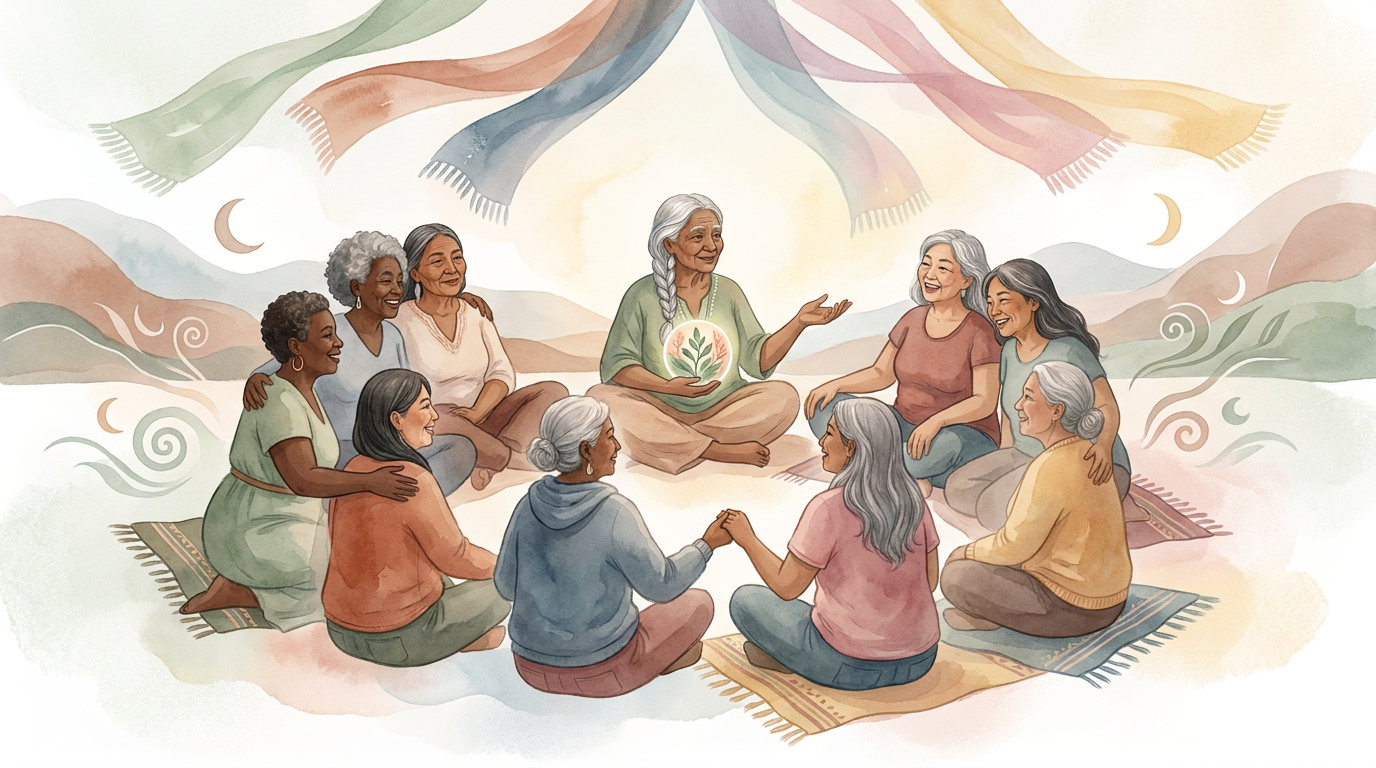
Grandmother teachings, often rooted in oral traditions and passed down through generations, are a foundational aspect of Indigenous knowledge systems that guide individuals through various life stages, including menopause. These teachings are not merely instructions but a holistic philosophy that emphasizes interconnectedness, respect for all life, community responsibility, and spiritual growth. In the context of indigenous menopause, grandmother teachings reframe this natural biological transition as a sacred rite of passage, elevating women to a revered status as wisdom keepers, spiritual guides, and cultural matriarchs. This perspective contrasts sharply with dominant Western narratives that often medicalize menopause, focusing primarily on symptoms and loss. Instead, Indigenous cultures often celebrate the culmination of a woman's reproductive cycle as a release from the physical demands of childbearing, freeing her energy for spiritual and community leadership. The term grandmother teachings menopause signifies a period of enhanced intuition, profound insight, and elevated societal influence, where women are seen as vital pillars of their communities.
How Do Indigenous Cultures View the Transition to Menopause?
Indigenous cultures typically view the transition to menopause as a profound and sacred transformation, marking a woman's entry into her 'wisdom years' and a new stage of spiritual power and community leadership. Unlike the often negatively framed narratives in Western societies, many Indigenous traditions celebrate this shift as a natural and anticipated part of a woman's life journey. For example, within many First Nations elder traditions, women who have completed their childbearing years are seen as having accumulated vast life experience, knowledge, and spiritual power, making them indispensable mentors and guides. The cessation of menstruation is often interpreted as the body retaining its vital energy, which can then be redirected towards spiritual practices, healing, storytelling, and community governance. This shift is not about loss but about gaining a new form of power and purpose. The māori menopause kuia (elderly woman) role, for instance, is one of immense respect and authority, where kuia are central to preserving cultural knowledge, leading ceremonies, and guiding younger generations. This holistic understanding integrates the physical changes with spiritual, emotional, and social dimensions, providing a comprehensive and empowering framework for women.
What Is the Role of Elders and Wisdom Keepers in Indigenous Communities?
The role of elders and wisdom keepers in Indigenous communities is paramount, serving as the living libraries, spiritual anchors, and moral compasses for their people, with menopausal women often stepping into these revered positions. These individuals, whether a First Nations elder or a māori menopause kuia, are not just older members of the community; they are recognized for their deep understanding of traditional laws, ceremonies, oral histories, healing practices, and the natural world. They are the carriers of grandmother teachings menopause, responsible for transmitting cultural values, language, and spiritual knowledge to younger generations. Their wisdom is sought for guidance on critical decisions, conflict resolution, and navigating complex life challenges. In many Indigenous societies, the transition to menopause is directly linked to a woman's ascension to this elder status, as it signifies a lifetime of experience, resilience, and accumulated spiritual power. This role is not passive but active, involving mentorship, leadership in ceremonies, and continuous involvement in community well-being. Their presence ensures the continuity of cultural identity and the strength of the community's spiritual fabric, reinforcing the idea that aging brings increased value and respect.
How Does Indigenous Menopause Differ from Western Medical Perspectives?
Indigenous menopause perspectives fundamentally differ from Western medical views by framing this life stage as a natural, empowering transition into wisdom and leadership, rather than primarily a medical condition characterized by symptoms and decline. Western medicine often approaches menopause as a hormone deficiency, focusing on symptoms like hot flashes, mood swings, and bone density loss, and frequently recommending hormone replacement therapy (HRT) or other pharmaceutical interventions. The narrative often centers on 'managing' or 'treating' menopause to alleviate discomfort and mitigate perceived risks. In contrast, indigenous menopause traditions celebrate the cessation of menstruation as a release from reproductive duties, freeing up a woman's energy for spiritual growth, community work, and the role of a wisdom keeper. While physical changes are acknowledged, they are often understood as part of a natural process, and traditional healing practices—such as herbal remedies, ceremonial practices, and community support—are utilized to maintain balance and well-being. The emphasis is on embracing the new phase of life, recognizing the woman's enhanced spiritual power and societal value as a First Nations elder or māori menopause kuia, rather than viewing it as a period of decline or medical pathology. This holistic and culturally affirming approach provides a powerful counter-narrative to the often-negative Western framing.
What Are Traditional Indigenous Practices for Navigating Menopause?
Traditional Indigenous practices for navigating menopause are holistic, integrating spiritual, emotional, physical, and community support to ensure a balanced and empowering transition into the wisdom years. These practices vary widely among different Indigenous nations but commonly involve herbal medicine, ceremonial practices, storytelling, and strong community networks. For instance, many First Nations elder women might turn to specific plant medicines, often passed down through generations, to support hormonal balance and alleviate discomfort; examples include red raspberry leaf, black cohosh, or dong quai, used differently than in Western contexts, often with spiritual intention. Ceremonies and rites of passage may be held to honor the woman's transition, acknowledging her new status and spiritual power. Storytelling plays a crucial role in transmitting grandmother teachings menopause, sharing the experiences of older women and providing guidance and reassurance. Community support, including mentorship from other elders and the active participation in community life, is vital for fostering a sense of belonging and purpose. For māori menopause kuia, involvement in whānau (family) and hapū (sub-tribe) affairs, coupled with traditional rongoā Māori (Māori medicine) practices, ensures well-being. These practices emphasize the interconnectedness of mind, body, spirit, and community, fostering resilience and celebrating the journey.
How Can Indigenous Women Reclaim Their Power During Menopause?
Indigenous women can reclaim their power during menopause by consciously embracing the rich cultural heritage of grandmother teachings menopause, reconnecting with traditional practices, and asserting their valued role as wisdom keepers within their communities. This reclamation involves decolonizing the narrative around menopause, rejecting Western medicalized views that often diminish or pathologize this natural transition. By engaging with elders and knowledge keepers in their own communities, Indigenous women can deepen their understanding of their specific cultural teachings about this life stage. Participating in traditional ceremonies, learning ancestral languages, and practicing traditional arts can be powerful acts of self-reclamation, reinforcing cultural identity and personal strength. For a First Nations elder or a māori menopause kuia, this might mean actively mentoring younger generations, sharing stories, leading spiritual practices, or contributing to community governance. It also involves prioritizing self-care through traditional foods, plant medicines, and mindful practices that align with Indigenous holistic health models. Reclaiming power during indigenous menopause is about recognizing and stepping into the inherent spiritual authority, wisdom, and leadership that this life stage grants, affirming one's irreplaceable value to family and community.
Benefits by Life Stage
While the primary focus is on menopause, understanding the holistic Indigenous worldview illuminates how these teachings support women across all life stages, culminating in the wisdom years.
Menstrual Health (periods, cramps, PMS)
Indigenous perspectives often frame menstruation as a sacred time of cleansing, reflection, and connection to the earth's cycles, offering a spiritual understanding that can alleviate the negative framing of menstrual health issues. Rather than viewing periods, cramps, or PMS solely as physical ailments, traditional teachings encourage women to honor their bodies' natural rhythms, use plant medicines for support, and seek quiet time for introspection. This approach can help reduce the stigma often associated with menstrual health, fostering a sense of empowerment and self-awareness from a young age. Understanding the body's cyclical nature through grandmother teachings menopause provides a foundation for appreciating all phases of a woman's reproductive life, preparing her for future transitions.
Fertility Journey (TTC, ovulation, conception)
For those on a fertility journey, Indigenous traditions emphasize balance, spiritual readiness, and community support, viewing conception as a sacred co-creation with the spirit world. Traditional practices might include specific ceremonies, herbal remedies to promote reproductive health, and guidance from elders on preparing the body, mind, and spirit for pregnancy. The focus is on aligning oneself with natural cycles and fostering a healthy environment for new life, rather than solely relying on medical interventions. This holistic view can reduce stress and anxiety often associated with trying to conceive, integrating the spiritual dimension into the physical process, and recognizing the profound connection between a woman's well-being and her capacity for fertility.
Pregnancy (trimesters, prenatal care)
Pregnancy in Indigenous cultures is often a community-supported journey, where the expectant mother is surrounded by care, traditional knowledge, and spiritual guidance throughout each trimester. Prenatal care extends beyond medical check-ups to include traditional diets, specific plant medicines for strength and well-being, ceremonial blessings for the mother and child, and the sharing of birth stories and grandmother teachings menopause. The emphasis is on nurturing both the physical and spiritual health of the mother and the unborn child, preparing them for a gentle entry into the world. The wisdom of First Nations elder women and māori menopause kuia is invaluable during this time, offering practical advice and spiritual protection, ensuring a strong start for the new generation.
Menopause (perimenopause, hormonal changes)
Menopause, including perimenopause and the associated hormonal changes, is viewed as a profound and positive transformation within Indigenous traditions, a transition into the highly respected 'wisdom years.' This stage is not seen as a decline but as an ascension to a new level of spiritual power, insight, and leadership, as discussed extensively above. Women are encouraged to embrace the physical changes as signs of their body's shift, redirecting their creative and life-giving energies from reproduction to community building, spiritual guidance, and cultural preservation. Traditional remedies, ceremonies, and the strong support of the community help navigate any discomfort, while the overarching cultural narrative celebrates the woman's increased value as a First Nations elder or māori menopause kuia. This perspective offers a powerful antidote to the often-negative framing of menopause, empowering women to step into their full potential as respected wisdom keepers.
Key Takeaways
- •Indigenous cultures view menopause as a sacred, empowering transition into a revered role as a wisdom keeper and community leader.
- •Grandmother teachings menopause provide a holistic framework for understanding this life stage, emphasizing spiritual growth, community contribution, and accumulated knowledge.
- •This perspective contrasts with Western medicalized views, focusing on celebration and empowerment rather than decline or symptoms.
- •Traditional practices, including herbal medicine, ceremonies, and strong community support, are integral to navigating indigenous menopause.
- •Indigenous women can reclaim power by reconnecting with their cultural heritage, asserting their role as First Nations elder and māori menopause kuia, and decolonizing their understanding of menopause.
Frequently Asked Questions
Q: What is the primary difference between Indigenous and Western views on menopause?
Indigenous views on menopause primarily celebrate it as a sacred transition into a period of heightened wisdom, spiritual power, and community leadership, whereas Western views often medicalize it as a deficiency or a stage of decline marked by symptoms to be treated.
Q: How do "grandmother teachings" specifically relate to menopause?
Grandmother teachings frame menopause as a significant rite of passage where women, having completed their reproductive roles, are freed to channel their energy into spiritual development, sharing their accumulated knowledge, and guiding their communities as revered elders and wisdom keepers.
Q: Are there specific ceremonies associated with indigenous menopause?
Yes, many Indigenous cultures have specific ceremonies or rites of passage that honor and support women entering menopause, acknowledging their transition to a new spiritual and societal status. These ceremonies vary greatly by nation but often involve blessings, communal gatherings, and traditional practices.
Q: How can an Indigenous woman connect with these traditional teachings today?
An Indigenous woman can connect with traditional teachings by seeking guidance from elders and knowledge keepers within her own community, participating in cultural events, learning ancestral languages, and engaging with traditional healing practices and storytelling. It involves actively seeking out and honoring her specific cultural heritage.
Q: What role do First Nations elders play during menopause?
First Nations elders, particularly women who have gone through menopause, play a crucial role as mentors, spiritual guides, and cultural custodians. They share their life experience and wisdom, provide traditional healing knowledge, and often lead ceremonies, embodying the respected status of a post-menopausal woman.
Q: What does "māori menopause kuia" signify?
"Māori menopause kuia" refers to a Māori woman who has entered her elder years, often post-menopause, and holds a highly respected position within her whānau (family) and hapū (sub-tribe). Kuia are seen as repositories of knowledge, cultural leaders, and spiritual anchors for their communities.
Q: Can non-Indigenous women learn from these perspectives?
While it's crucial to respect Indigenous sovereignty over traditional knowledge and avoid appropriation, non-Indigenous women can gain valuable insights from the empowering and holistic framing of menopause as a wisdom stage. This can inspire a more positive personal narrative around aging and the transition, encouraging a deeper connection to self and community, while always acknowledging the source and seeking to understand, not to take.
Start Your Wellness Journey Today
Ready to track your cycle, fertility, pregnancy, or menopause journey? Download PERIODiQ - your iQ-powered wellness companion designed for every stage of your health journey.
Get PERIODiQ Free: https://periodiq.app
Your Wellness Journey Starts Here
Download PERIODiQ
Scan the QR code or tap the link to get started with your personalized health tracking.
periodiq.app • iOS & Android
Cite this article
PERIODiQ Editorial Team (2026). "Menopause as a Grandmother Teaching: Indigenous Perspectives on the Wisdom Years." PERIODiQ. https://periodiq.app/library/menopause-as-a-grandmother-teaching-indigenous-perspectives-on-the-wisdom-years
"Menopause as a Grandmother Teaching: Indigenous Perspectives on the Wisdom Years." PERIODiQ, 2026, https://periodiq.app/library/menopause-as-a-grandmother-teaching-indigenous-perspectives-on-the-wisdom-years.
Send this to a friend — PERIODiQ is free for them too. No card. No paywall.
Loved this? Save articles, track your cycle, and unlock meditations — free forever.
Disclaimer: PERIODiQ™ offers general wellness information only. It does not provide medical advice, diagnosis, or treatment. Always speak with a licensed health professional about your health.