Cramps at School: 5 Secret Relief Tricks for Teens
Dealing with period cramps at school can be tough, but there are simple, effective ways to find relief. From hydration and gentle movement to smart planning and discreet comfort items, these tips can help you manage menstrual cramps without missing out on school activities.
Listen to this article
~13 min listen
Click play to generate audio narration with a calming voice
TL;DR Summary
- •Staying hydrated and eating balanced snacks can significantly reduce period cramp intensity.
- •Gentle movement and strategic stretching, even quick bathroom breaks, can ease discomfort.
- •Being prepared with a 'cramp kit' and knowing who to talk to at school makes a huge difference.
Cramps at School: Your Guide to Feeling Better, Fast!
Hey there! 👋 We've all been there – that moment when you're sitting in class, trying to focus on something super important, and suddenly, your period cramps decide to make a grand entrance. 😩 It's like your body is throwing a mini-party you didn't RSVP to, and the main guest is a persistent, dull ache in your lower belly or back. Dealing with period cramps at school can feel like a secret mission, especially when you just want to blend in and get through the day. But guess what? You're not alone, and there are actually super effective, discreet ways to find relief that you might not even know about! This guide is packed with tips and tricks to help you tackle those pesky menstrual cramp relief teens often need, so you can focus on learning, hanging out with friends, and just being you, without cramps getting in the way.
It's totally normal to experience some discomfort during your period. Your uterus is a muscle, and when it sheds its lining each month, it contracts, which can cause those crampy feelings. For some, it's a mild annoyance, but for others, it can be really painful. The good news is, you don't have to just suffer in silence. We're going to dive into five 'secret' relief tricks that are easy to use at school, plus some bonus tips to help you feel your best.
Why Do Period Cramps Feel So Bad Sometimes?
Before we jump into relief, let's quickly chat about why cramps happen. During your period, your body releases hormone-like substances called prostaglandins. These prostaglandins cause your uterine muscles to contract and shed the uterine lining. Higher levels of prostaglandins can lead to more intense contractions and, you guessed it, more intense pain. Think of it like a tiny, internal workout for your uterus! While this process is completely natural and a sign that your body is working as it should, it doesn't make the pain any less real. Understanding this can sometimes help you feel more in control, knowing it's just your body doing its thing.
Now, let's get to those game-changing relief strategies!
How Can I Discreetly Relieve Period Cramps at School?
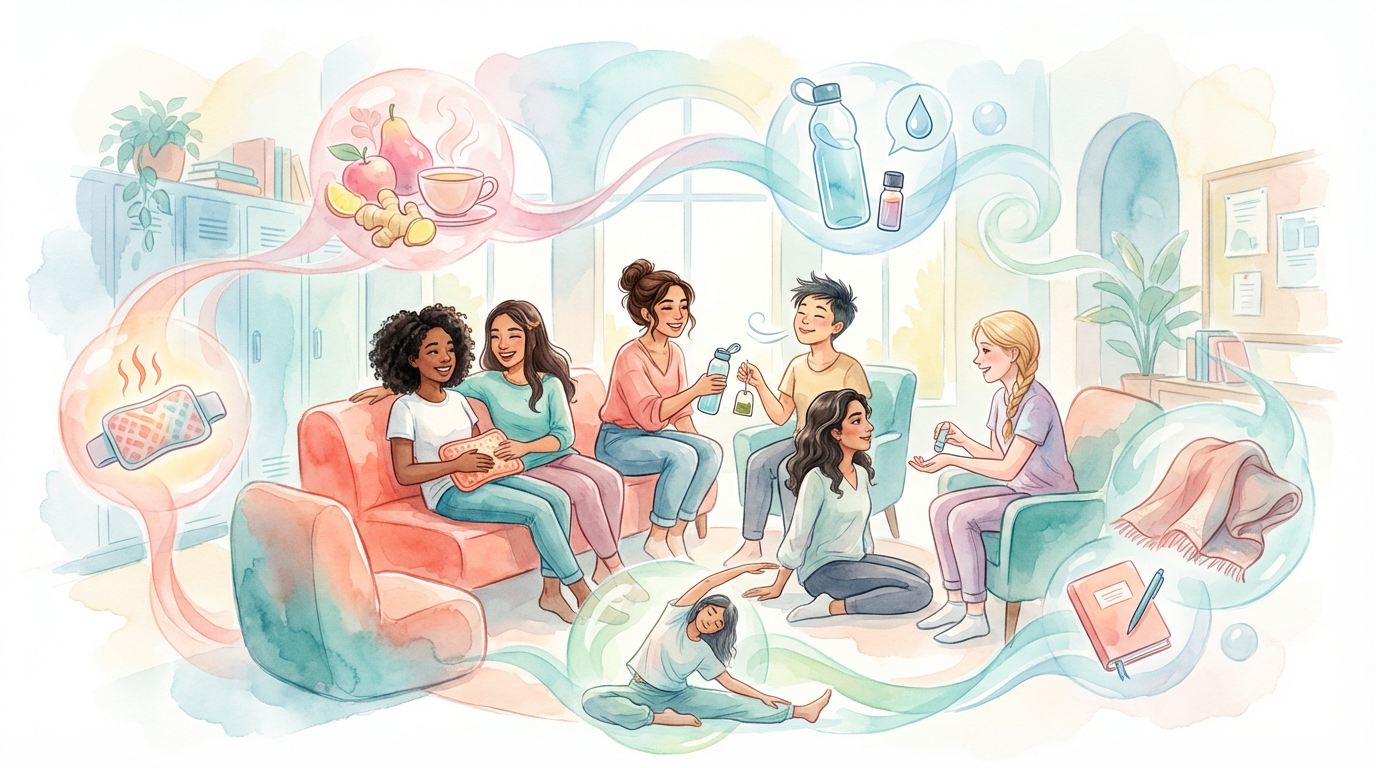
Dealing with cramps at school requires a bit of stealth and smart planning. The key is to have strategies that you can use without drawing too much attention. These tips focus on quick, effective, and subtle ways to ease your discomfort so you can get back to your day.
1. Hydration & Smart Snacking: Your Internal Comfort Crew 💧🍎
It might sound simple, but what you put into your body can make a huge difference in how you experience period cramps. Dehydration can actually make cramps feel worse, and certain foods can either help or hinder your comfort.
The Power of Water:
- •Why it helps: Drinking plenty of water (think 6-8 glasses a day, or more if you're active!) helps your body function optimally. It can reduce bloating, which often contributes to cramp discomfort, and helps your muscles, including your uterus, work more smoothly. When you're dehydrated, your muscles can tense up more, making cramps feel sharper.
- •How to do it at school: Carry a reusable water bottle everywhere! Take sips throughout class, during breaks, and while walking between classes. If your school has water fountains or refill stations, make good use of them. Make it a habit to fill up your bottle before school starts and again at lunch.
Smart Snacks for Soothing:
- •Why it helps: Certain foods can have anti-inflammatory properties or provide sustained energy, which can indirectly ease cramp pain. Plus, avoiding sugary or highly processed foods can prevent energy crashes and digestive upset, both of which can worsen how you feel.
- •What to pack:
- •Bananas: Rich in potassium, which helps with muscle function and can reduce bloating.
- •Almonds or Walnuts: Great sources of magnesium and healthy fats, which can help relax muscles.
- •Dark Chocolate: Yes, chocolate! In moderation, dark chocolate (70% cocoa or higher) contains magnesium and antioxidants that can be comforting.
- •Oranges: Packed with Vitamin C and can help with hydration.
- •Oatmeal/Whole-grain crackers: Provide sustained energy and fiber, which helps with digestion.
- •How to do it at school: Keep a small stash of these snacks in your backpack or locker. When you feel a cramp coming on, grab a healthy bite during lunch or a quick break. Aim for balanced meals throughout the day, too!
Research Says: Studies have shown that diets rich in fruits, vegetables, and whole grains, and lower in processed foods, can be associated with reduced menstrual pain. (Source: Journal of Obstetrics and Gynaecology Research)
2. Gentle Movement & Strategic Stretching: Your Body's Natural Painkiller 🧘♀️🚶♀️
When cramps hit, the last thing you might want to do is move, but often, gentle movement is exactly what your body needs! Staying still can make muscles feel tighter and pain more intense.
The Magic of Movement:
- •Why it helps: Light physical activity increases blood flow to your pelvic area, which can help relax uterine muscles and reduce cramping. It also releases endorphins, your body's natural painkillers, which can lift your mood and decrease pain perception.
- •How to do it at school:
- •Bathroom Breaks: Use bathroom breaks as an opportunity for a mini stretch session. In a stall, you can do gentle stretches like child's pose (if space allows), or simply stand and do some gentle pelvic tilts (tuck your tailbone under, then release). Even just walking to the bathroom and back is more movement than sitting still.
- •Walk between classes: Instead of rushing or slumping, try to walk with good posture and a steady pace. This can be a subtle way to encourage blood flow.
- •Desk Stretches: While seated, you can do gentle twists, shoulder rolls, or simply stand up and stretch towards the ceiling. Even a few minutes of this can make a difference.
- •During PE/Sports: If you usually participate, try to keep up. Listen to your body – don't push yourself if the pain is severe, but often, light activity can be beneficial. Inform your coach or teacher if you're feeling unwell.
Quick Desk Stretches:
- •Seated Gentle Twist: Sit tall, twist your upper body gently to the right, placing your left hand on your right knee. Hold for 15-20 seconds. Repeat on the other side. This can help release tension in your lower back.
- •Cat-Cow (Seated Version): While seated, arch your back slightly as you inhale (cow), then round your back as you exhale (cat). This gentle spinal movement can relieve back pain often associated with cramps.
Expert Insight: Exercise physiologists often recommend light to moderate exercise for menstrual pain relief, noting its positive impact on circulation and endorphin release. (Source: American College of Obstetricians and Gynecologists)
3. Heat Therapy on the Go: Your Secret Weapon 🔥
Heat is one of the oldest and most effective remedies for muscle pain, and period cramps are no exception. Applying heat to your lower abdomen or back can relax those contracting uterine muscles and provide immense comfort.
The Magic of Heat:
- •Why it helps: Heat increases blood flow, which can relax the uterine muscles that are cramping. It also has a soothing effect that can distract from the pain and provide a sense of comfort.
- •How to do it at school:
- •Adhesive Heat Patches: These are a game-changer! Brands like ThermaCare or generic adhesive heat patches are thin, stick directly to your clothing (or even skin, but check instructions!), and provide several hours of gentle, continuous heat. They're super discreet – no one will ever know you're wearing one under your shirt. Keep a few in your backpack.
- •Small, Portable Hot Water Bottle/Microwavable Heat Pack: If your school has a microwave (like in the cafeteria or nurse's office), you could potentially use a small, microwavable heat pack. Just be mindful of school rules and discretion. A mini hot water bottle wrapped in a cloth could also work for a short period.
Pro Tip: Apply a heat patch before the cramps get really bad, if you know your period is coming. Prevention is often easier than treatment!
4. Over-the-Counter Pain Relief: Your First Line of Defense 💊
Sometimes, natural remedies aren't quite enough, and that's okay! Over-the-counter (OTC) pain relievers are specifically designed to help with menstrual pain and can be very effective.
Understanding OTCs:
- •Why they help: Non-steroidal anti-inflammatory drugs (NSAIDs) like ibuprofen (Advil, Motrin) or naproxen (Aleve) work by reducing the production of prostaglandins, those hormone-like substances that cause uterine contractions and pain. This means they address the cause of the pain, not just the symptom.
- •How to use them at school:
- •Talk to a Trusted Adult: This is super important! Before taking any medication at school, talk to your parent or guardian. They might need to fill out a form for the school nurse to administer medication, or they might give you permission to carry a small, pre-dosed amount. Never self-medicate without adult knowledge and permission, especially at school.
- •Timing is Key: NSAIDs work best when taken before or at the very start of your cramps. If you know your period is due, or you feel the first twinge, taking an NSAID can often prevent the pain from becoming severe.
- •Always read the label: Follow dosage instructions carefully. Don't take more than recommended.
Important Note: If OTC pain relievers aren't helping, or your cramps are so severe they interfere with your daily life, it's really important to talk to a doctor or a trusted adult about seeing one. There might be other options or underlying reasons for severe pain.
5. Mind-Body Connection: Calming Your Nerves 🧠💖
Stress and anxiety can actually make pain feel worse. When you're stressed, your muscles can tense up, and your body can become more sensitive to pain. Learning to calm your mind can be a powerful tool for managing period pain.
Harnessing Your Mind:
- •Why it helps: Relaxation techniques can reduce muscle tension, lower stress hormones, and change your perception of pain. When you're calmer, your body is less likely to amplify discomfort.
- •How to do it at school:
- •Deep Breathing: This is a super discreet and effective trick. When you feel a cramp coming on, try this: Inhale slowly through your nose for a count of four, hold your breath for a count of two, then exhale slowly through your mouth for a count of six. Repeat 5-10 times. You can do this sitting at your desk, in the hallway, or in the bathroom. It signals to your body that it's safe to relax.
- •Quick Meditation/Mindfulness: On a break, find a quiet spot (even just closing your eyes at your desk for a minute). Focus on a calming image, or simply pay attention to your breath without judgment. There are many free apps with short guided meditations (like Calm or Headspace) that you can listen to with earbuds.
- •Distraction: Sometimes, simply redirecting your focus can help. Engage in a fun conversation with a friend, listen to music during a study hall, or read a captivating book. Distraction doesn't make the pain disappear, but it can make it less central to your experience.
Mindfulness Moment: Even taking 60 seconds to notice five things you can see, four things you can hear, three things you can feel, two things you can smell, and one thing you can taste can ground you and reduce anxiety.
Building Your Ultimate Period Cramp Survival Kit for School 🎒
Being prepared is your superpower when it comes to managing period cramps school challenges! A small, discreet 'cramp kit' in your backpack can make all the difference.
What to pack:
- •Adhesive Heat Patches: Your secret weapon for continuous relief.
- •Small Pack of Pain Relievers: (With parental/school permission) Ibuprofen or naproxen.
- •Reusable Water Bottle: Always full!
- •Healthy Snacks: Bananas, nuts, dark chocolate, whole-grain crackers.
- •Extra Period Supplies: Tampons, pads, or liners, just in case.
- •Comfort Item: A small, soft handkerchief or a comforting essential oil roll-on (like lavender for calming, applied to wrists – again, check school policies).
- •A Note from Home: If you have special needs or instructions for the nurse, make sure your parents have communicated with the school.
When to Talk to Someone: Don't Suffer in Silence!
While these tips are great for everyday cramp relief, it's really important to know when to seek help. If your cramps are:
- •So severe that they regularly make you miss school or activities.
- •Not relieved by OTC pain relievers.
- •Accompanied by very heavy bleeding, dizziness, or fever.
- •Suddenly much worse than they used to be.
- •New or different from what you typically experience.
Talk to a trusted adult: Your parent, guardian, school nurse, school counselor, or family doctor are all great resources. They can offer more personalized advice, explore other treatment options, or rule out any underlying conditions. Remember, your health and comfort are important, and you deserve to feel good!
Key Takeaways for Managing Cramps at School
- •Hydrate & Fuel Smart: Water and healthy snacks are your internal comfort crew.
- •Move Gently: Even small stretches or walks can make a big difference.
- •Heat is Your Friend: Discreet adhesive heat patches are a game-changer.
- •Plan Ahead: Have your cramp kit ready with approved pain relievers.
- •Breathe & Relax: Use deep breathing to calm your mind and body.
- •Don't Be Afraid to Speak Up: Talk to a trusted adult if cramps are severe or persistent.
Frequently Asked Questions (FAQ) About Period Cramps at School
Q1: What are period cramps and why do I get them?
A1: Period cramps, also known as dysmenorrhea, are a common symptom of menstruation. They happen because your uterus contracts to shed its lining, a process triggered by hormone-like substances called prostaglandins. These contractions can cause a dull ache or sharp pain in your lower abdomen or back. It's a completely normal part of your menstrual cycle!
Q2: Can stress make my period cramps worse at school?
A2: Yes, absolutely! Stress and anxiety can heighten your perception of pain and cause your muscles, including your uterus, to tense up. This can make cramps feel more intense. Practicing relaxation techniques like deep breathing or mindfulness can help reduce stress and potentially ease cramp discomfort.
Q3: Is it okay to take pain relievers at school for cramps?
A3: It depends on your school's policy and your parents' permission. Many schools require medication to be administered by the school nurse, or for parents to provide written consent for you to carry it. Always talk to your parent or guardian first. Over-the-counter NSAIDs like ibuprofen are often very effective for menstrual cramps when taken as directed.
Q4: What are some discreet ways to relieve cramps in class?
A4: Discreet methods include sipping water from a reusable bottle, doing gentle seated stretches (like pelvic tilts or gentle twists), practicing deep breathing exercises, or wearing an adhesive heat patch under your clothes. Having a healthy snack packed with magnesium or potassium can also help subtly.
Q5: What should I do if my period cramps are really bad and I can't focus on schoolwork?
A5: If your cramps are severe and interfering with your ability to learn, it's important to tell a trusted adult. You can speak to your teacher, the school nurse, or call your parent/guardian. They can help you get relief, whether it's by providing medication (if allowed), letting you rest in the nurse's office, or arranging for you to go home if necessary. Don't suffer in silence!
Q6: Does drinking hot tea help with cramps at school?
A6: Yes, drinking warm liquids like herbal tea (if you can bring it in a thermos) can be very soothing. The warmth can help relax muscles, and certain herbal teas like ginger or chamomile have anti-inflammatory and calming properties that may help reduce pain and tension. Just make sure it's allowed in class or saved for breaks.
Q7: Are there any foods I should avoid during my period to prevent cramps?
A7: While everyone is different, some people find that highly processed foods, sugary snacks, excessive caffeine, and very salty foods can increase bloating and inflammation, potentially making cramps worse. Focusing on a balanced diet rich in fruits, vegetables, and whole grains is generally recommended for overall well-being and might help reduce cramp severity.
Start Your Wellness Journey Today
Ready to track your cycle, fertility, pregnancy, or menopause journey? Download PERIODiQ - your iQ-powered wellness companion designed for every stage of your health journey.
Get PERIODiQ Free: https://periodiq.app
Your Wellness Journey Starts Here
Download PERIODiQ
Scan the QR code or tap the link to get started with your personalized health tracking.
periodiq.app • iOS & Android
Cite this article
PERIODiQ Editorial Team (2026). "Cramps at School: 5 Secret Relief Tricks for Teens." PERIODiQ. https://periodiq.app/library/cramps-at-school-5-secret-relief-tricks-for-teens
"Cramps at School: 5 Secret Relief Tricks for Teens." PERIODiQ, 2026, https://periodiq.app/library/cramps-at-school-5-secret-relief-tricks-for-teens.
Send this to a friend — PERIODiQ is free for them too. No card. No paywall.
Loved this? Save articles, track your cycle, and unlock meditations — free forever.
Disclaimer: PERIODiQ™ offers general wellness information only. It does not provide medical advice, diagnosis, or treatment. Always speak with a licensed health professional about your health.