
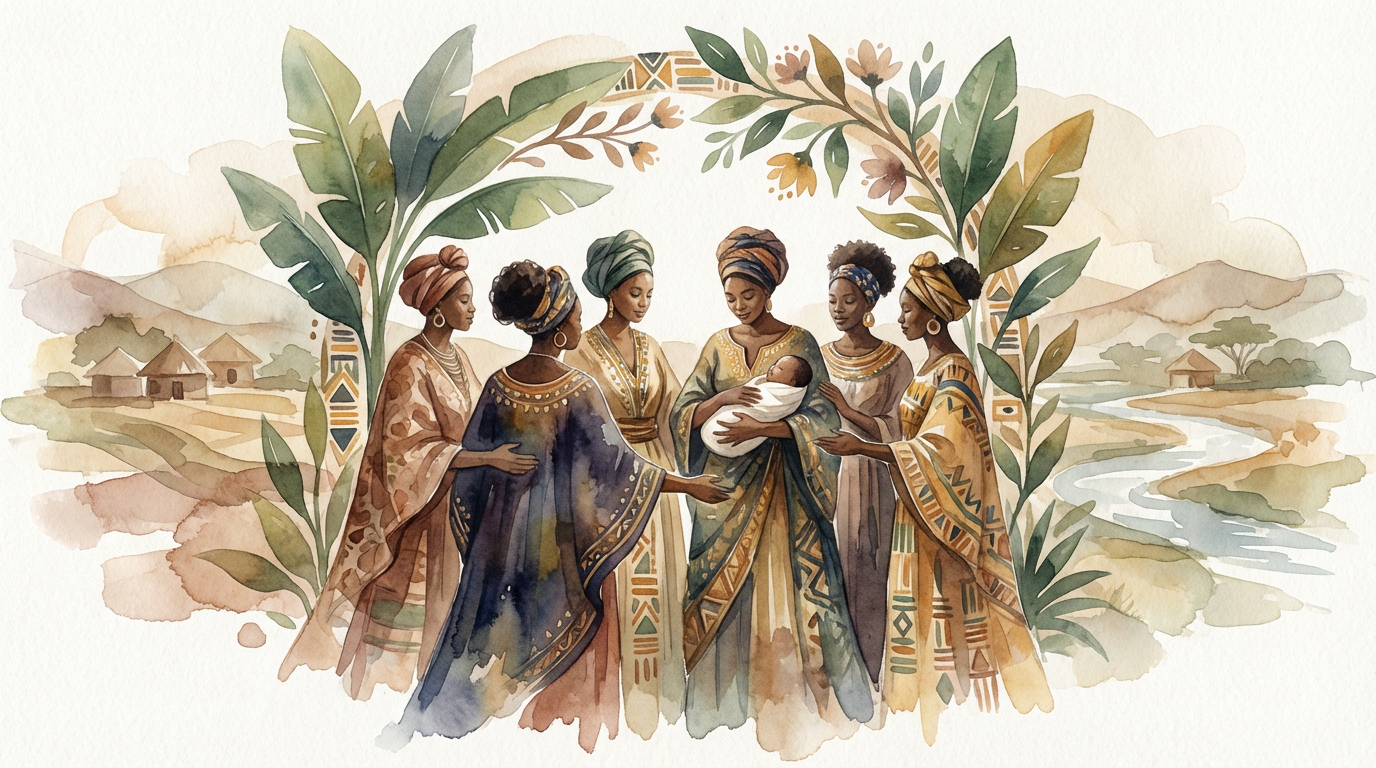
Community Birth Support: African Traditions for New Mothers
African traditions offer invaluable community birth support, emphasizing collective care, ancestral wisdom, and holistic well-being for new mothers. These practices integrate postpartum recovery, infant care, and spiritual grounding, fostering resilience and connection within the community.
Listen to this article
~13 min listen
Click play to generate audio narration with a calming voice
TL;DR Summary
- •African traditions provide a holistic framework for community birth support, emphasizing collective care, ancestral wisdom, and the well-being of both mother and child.
- •Postpartum care extends beyond physical recovery, incorporating spiritual healing, nutritional support, and practical assistance from a network of family and community members.
- •These practices foster strong communal bonds, reduce maternal stress, and integrate new mothers seamlessly into their roles through shared knowledge and mutual support.
What is Community Birth Support in African Traditions?
Community birth support in African traditions is a deeply ingrained, holistic approach to caring for new mothers and their infants, rooted in the collective wisdom and interconnectedness of the community. Unlike modern, often individualized birthing experiences, African traditions emphasize that "it takes a village" to raise a child, and this begins even before birth and extends well into the postpartum period. This support encompasses physical, emotional, spiritual, and practical assistance, ensuring the mother's well-being, the baby's healthy development, and the family's smooth integration into their new roles. It's a testament to ancestral practices that prioritize communal health over individualistic approaches, providing a robust safety net for women navigating the transformative journey of motherhood.
Why is Community Support Crucial for New Mothers?
Community support is crucial for new mothers because the journey into motherhood is profoundly transformative and can be overwhelming without adequate assistance. In many African cultures, the postpartum period, often referred to as the "lying-in" period, is recognized as a sacred time requiring rest, nourishment, and protection. This collective care helps to mitigate the challenges of sleep deprivation, hormonal shifts, and the demands of infant care. Research indicates that strong social support networks are directly linked to lower rates of postpartum depression, improved breastfeeding outcomes, and greater maternal confidence. For women balancing careers, family life, and fertility planning, having a robust community network—whether through direct family, friends, or specific cultural groups—provides the practical help and emotional reassurance needed to thrive, rather than just survive, this critical phase. This support is not just about helping with chores; it's about sharing wisdom, providing emotional validation, and reinforcing the mother's identity within her community.
How Do African Traditions Define the Postpartum Period?
In African traditions, the postpartum period is typically defined as a sacred and crucial time for healing, bonding, and cultural integration, extending far beyond the conventional six-week medical check-up. This period, often lasting anywhere from 40 days to several months, is characterized by specific rituals, dietary practices, and community involvement designed to restore the mother's strength, protect the vulnerable infant, and facilitate the family's adjustment. For instance, among the Yoruba people of Nigeria, the Iya Agba (elderly women) play a pivotal role, guiding the new mother through traditional baths, massages, and herbal remedies. In Ghana, the dipo custom, while primarily a puberty rite, often includes teachings on motherhood and community responsibility that prepare young women for future roles, including the postpartum phase. This time is not just about physical recovery, but also spiritual cleansing and emotional nourishment, ensuring the mother feels cherished, respected, and empowered as she steps into her new identity. The emphasis is on complete recuperation, allowing the mother to fully dedicate herself to her newborn without the burden of household duties or external pressures, as these are typically handled by the community.
What are the Key Traditional Practices for Postpartum Care?
Traditional African postpartum care practices are rich and diverse, yet share common threads of holistic well-being and community involvement. These practices often include:
- •Confinement and Rest (Lying-in): New mothers are often encouraged, and sometimes expected, to remain indoors for a specified period (e.g., 40 days) to rest, heal, and bond with their baby. During this time, they are relieved of household duties.
- •Nutritional Support: Specific diets rich in nutrient-dense foods, often warm and easily digestible, are prepared for the mother to aid recovery, boost milk production, and restore energy. Herbal infusions are also common.
- •Herbal Remedies and Massages: Traditional healers or elder women often administer herbal baths, steams, and abdominal massages to help the uterus contract, reduce swelling, and promote overall healing. For example, in some East African cultures, kanga wraps are used for abdominal binding to support the core muscles.
- •Spiritual Cleansing and Protection: Rituals are performed to cleanse the mother and baby from negative energies and to welcome the new life into the community. This may involve prayers, offerings, or specific ceremonial baths.
- •Infant Care Education: Experienced women in the community share ancestral knowledge on breastfeeding techniques, infant massage, umbilical cord care, and traditional remedies for common infant ailments.
- •Emotional and Psychological Support: The constant presence and empathy of family members and community elders provide a crucial emotional buffer, allowing the mother to express her feelings, fears, and joys without judgment. This communal presence helps to normalize the challenges of early motherhood and reinforces the idea that she is not alone.
These practices are not merely superstitions but are often based on centuries of empirical observation and a deep understanding of the body's healing processes, passed down through generations.
How Do Ancestral Wisdom and Community Wellness Intersect in Birth Support?
Ancestral wisdom and community wellness are inextricably linked in African birth support, forming the bedrock of these traditional practices. Ancestral wisdom refers to the accumulated knowledge, beliefs, and practices passed down through generations, often embodying a holistic understanding of health, spirituality, and social harmony. This wisdom is not just theoretical; it's a living tradition demonstrated through rituals, storytelling, and practical guidance. For example, the knowledge of specific herbs for postpartum healing or the importance of certain foods for lactation comes directly from ancestral teachings.
Community wellness, in this context, means that the health and well-being of an individual are seen as integral to the health and well-being of the entire community. A healthy mother and child contribute to a stronger, more vibrant community. Therefore, the community actively invests in the mother's recovery and the child's upbringing. This intersection is evident in:
- •Shared Responsibility: The burden of childcare and household management is distributed among many, allowing the mother to focus solely on healing and bonding. This communal effort reduces individual stress and strengthens social cohesion.
- •Intergenerational Knowledge Transfer: Grandmothers, aunts, and experienced mothers pass down essential skills and wisdom directly to new mothers, ensuring continuity of cultural practices and supporting the new mother's confidence.
- •Rituals of Integration: Ceremonies and naming rituals not only welcome the new baby but also reaffirm the mother's new status and place within the community, reinforcing her identity and value.
- •Preventative Care: Many traditional practices are preventative, aiming to avert potential physical or emotional issues by providing comprehensive support from the outset, rather than intervening only when problems arise. This proactive approach underscores the community's commitment to the long-term well-being of its members.
By drawing on ancestral wisdom, communities create an environment where new mothers feel secure, valued, and connected, fostering not just individual wellness but also the collective strength and resilience of the entire group.
What Role Do Traditional Birth Attendants (TBAs) and Elders Play?
Traditional Birth Attendants (TBAs), often referred to as Iya Agba (Yoruba for 'elder mother') or similar titles across various African cultures, and community elders play a foundational and revered role in African birth support. They are the custodians of ancestral knowledge and the primary providers of care, bridging the gap between spiritual beliefs and practical healthcare. Their roles typically include:
- •Prenatal Guidance: TBAs often counsel expectant mothers on nutrition, safe practices, and emotional preparation for birth, drawing on generations of experience.
- •Labor and Delivery Support: While their role in direct delivery has sometimes been marginalized by modern medicine, historically and in many rural areas, TBAs provide continuous emotional, physical, and spiritual support during labor, using traditional techniques to facilitate birth.
- •Postpartum Care Experts: After birth, TBAs and elders become central figures in the mother's recovery. They administer traditional massages, prepare herbal remedies, oversee dietary restrictions, and teach infant care practices like breastfeeding and umbilical cord treatment.
- •Spiritual and Emotional Mentors: Beyond physical tasks, they offer invaluable emotional support, listening to the mother's concerns, sharing wisdom, and performing rituals for spiritual protection and blessing for both mother and child. They act as confidantes and guides, helping mothers navigate the emotional landscape of new motherhood.
- •Community Liaisons: They often serve as vital links between the new mother and the broader community, coordinating support, sharing information, and ensuring the family's needs are met. Their respected status enables them to mobilize community resources effectively.
Their expertise is not just clinical; it is deeply cultural and spiritual, providing a sense of security and continuity that modern healthcare systems often struggle to replicate. They embody the collective memory and wisdom of the community, ensuring that traditional practices are preserved and passed on.
How Can Modern Mothers Integrate These Practices into Their Lives?
Modern mothers, particularly those balancing careers, fertility planning, and family life in contemporary settings, can thoughtfully integrate elements of African traditional birth support to enrich their postpartum experience. This doesn't necessarily mean adopting every ritual, but rather embracing the underlying principles of community, holistic care, and ancestral wisdom. Here's how:
- •Build Your "Village": Proactively cultivate a support network before birth. This could include close friends, family members (parents, siblings, aunts), neighbors, or even online communities focused on motherhood. Clearly communicate your needs and ask for specific help (meals, errands, childcare for older children, emotional check-ins).
- •Prioritize Rest and Nourishment: Consciously schedule and enforce a "lying-in" period for yourself, even if it's shorter than traditional. Delegate tasks, avoid overcommitting, and prioritize nutrient-dense, easily prepared meals. Consider meal train services or asking friends to bring food.
- •Seek Holistic Support: Explore complementary therapies like postpartum massage or herbal teas if they resonate with you. Consult with a qualified naturopath or herbalist experienced in women's health. Many modern doulas also offer postpartum support that aligns with traditional care principles.
- •Embrace Intergenerational Wisdom: If possible, engage with elder women in your family or community. Their lived experiences and advice can be invaluable, offering perspectives that modern parenting guides might miss. This can also be a beautiful way to connect with your heritage.
- •Practice Self-Compassion and Mindfulness: Acknowledge that the postpartum period is a time of profound change. Incorporate mindfulness practices, gentle movement, and moments of quiet reflection to support your emotional well-being.
- •Cultural Sensitivity and Adaptation: For women of African descent living in the diaspora, actively seek out cultural groups or organizations that celebrate and practice traditional postpartum care. Adapt these practices to fit your lifestyle and resources, focusing on the spirit of community and care.
- •Communicate Your Needs: Be open and honest with your partner, family, and friends about what you need. Often, people want to help but don't know how. Providing specific requests can be empowering.
By intentionally weaving these elements into their postpartum plan, modern mothers can create a more supported, nourishing, and culturally rich experience, drawing strength from ancient wisdom while navigating contemporary life.
What are the Long-Term Benefits of Community Birth Support?
The long-term benefits of robust community birth support, as exemplified by African traditions, extend far beyond the initial postpartum period, positively impacting the mother, child, family, and the community as a whole. These benefits contribute to a more resilient and interconnected society:
- •Reduced Maternal Stress and Improved Mental Health: Consistent support significantly lowers the risk of postpartum depression and anxiety, fostering greater maternal well-being and confidence in parenting. A mother who feels supported is better equipped to cope with the demands of motherhood.
- •Stronger Mother-Child Bonding: When a mother is well-rested and emotionally secure, she can more fully engage in bonding with her infant, which is crucial for early childhood development and attachment.
- •Enhanced Family Cohesion: The shared experience of supporting a new mother strengthens family ties and fosters a deeper sense of unity. Partners also benefit from the extended support network, reducing their burden and allowing them to better support the mother.
- •Preservation of Cultural Heritage: By actively participating in and receiving traditional care, new mothers become conduits for passing on ancestral wisdom and cultural practices to future generations, reinforcing cultural identity.
- •Community Resilience and Social Capital: The act of giving and receiving support builds social capital within the community, fostering trust, reciprocity, and a sense of collective responsibility. This resilience benefits all members, creating a supportive environment for future generations.
- •Empowered Motherhood: Being nurtured and supported during such a vulnerable time empowers mothers, instilling a sense of self-worth and capability that extends into all aspects of their lives.
- •Better Child Development Outcomes: Children raised in environments where mothers are well-supported tend to have more engaged and responsive caregivers, leading to better cognitive, social, and emotional development outcomes.
Ultimately, community birth support cultivates a cycle of care and well-being, where each generation benefits from the wisdom and collective strength of those who came before, ensuring that the journey into motherhood is a celebrated and supported passage for all.
Key Takeaways
- •African traditions offer comprehensive community birth support, integrating physical, emotional, and spiritual care for new mothers and infants.
- •The postpartum period is recognized as a sacred time for rest, healing, and cultural integration, supported by the entire community.
- •Ancestral wisdom and intergenerational knowledge transfer are central to these practices, emphasizing collective wellness.
- •Traditional Birth Attendants (TBAs) and elders play a crucial role as custodians of knowledge and primary caregivers.
- •Modern mothers can adapt these principles by building strong support networks, prioritizing rest, seeking holistic care, and embracing intergenerational wisdom.
- •Long-term benefits include reduced maternal stress, stronger family bonds, preservation of cultural heritage, and enhanced community resilience.
Frequently Asked Questions
Q1: What is the main difference between Western and African postpartum care?
A1: The main difference lies in the emphasis on collective versus individual care. Western postpartum care often focuses on the individual mother and nuclear family, with limited formal support after initial hospital discharge. African traditions, conversely, embed the new mother and baby within a robust community network, providing continuous, holistic, and often ritualized support for an extended period, emphasizing shared responsibility and ancestral wisdom.
Q2: Can these traditional practices be harmful or conflict with modern medicine?
A2: While some traditional practices may require caution or adaptation, many are complementary to modern medicine. The core principles of rest, nutrition, emotional support, and hygiene are universally beneficial. It's crucial for modern mothers to communicate with their healthcare providers about any traditional remedies or practices they wish to incorporate to ensure safety and avoid potential conflicts, especially with herbal medicines.
Q3: How long do African postpartum support periods typically last?
A3: The duration of postpartum support varies widely across different African cultures, but it typically extends beyond the conventional six-week medical check-up. Common periods range from 40 days to three months, and in some traditions, the community's protective oversight continues for much longer, ensuring the mother's full recuperation and the baby's early development.
Q4: Are these traditions still practiced today, especially in urban areas?
A4: Yes, these traditions are still practiced today, though their manifestation might differ between rural and urban settings, and within the diaspora. In urban areas, while the physical 'village' might be dispersed, families often create smaller, intentional support networks, leveraging technology for communication and adapting practices to fit modern lifestyles. The underlying values of communal care and ancestral wisdom persist.
Q5: What if I don't have direct family members to provide this kind of traditional support?
A5: If direct family isn't available, modern mothers can proactively build their own "village." This can involve creating a network of trusted friends, joining local or online mother's groups, hiring postpartum doulas who specialize in holistic care, or engaging with cultural community organizations that offer similar support structures. The key is to intentionally seek out and cultivate a supportive network.
Q6: How do African traditions address postpartum depression?
A6: While the term "postpartum depression" might not be used, African traditions inherently address the risk factors for it through their comprehensive support systems. The emphasis on continuous emotional support, shared burdens, spiritual grounding, and ensuring the mother's rest and nourishment acts as a powerful preventative measure. The communal validation and integration of the mother into her new role significantly reduce feelings of isolation and overwhelm, which are major contributors to postpartum mood disorders.
Q7: Is there a spiritual component to African birth support?
A7: Absolutely. Spirituality is often deeply interwoven into African birth support. Many traditions include rituals for spiritual cleansing, protection against negative energies, and blessings for the mother and child. These practices aim to ensure not just physical well-being but also spiritual harmony and alignment, recognizing the profound spiritual transition that occurs during childbirth and early motherhood.
Start Your Wellness Journey Today
Ready to track your cycle, fertility, pregnancy, or menopause journey? Download PERIODiQ - your iQ-powered wellness companion designed for every stage of your health journey.
Get PERIODiQ Free: https://periodiq.app
Your Wellness Journey Starts Here
Download PERIODiQ
Scan the QR code or tap the link to get started with your personalized health tracking.
periodiq.app • iOS & Android
Cite this article
PERIODiQ Editorial Team (2026). "Community Birth Support: African Traditions for New Mothers." PERIODiQ. https://periodiq.app/library/community-birth-support-african-traditions-for-new-mothers
"Community Birth Support: African Traditions for New Mothers." PERIODiQ, 2026, https://periodiq.app/library/community-birth-support-african-traditions-for-new-mothers.
Send this to a friend — PERIODiQ is free for them too. No card. No paywall.
Loved this? Save articles, track your cycle, and unlock meditations — free forever.
Disclaimer: PERIODiQ™ offers general wellness information only. It does not provide medical advice, diagnosis, or treatment. Always speak with a licensed health professional about your health.